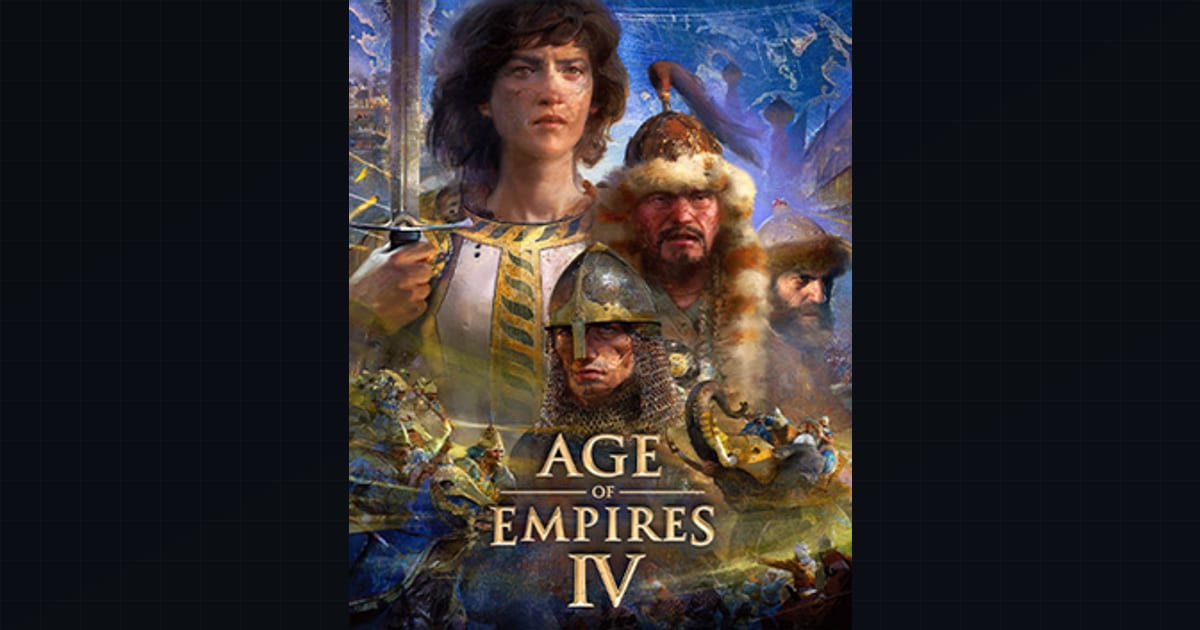
Age of Empires IV arrives on PlayStation 5 on November 4, 2025, marking the first time the title appears on a Sony platform. Developed by Relic Entertainment in partnership with World’s Edge and published by Xbox Game Studios, the real-time strategy game previously launched on Windows on October 28, 2021, and on Xbox One and Xbox Series X/S on August 22, 2023. It is the fourth installment in the Age of Empires series and the first not developed by Ensemble Studios.
That last line of the fact sheet matters more than it might look. Ensemble’s closure in 2009 left the franchise without a home for over a decade, and the decision to hand the series to Relic — a studio whose reputation was built on Company of Heroes and Dawn of War, games with a very different economic and tempo philosophy — was a genuine design risk. Age of Empires IV is the product of that bet, and the PS5 arrival is arguably the moment the bet fully pays off: the series is now healthy enough, and complete enough, to be a multi-console platform play rather than a legacy PC curio.
Civilizations & Expansions
The base game, known as Age of Empires IV: Anniversary Edition, includes ten civilizations. Eight were available at original launch — Abbasid Dynasty, Chinese, Delhi Sultanate, English, French, Holy Roman Empire, Mongols, and Rus — with Ottomans and Malians added free on October 25, 2022. The total roster now stands at 23 civilizations across the base game and multiple expansions. The Sultans Ascend added six civilizations, including four variant civilizations that modify existing rosters. Knights of Cross and Rose added two variants, Dynasties of the East added four, and Yue Fei’s Legacy added one. A subsequent expansion, Raiders of the North, introduced Vikings and Scots.
The roster math is worth unpacking. 23 civilizations sounds like a balance nightmare, but the variant system is the load-bearing design decision here. Rather than treating every new factionfaction. An in-game group or nation players can align with or fight against, with its own goals and reputation system. as a fully distinct economic and military tree, World’s Edge leaned on variants — civilizations that reskin and re-tune an existing roster’s mechanics with modified landmarks, units, or age systems. That keeps the balance surface manageable while still expanding strategic variety, and it lets the team ship content faster than the full-faction pipeline Age of Empires II historically demanded. For a PS5 player arriving in late 2025, this means the game they are buying is not the 2021 launch build: it is a mature roster where matchups have been iterated on for years across the PC and Xbox competitive pool.
Campaigns & Age System
The game features seven single-player campaigns, two of which are DLC-exclusive. Console versions include a tutorial campaign, The Rise of a King. Other campaigns cover the Norman conquest, the Hundred Years War, the rise of Moscow, the Mongol Empire, The Sultans Ascend, and Yue Fei’s Legacy. The game uses four Ages — Dark, Feudal, Castle, and Imperial — with advancement handled by constructing Landmarks rather than at the Town Center, with certain civilizations such as the Knights Templar and Abbasid Dynasty using modified systems.
The Landmark system is Age of Empires IV’s core mechanical identity, and it is a smart piece of RTSRTS. Real-Time Strategy — a strategy game where everyone plays at the same time, continuously, instead of taking turns. design. In classic Age titles, aging up was an economic decision made at the Town Center — a pause-and-pay choice. By making Age advancement a physical construct in the world, Relic converted a menu decision into a spatial one. Landmarks must be placed, protected, and can be targeted; advancing through the Ages changes your base geometry and your map vulnerability. The modified systems for civilizations like the Abbasid Dynasty push this further, intertwining the tech tree with a single evolving structure. For console RTS players specifically, where precision micro is harder on a controller, Landmark-centric play shifts emphasis toward positioning and timing — decisions a gamepad handles well — rather than raw clicks-per-minute.
The console-only tutorial campaign, The Rise of a King, signals that the developers understood this from the Xbox port onward: the genre’s biggest wall is not complexity of strategy but complexity of input, and onboarding is where that wall is dealt with.
Technical Details
Age of Empires IV runs on the Essence Engine 5.0 and supports both single-player and multiplayer modes. Directors Adam Isgreen and Quinn Duffy led development, with a composing team including Tilman Sillescu and Mikolai Stroinski among others. No minimum or recommended hardware specifications were provided for the PlayStation 5 release.
Essence Engine 5.0 is Relic’s in-house technology, and it is a meaningful part of why this port exists at all. Relic has spent two decades shipping engine-level RTS tech — formation systems, physics-driven destruction, large-unit-count battles — and an engine built and owned in-house makes console ports an engineering problem rather than a licensing negotiation. The absence of published PS5 specifications is unremarkable on its face but consistent with how Xbox Game Studios has handled console-first releases: fixed hardware targets tend to be validated rather than documented, unlike the sprawling spec sheets PC players are used to.
Why the PS5 Launch Matters
Real-time strategy has been a PC-native genre for its entire history, with console experiments (Halo Wars, Command & Conquer ports) mostly proving that ports do not work unless redesigned for the pad from the ground up. Age of Empires IV is the rare counterexample of the gradual approach: launch on PC, spend two years shipping controller-friendly UI and snap systems for Xbox, then carry that hardened console implementation to PlayStation with three extra years of content behind it. The PS5 version is not a down-port of the 2021 game; it is effectively the culmination of the series’ most successful modernization.
Strategically, this is also Xbox Game Studios continuing its platform-agnostic publishing posture — shipping first-party Microsoft IP onto a competitor’s console when the audience math justifies it. For the RTS genre, every such success widens the addressable market, which is the prerequisite for anyone else greenlighting a big-budget strategy title.
The Take
This is less a “port announcement” and more a genre statement. A 23-civilization, seven-campaign, competitively maintained RTS landing on PlayStation is a signal that strategy games no longer have to accept the PC as their ceiling. The caveats are real: controller RTS play still trades micro precision for accessibility, and the multiplayer skill gap between pad and keyboard players is a design problem the game has addressed with platform-aware queues rather than eliminated. But as arrival points go, November 4, 2025 is the strongest version of Age of Empires IV yet shipped — and the version least likely to leave a new player wondering why this genre mattered in 2005.
What to Watch
The open question is competitive uptake. Age of Empires IV’s esports and ladder scene has been built on PC. Whether the PS5 player pool sustains ranked multiplayer — where population thresholds determine matchmaking quality — will decide if this port is a durable success or a single-player-and-co-op footnote. The content offering (seven campaigns, The Rise of a King tutorial, the full expansion roster) ensures the single-player value is there regardless. The multiplayer story is the one still being written.