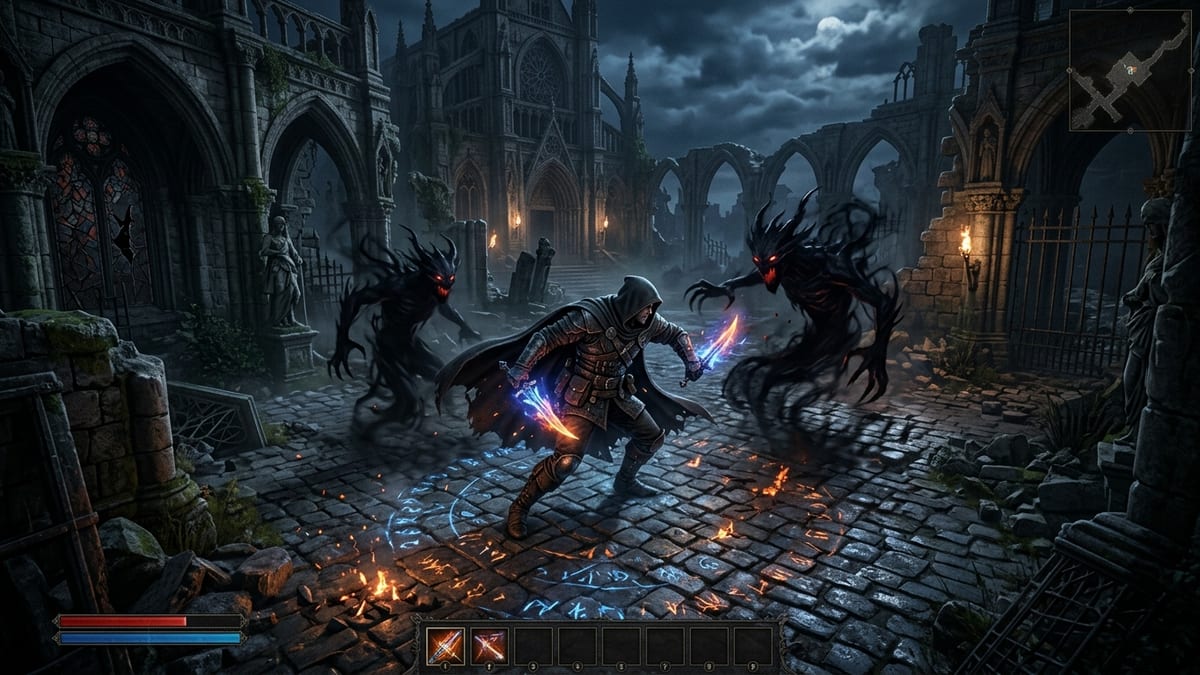
Action RPGs are not interchangeable. Four titles anchor the genre in 2026 — Path of Exile 2, Diablo IV, Last Epoch, and Titan Quest II — and they differ more in shape than in surface art. This primer compares them on the dimensions that actually decide whether a game sticks: the core combat loop, progression depth, endgame structure, monetization model, and how much theorycrafting the game demands before it becomes fun. It is a structural read, not a review tier list, and the goal is to help you pick the one that matches how you like to play.
What an ARPGARPG. Action RPG — an RPG with real-time combat rather than turn-based fights. is, and where these four sit
An action RPGRPG. Role-Playing Game — a game built around character progression, story, and player choices. here means a game built around a player-controlled character who clears combat encounters for loot, where the loot and a skill system combine into builds, and where the long game is optimizing those builds against harder content. All four titles share that skeleton. They diverge on how the skeleton is loaded: how punishing the economy is, how open the skill system is, whether the endgame is a proceduralprocedural. Generated by rules or algorithms rather than hand-placed — e.g. terrain or quests that the game builds itself. ladder or a curated boss list, and whether the business model is a one-time purchase, a season pass, or a free-to-play cosmetic shop.
Path of Exile 2 and Titan Quest II are the newest entries, both still maturing toward a full 1.0. Diablo IV and Last Epoch are live and established. That maturity difference matters: the two live games have settled economies and finished endgames, while the two newer ones are still adding acts, classes, and endgame systems on announced roadmaps.
Core loop and combat feel
The moment-to-moment loop is similar across all four — clear packs, collect drops, identify upgrades, repeat — but the combat rhythm differs. Diablo IV prioritizes a clean, high-production feel with generous responsiveness and a clear power curve tuned for seasonal play; combat is readable and the skill bar is bounded, which keeps builds legible. Path of Exile 2 leans harder into weight and animation commitment, with a more deliberate pace and a skill system that treats active skills as socketable gems rather than fixed class kits, so the same class can play several different ways. Last Epoch sits between the two: faster than PoE2’s commitment model, more build-flexible than Diablo IV’s fixed bar, with a time-travel narrative framing that changes zones rather than mechanics. Titan Quest II inherits its predecessor’s classical-mythology identity and a slower, item-driven combat pace closer to the older ARPG tradition.
The practical takeaway: if you want the most polished, immediately readable combat, Diablo IV is the easiest entry. If you want combat where build decisions change how a skill literally behaves, PoE2 and Last Epoch reward that more.
Progression depth and the skill system
This is where the four separate sharply, and it is the single best predictor of whether a game will suit you.
Path of Exile 2 has the deepest, most open system. Skills are gems you slot, supports modify them, the passive tree is enormous, and the resource model (Life, Mana, and the new Spirit stat) means build planning is a real activity. Theorycrafting is the game for a large share of players; the ceiling is essentially uncapped and the floor is correspondingly higher.
Last Epoch is the approachable deep end. It has a respectable skill tree per skill, a glyph-based crafting system that is powerful but legible, and a factionfaction. An in-game group or nation players can align with or fight against, with its own goals and reputation system. system that lets you target-farm specific item types. It offers most of PoE’s build-crafting satisfaction with a much gentler learning curve and fewer ways to brick a character.
Diablo IV is the most constrained and the most curated. Skill points are limited, paragon boards are the long-tail progression, and the system is designed so a reasonable build is reachable without external tools. The trade-off is a lower ceiling: min-maxing exists, but the gap between a casual build and an optimized one is narrower than in PoE2 or Last Epoch.
Titan Quest II is item-centric. The mastery system and the item-driven build logic mean your gear does more of the talking than an expansive passive tree, which keeps the system legible and rewards farming specific item sets rather than theorycrafting a tree.
Endgame structure
The endgame is where you spend most of your hours, and the four models are genuinely different.
Path of Exile 2 builds on the Atlas and waystone-tier mapping tradition: a procedural, tiered map system where you scale difficulty and rewards through passive-tree investment and boss-kill gating, with tablets modifying map behavior. The endgame is a long, configurable ladder.
Diablo IV runs a seasonal model: a fresh seasonal mechanic each season reshapes the economy and the ladder, with an endgame built around tiered dungeons, boss farming, and the seasonal theme. Seasons reset progress, which is a feature for some players and a dealbreaker for others.
Last Epoch uses the Monolith of Fate — a timeline-based endgame where each timeline has its own modifiers and a final boss, with corruption scaling difficulty. It is the most legible endgame of the four: you can see the whole structure and target what you need.
Titan Quest II, in its current early-access form, is still assembling its endgame around its mastery and item systems; the published roadmap describes the cadence toward a full release. Treat its endgame as in-progress rather than final.
Monetization
The business model shapes how the game feels over months. Path of Exile 2 is free-to-play with a cosmetic microtransaction shop and stash-tab purchases that are convenient but not power; the model is the same proven one as its predecessor and is generally regarded as fair. Diablo IV is a paid base game plus paid expansions and seasonal content, with a cosmetic shop layered on top — a higher upfront and ongoing cost. Last Epoch is a one-time purchase with no subscription and a light cosmetic shop, the most straightforward of the four. Titan Quest II is a paid early-access purchase with the price rising toward 1.0, the conventional premium model.
If you dislike recurring spend, Last Epoch is the cleanest; if you want a free entry point, PoE2 is it; if you want a polished seasonal treadmill and will pay for it, Diablo IV is built for exactly that.
How much theorycrafting each demands
This is the real question for most players. The four sit on a clear gradient:
- Diablo IV — least demanding. You can play well with in-game tooltips and reach endgame-ready builds without a spreadsheet.
- Titan Quest II — item-driven; planning is about gear sets more than passive-tree math, which keeps it moderate.
- Last Epoch — flexible and deep but forgiving; a build is reachable with moderate effort and the crafting system protects you from bricking gear.
- Path of Exile 2 — most demanding. The open skill system, the size of the passive tree, and the resource model mean a serious player benefits from external tools and will spend real time planning; the payoff is the highest ceiling.
How to choose
Pick by how you want to spend your hours. If you want a polished, seasonal, lower-friction ARPG and will pay for expansions, Diablo IV. If you want the deepest build-crafting and a free entry, accept the steeper learning curve, and don’t mind a cosmetic shop, Path of Exile 2. If you want most of the depth with a one-time purchase and a gentler curve, Last Epoch is the strongest middle. If you want a classical, item-driven ARPG and are comfortable with an early-access game still growing toward 1.0, Titan Quest II.
None of the four is strictly best. They are tuned for different players, and the right call is the one whose loop, depth, and payment model match how you actually play.