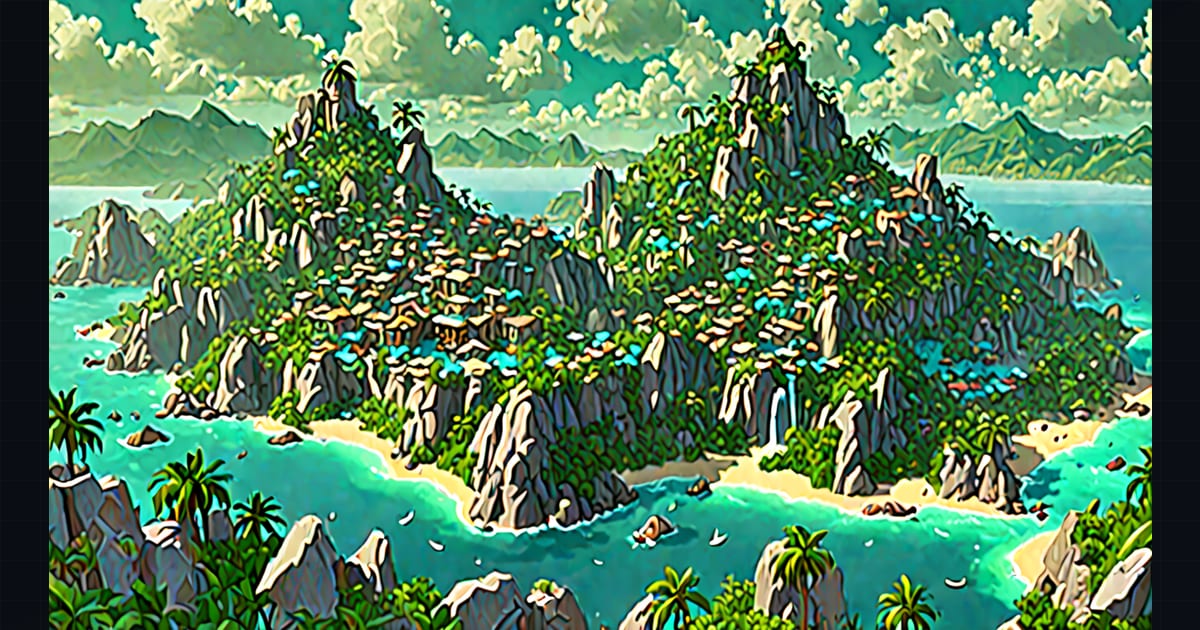
Intrepid Studios has shared high-level engineering details regarding the custom Unreal EngineUnreal Engine. A widely-used commercial game engine from Epic Games; powers many large-studio (AAA) games. UE5 is the current generation. 5 server meshingserver meshing. A technique that stitches many game servers together so players see one seamless world, even across server boundaries. technology powering Ashes of Creation. The architecture dynamically distributes player density across smoothly connected server nodes during large-scale castle sieges.
That last sentence deserves more attention than the press-summary treatment usually gives it, because it describes the single hardest unsolved problem in modern MMOMMO. Massively Multiplayer Online — a game that hosts very large numbers of players together in one shared, persistent world. engineering — and the design pillar on which the entire game economy is balanced. Everything else Intrepid has announced, from node sieges to naval trade, either stands or falls on whether that mesh actually works under load.
What changed: Intrepid detailed UE5 server meshing, dynamic node growth, sieges, and naval trade. Why it matters: Node progression is the economy; the mesh decides whether sieges work. Who should care: Sandbox MMO players and UE5 watchers weighing Alpha 2 in 2026.
Node Engine Mechanics
Node Engine Mechanics
- Dynamic Node Growth: Player activities generate node EXPnode EXP. Experience points that grow a 'node' (settlement) — earned by players questing, gathering, and crafting in its region., leveling wilderness zones into Villages, Cities, and Metropolises:
- Questing
- Gathering
- Crafting
- Node Sieges: Declaration of war triggers timed siegesiege. A timed, large-scale attack on a settlement — attackers try to destroy it, defenders try to hold it. windows where attackers attempt to destroy municipal infrastructure while defenders deploy defensive wall artillery.
- Naval Trade & Caravans: Ocean shipping lanes require player-built frigates equipped with cannon batteries to protect regional trade goods from player pirates.
What the mesh is actually doing
Traditional MMOs solve player density with either sharding (many parallel copies of the same zone, which destroys persistence) or hard zone caps with login queues and overflow servers (which destroys immersion the moment a world boss pulls a crowd). Intrepid’s approach is different in kind: rather than cloning the world when a siege swells to hundreds of combatants, the engine hot-swaps which server process owns which slice of geography mid-fight. A castle siege is the worst-case scenario for any MMO backend — maximum entity density, maximum AoE physics, maximum network tick pressure concentrated in one small area. Designing the mesh around that scenario, rather than around average-load questing, is the correct engineering priority, and it tells you where Intrepid expects the game’s identity to live.
Node progression is an economy, not a leveling system
The dynamic node growth loop is frequently misread as a cosmetic world-state gimmick. It is not. Because questing, gathering, and crafting all feed node EXP, the “leveling” of a zone is a direct, measurable proxy for collective economic activity in that region. A Metropolismetropolis. The largest tier of a player-grown settlement/node; a major economic and political hub in the world. is, functionally, a server-native measure of where wealth and labor have concentrated. That has two consequences worth pricing in: first, node sieges are economic warfare with infrastructure as the casualty — destroying a rival’s municipal buildings is destroying their accumulated regional GDP, not just their flag. Second, the system creates a genuine governance problem. Whoever directs node growth directs where the server’s economy forms, which means guild politics, cartel behavior, and deliberate starvation of rival zones are emergentemergent. Behavior that wasn't explicitly designed but arises from simpler rules interacting — player-run economies, cartels, surprise tactics. strategies the design explicitly permits.
Testing & Beta Roadmap
Alpha 2 playtesting operates as a persistent realm test environment, allowing developers to monitor economic inflation and guild territory governance over multi-month cycles.
The “persistent realm” framing is the tell. Most alpha tests are wipe-happy sandboxes; running an unpersistent-wipe, multi-month environment means Intrepid is treating Alpha 2 as a live economic simulation, not a bug hunt. Watching inflation curves and territory governance over months is exactly how you validate a player-driven economy before you are locked into it at launch — ask any EVE Online economist what happens when you don’t.
Why It Matters
The genre has spent two decades splitting into two camps: theme-park MMOs with sharded servers and designer-controlled worlds (WoW, FFXIV, and their descendants), and sandbox MMOs with persistent player-driven worlds held together by bespoke netcode and sheer stubbornness (EVE, and little else at scale). Ashes of Creation is the first major-budget attempt to put a persistent, player-shaped world on Unreal Engine 5 with sharding underneath the world rather than on top of it. If the server mesh delivers smooth handoffs during a 250-player siege — a claim that remains unproven until Alpha 2 stress data exists — it invalidates the standing assumption that persistence and mass-combat performance are a zero-sum trade. That assumption has constrained MMO design since roughly 2004. Its removal would be the most consequential backend development in the genre since instancing.
The Take
The architecture is ambitious and correctly prioritized, but the roadmap’s real risk is not the mesh — it is the economy built on top of it. Player-driven node growth plus destructible infrastructure plus open-world naval piracy is a formula that produces spectacular stories and equally spectacular griefing, and the difference between the two is moderation tooling and catch-up mechanics that no amount of server engineering provides. The hardware requirements hint at the second risk: an RTX 2070 minimum and an RTX 4080 / Ryzen 7800X3D recommended spec is steep even by 2026 standards, and a game whose core loop depends on mass player concurrency cannot afford a client that bottlenecks on hardware most of its own player base does not own. A backend that scales to 500 players is only as good as the median client’s ability to render them.
The multi-month persistent Alpha 2 is, however, exactly the right de-risking move. Economic inflation and governance behavior cannot be simulated in a weekend stress test; they have to be observed in the wild. Intrepid watching those numbers for months before committing to launch tuning is a sign of engineering maturity that the genre rarely shows.
What It Signals
Two signals stand out. First, Unreal Engine 5 is becoming the default substrate for the next generation of MMOs, and Ashes’ custom mesh work — layered on top of UE5 rather than a from-scratch engine — shows how studios are now spending their engine budgets: not on rendering, which UE5 provides, but on the networking layer that Epic does not. Second, node sieges and caravancaravan. A player-driven trade convoy that moves goods between settlements — valuable, and vulnerable to attack. piracy as headline features signal a deliberate bet on friction-based gameplay — loss, theft, and destruction as content rather than failure states. That bet has a passionate niche audience (EVE veterans, Lineage siege players) and a historically cold mainstream one. Alpha 2’s persistent telemetry will tell Intrepid, and eventually the rest of the industry, whether a budget this size can make the niche scale.
For players weighing whether to care in 2026: this is the first MMO architecture reveal in years where the engineering and the design are the same decision. Whether it works is no longer a marketing question — it is a data question, and Alpha 2 is where the data starts existing.
The milestones from here are mechanical: months of inflation and territory-governance telemetry from the persistent realm, then the siege stress loads the mesh was designed around. Watch the client spec too — an RTX 2070 minimum and RTX 4080 / Ryzen 7800X3D recommended is steep for a game built on mass concurrency, and any movement there tells you how the optimization work is going.
Next read
- For the player-economy side of nodes in beta, see the node system & player economy primer.
- For the full alpha-to-launch timeline, see the beta phase schedule & systems rollout.
- Every Ashes of Creation breakdown lives on the coverage hub.