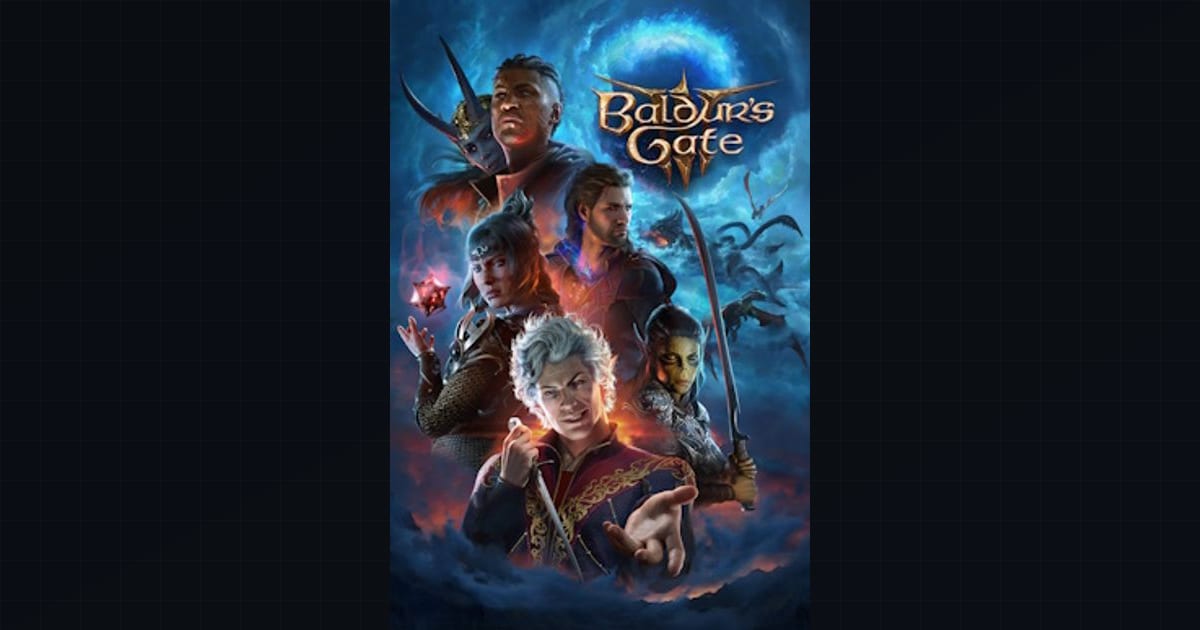
What changed: Patch 8 is BG3’s final major update: Photo Mode, cross-play, and twelve new subclasses. Why it matters: Active development ends; Larian shifts to a new Divinity RPGRPG. Role-Playing Game — a game built around character progression, story, and player choices. it calls its largest yet. Who should care: BG3 players on PC, PS5, Xbox, or Mac, and modders using the BG3 Toolkit.
What changed in Patch 8
Patch 8 arrives as the last major content update for Baldur’s Gate 3. The notes from Larian Studios confirm that after this patch the team will shift focus to upcoming projects, handling only minor bug fixes moving forward. The update introduces several long‑requested features and expands character options.
One of the headline additions is Photo Mode. Players can now pause the action, adjust camera settings, apply filters, and add stickers to capture screenshots of their adventures. The mode works on PC, console, and supports user‑created stickers via the BG3 Toolkit. Photo Mode includes more than 300 stickers, adjustable frames, colour‑grading presets, and the ability to change focal length and depth of field. Captured images are saved to the platform’s native screenshot folder or to the Larian Studios/Baldur’s Gate 3/Screenshots directory on PC.
Cross‑play functionality enables multiplayer sessions between PC, Mac, PlayStation 5, and Xbox Series X|S. Larian notes that all participants must use the same version of any installed mods, and the Mod Verification window will appear when discrepancies are detected. Cross‑progression allows saves to travel across platforms when linked to a Larian account. The feature also introduces Xbox Series S split‑screen support for local co‑op, letting two players share a single console screen while maintaining independent characters and inventories.
Another major addition is the arrival of twelve new subclasses, one for each core class:
| Base Class | New Subclass | Unlocks At |
|---|---|---|
| Barbarian | Path of the Giant | Level 3 |
| Bard | College of Glamour | Level 3 |
| Cleric | Death Domain | Level 1 |
| Druid | Circle of Stars | Level 2 |
| Fighter | Arcane Archer | Level 3 |
| Monk | Way of the Drunken Master | Level 3 |
| Paladin | Oath of the Crown | Level 1 |
| Ranger | Swarmkeeper | Level 3 |
| Rogue | Swashbuckler | Level 3 |
| Sorcerer | Shadow Magic | Level 1 |
| Warlock | Hexblade | Level 1 |
| Wizard | Bladesinging | Level 2 |
Each subclass brings unique abilities, animations, visual effects, and voiced dialogue. For example, the Way of the Drunken Master Monk gains unpredictable movement and bonus damage when intoxicated, while the Arcane Archer Fighter gains magical arrows that can bypass certain resistances and the Bladesinging Wizard gains a bladesong that enhances melee attacks.
Beyond new features, Patch 8 resolves numerous bugs reported by the community. The patch notes list more than eight hundred individual changes. Fixes cover:
- Inventory handling: containers no longer scatter contents when destroyed.
- Multiplayer stability: clients can join lobbies while the host is on a long rest.
- Pathfinding on ladders: characters no longer get stuck when another companion uses the ladder.
- UI controller issues: tooltip flicker, slot selection, and rumble settings corrected.
- Combat interactions: riders no longer apply multiple times in Honour Mode, Sneak Attack resets correctly after a kill, and several spell visual effects now align with their intended targets.
The update also corrects specific quest line blockers, such as the Emerald Grove Environs waypoint triggering correctly and the journal updating for the Rescue the Druid Halsin quest. Mod compatibility receives attention as well, with the Mod Verification window now triggering regardless of where the request to connect originates and the toolkit gaining improved character creation support for modded games.
How the new features work
Photo Mode activates by pressing both analog sticks on a controller or by hitting F9 on keyboard. A heads‑up display lets users adjust field of view, depth of field, exposure, and apply colour grading. Stickers can be placed, scaled, and rotated. A frame editor lets users add borders, adjust opacity, and apply vignette effects. The mode includes a sticker library that can be expanded through the BG3 Toolkit, allowing mod authors to create and upload custom stickers. Captured images save to the platform’s screenshot folder or to the Larian Studios/Baldur’s Gate 3/Screenshots directory on PC, and to the Pictures/Larian Studios/Baldur’s Gate 3/Screenshots folder on Mac.
Cross‑play requires linking platform accounts to a Larian account via https://larian.com/account/connected. Once linked, the “Allow Cross‑Play” option in the Gameplay menu must be enabled. Players can then create or join lobbies from the Multiplayer menu. The system verifies mod compatibility; if a host uses mods that a client lacks, the client will be prompted to install, update, or disable those mods before joining. For Xbox Series S, split‑screen mode appears as an option in the Multiplayer lobby, letting two players share a single screen while maintaining independent inventories, character sheets, and mod lists. Cross‑progression works by uploading saves to the Larian cloud when a player links their account; the same save can then be downloaded on another platform after linking the account there.
Subclass selection appears during level‑up when the required threshold is reached. The level‑up screen highlights the new subclass option with a distinct icon and tooltip. For example, barbarians see the Path of the Giant icon at level 3, while wizards see the Bladesinging icon at level 2. Selecting a subclass replaces the base class feature at that level with the subclass feature. Each subclass brings a distinct playstyle: the Way of the Drunken Master Monk adds unpredictable movement and bonus damage when intoxicated, while the Arcane Archer Fighter gains magical arrows that can bypass certain resistances and the Bladesinging Wizard gains a bladesong that enhances melee attacks and grants a defensive ward when adjacent to an ally. Each subclass also includes unique summon animations, visual effects, and voiced lines that react to combat events.
The BG3 Toolkit received an update to support partial level editing for items, characters, and triggers. Mod authors can now edit existing levels without altering static world geometry such as buildings, terrain, or scenery. This enables custom NPCs, interactive objects like chests that teleport when approached, or environmental effects that activate only in specific rooms. The toolkit also added a TranslatedStringKey editor for creating custom localization entries, a reloadUI command to refresh the user interface without restarting the game, and a reloadLoca command to refresh localisation data. Improved character creation support ensures that modded races and classes appear correctly in the creation screen, and the mod manager now shows accurate dependency information when a mod is selected.
Build path and development notes
Larian described Patch 8 as the culmination of eight years of work that began when Wizards of the Coast approached the studio in 2017. The team treated the patch as a farewell to active development, emphasizing that while minor bug fixes will continue, no further narrative or major systems will be added. The development timeline included regular internal milestones, community playtests, and open dialogue about modding tools.
Studio head Swen Vincke expressed pride in the community’s role, noting that player feedback shaped many of the refinements seen in the patch. The development process incorporated regular community updates, live streams, and open dialogue about modding tools. Larian’s internal automation investments reduced iteration times from weeks to hours, allowing rapid testing of changes before release. The team built automated test suites for combat encounters, dialogue branching, and mod compatibility checks, which helped catch regressions early.
The team also highlighted efforts to maintain mod compatibility. Updated guidelines clarify that mods introducing new playable races cannot be curated for consoles due to platform restrictions. However, most other mods can continue to function, and the Mod Verification window helps prevent version mismatches. The toolkit now includes a dependency checker that warns authors if a mod relies on a feature that may be unavailable on a specific platform. Larian also updated the mod loading order screen to display thumbnail previews, making it easier to spot missing or corrupted assets.
What this means for the franchise and Larian’s future
With Patch 8 marking the end of major content updates for Baldur’s Gate 3, Larian confirms that its full attention now turns to its next original RPG. The studio announced a new entry in the Divinity series simply titled Divinity at The Game Awards 2025. According to Larian’s official website, the game promises “greater breadth and depth than ever before” and is described as the studio’s most ambitious title to date.
Larian founder Swen Vincke stated that the new Divinity will build on lessons from Baldur’s Gate 3 while aiming to provide more freedom and player agency. The game will be turn‑based, continuing the studio’s combat tradition, but will explore a more grounded tone in the world of Rivellon. Vincke emphasized that the narrative will respect existing lore while offering continuity for fans of Divinity: Original Sin and Original Sin 2. He noted that the story will take place after a major event from earlier entries, allowing the world to show the consequences of past actions while introducing new factions and mysteries.
The announcement indicates that Larian intends to maintain multiplatform releases, though specific platforms and a release window have not yet been disclosed. The studio plans to engage the community during development, sharing updates and seeking feedback similar to its approach with Baldur’s Gate 3. Early access is under consideration, with Vincke mentioning that the team wants to involve players early to refine systems and balance, but no firm commitment has been made.
For the Baldur’s Gate 3 franchise, the conclusion of major patches does not mean abandonment. Larian will continue to issue minor bug fixes and maintain online services such as cross‑save and cross‑play. The modding ecosystem remains active, with the updated BG3 Toolkit enabling creators to produce new content. Players can expect the game to stay accessible across platforms, and the community‑generated mods will keep the experience fresh. The studio also confirmed that the final patch does not remove any existing content; all previously released campaigns, expansions, and cosmetic items remain available.
Overall, Patch 8 serves as both a polished farewell to a critically acclaimed RPG and a clear signal that Larian is ready to invest its accumulated expertise into a new, larger‑scale project. The studio’s track record suggests that the forthcoming Divinity title will aim to meet high expectations while expanding on the strengths that made Baldur’s Gate 3 a landmark release.
For BG3 players, the practical takeaway from here is stability: minor bug fixes, cross‑save, and mod support continue, but Patch 8 is the content ceiling. The next data point for Larian watchers is whether the new Divinity RPG confirms platforms and the early‑access plan Vincke has floated.
Next read
- For build ideas that use the new subclasses, see Baldur’s Gate 3: The Best Multiclass Builds to Run After Patch 8.
- For the modding side, see Baldur’s Gate 3 Mod Support Primer: Installing, Vetting, and Console Limits.
- All our BG3 reports live on the Baldur’s Gate 3 coverage hub.