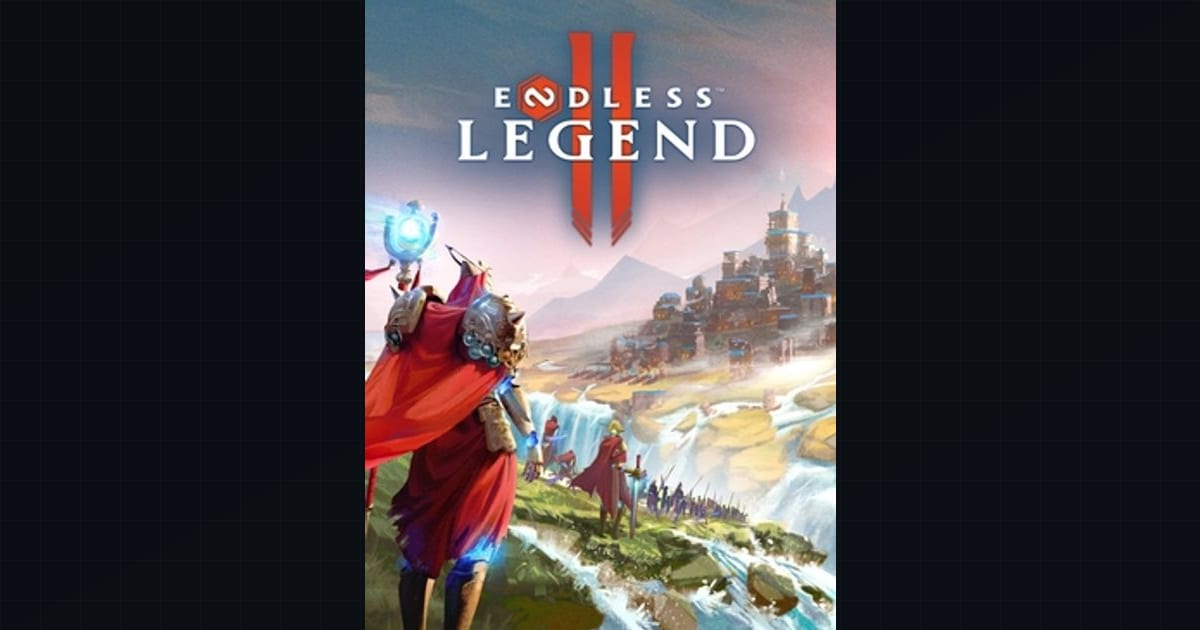
Endless Legend 2 entered Early Access on September 22, 2025, bringing Amplitude Studios’ turn-based strategy sequel to the public for the first time as a complete, playable game. Game Director Derek Paxton described the moment as a major milestone, akin to the point where the full game leaves internal builds and meets the community. The Early Access launch shipped with five playable factions, nine victory paths, and a world shaped by recurring Monsoons and Tidefalls that periodically drain the oceans to reveal new land.
What shipped to Early Access
The launch build includes the full game loop rather than a vertical slice. Players found cities, recruit heroes, raise armies, pursue quests, and pursue one of nine ways to win: elimination, a score victory, or seven narrative victory paths. The world of Saiadha is randomly generated for each game, and the Tidefall mechanic means the seas recede over time, exposing new regions, resources, and connections between players. There are no naval units, by design, because the oceans disappear as the game progresses.
The five playable factions at launch are:
- Kin of Sheredyn — the defensive, militaristic factionfaction. An in-game group or nation players can align with or fight against, with its own goals and reputation system.. Their Keep district is available from Era 1 rather than Era 2, a faction-specific asymmetry that front-loads their fortification identity. The Chosen unit system and entrenchment gauge anchor their play around holding ground.
- Aspects — the diplomatic coral-robots. Aspects lean on protectorate slots, coral-based expansion, and a Forum district available from Era 1. Their population generates Influence while at peace, and their technology tree pushes treaties and Force a Treaty diplomacy.
- Last Lords — the economic powerhouse. Their population generates Dust rather than Influence, and their Palanquin units and Soul Repository mechanics support a gold-driven empire. They were added in the patch that moved the build from Demo to Early Access.
- Tahuk — the “mad scientist” faith faction. The Tahuk are the science faction, but Amplitude intentionally avoided giving them simply faster research. Their Holy Oculum building unlocks charged active abilities that divert Science generation into powerful effects, and their Empire Powers come with drawbacks to balance their strength.
- Necrophage — the warmongering hive. Necrophage have reduced access to diplomatic technologies, cannot enact Immigration Policies, and their Scavenger Lairs and Larva upgrades drive an aggressive, expansionist playstyle. They were also added in the Demo-to-EA patch.
How Amplitude’s modular faction design evolved from EL1
The five factions reflect an evolution of Amplitude’s signature asymmetry rather than a clean break from the first Endless Legend. Several design choices show the shift.
The first Endless Legend built factions around strong single affinities. Endless Legend 2 keeps that core but twists the archetypes. The Last Lords were described by the design team as honorable knights who now must drain others to survive. The Tahuk were built as scientists plagued by institutional theocracy, “chaotic yet touching little folks, riddled with esotericism and cutting edge technology,” so that every powerful Empire Power comes with a drawback. The Aspects turn the diplomatic faction into coral-robots whose population yields Influence only at peace.
The economic system also evolved. In the earliest internal version, Foundations came in multiple types that each exploited specific yields, and Improvements affected only the district where they were built. Community feedback from alpha testers pushed Amplitude to unify Foundation types, make Improvement effects global, and gate Districts and Improvements behind era research so each faction starts with one or two district types. This is the version that shipped: faction-specific starting districts (Keep for Kin, Laboratory for Tahuk, Forum for Aspects) keep asymmetry visible from turn one without overwhelming new players.
The Tidefall and Monsoon systems are the largest structural change. Paxton noted in the State of the Game post that Tidefall was a core element that went through heavy iteration, once running eight small Tidefalls per game before the team settled on a slower rhythm that players actually feel.
What the Demo told Amplitude
Before Early Access, Amplitude ran a public Demo and surveyed everyone who played at least two hours. The team used two questions to judge readiness: satisfaction and likelihood to recommend. The Demo surfaced clear strengths and weaknesses that shaped the launch build.
The strengths were Tidefall pacing, faction asymmetry, and the art and sound direction. The weaknesses clustered on the main screen UI, the city construction flow, the volume of character writing, and terrain readability. Amplitude shipped fixes for the readable-terrain side of those complaints in the launch patch — clearer foundations, fixed blurry graphics, more graphical options, reduced saturation, more visible grid lines, and smaller terrain vegetation so it stops competing with anomalies. The larger UI and city flow work was flagged as ongoing and would continue through Early Access rather than landing at launch.
The roadmap to 1.0
Amplitude held back a detailed roadmap until after launch, on the stated logic that player feedback should shape what comes next. Three items were committed to in writing at launch:
- A sixth playable faction, closely tied to the history of Saiadha, added in the coming months. A community response from the team confirmed the plan is six factions total for 1.0.
- Multiplayer, released in an update after Early Access begins. Hotseat was ruled out because the simultaneous-turn structure is too deeply embedded to retrofit to sequential turns.
- Custom faction creation, so players can mix faction traits.
- Steam Deck verification, since the game runs on the Deck but needs more work to be properly verified.
Modding support is something the team is interested in exploring during Early Access.
What early post-launch updates fixed
The launch patch (Patch 0, from Demo to Early Access) added the Last Lords, Necrophage, and Tahuk factions to the two that shipped in the Demo. It also rebalanced hero equipment, hero skills, unit costs, district effects, public opinion modifiers, and the Necrophage, Aspect, and Kin faction quests. The UI gained editable main settings from the lobby, better end-turn feedback, and improved quest dialog presentation.
Subsequent updates through 2026 have continued that cadence. Update 13, “Steady Tides,” reworked victory conditions so every objective on a path is mandatory, shifted the early-game economy by moving Forum, Keep, and Laboratory districts to Era 2 (with faction exceptions), reworked militia to scale with fortification rather than a unified city level, and rebalanced a large slate of hero skills and equipment. Later hotfixes continued to address balance and faction-specific bugs. The pattern is consistent with Amplitude’s stated Early Access philosophy: ship a complete game, then tune balance, AI, UI, and content with the community.
What this means for players
The Early Access build is a full game, not a preview. Five asymmetric factions, nine victory paths, hundreds of quests, and a world that physically changes over the course of a match are all in. The known rough edges are the main screen UI and the city construction flow, both of which Amplitude has acknowledged and is reworking. Players who want multiplayer, custom factions, or the sixth faction should expect those in updates during Early Access rather than at launch.
The recommendation is straightforward. If you want a single-player 4X4X. eXplore, eXpand, eXploit, eXterminate — a grand-strategy subgenre about building a civilization over a long arc. with strong faction asymmetry and a world that reshapes itself each match, the Early Access build delivers that today. If you need multiplayer or a polished UI out of the box, the roadmap points to those arriving before 1.0, and Amplitude’s track record on Endless Legend and Humankind is to keep iterating in public.
One practical note on the five factions: they cover a wide enough design space that most playstyles have a home at launch. Defensive players can settle on the Kin of Sheredyn and lean into fortification, diplomatic players can run the Aspects and their protectorate economy, economic players can drive the Last Lords’ Dust engine, science-and-faith players can experiment with the Tahuk’s charged Holy Oculum abilities, and aggressive players can swarm with the Necrophage. With the sixth faction and custom faction creation still to come, the Early Access roster is already broad enough that the choice of faction meaningfully changes how a match plays.