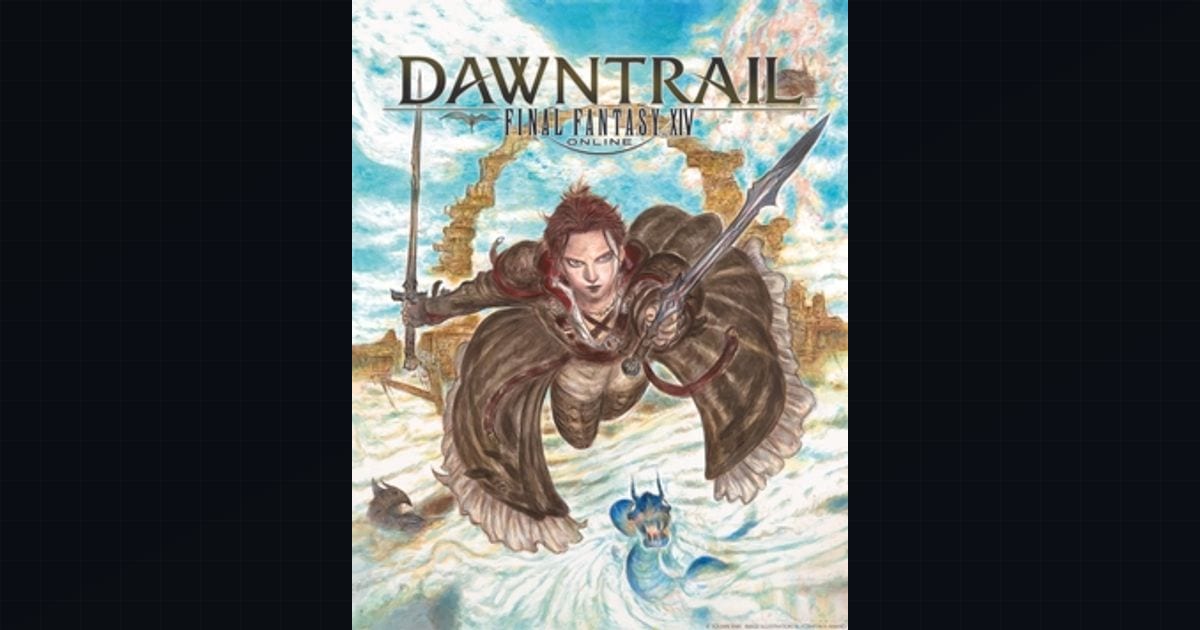
Final Fantasy XIV: Dawntrail introduced two new jobs: Viper (VPR), a fast melee DPS built around chained twinblade combos, and Pictomancer (PCT), a magical ranged DPS that paints motifs onto a canvas to power burst windows. Both jobs use gauge-based resource systems and live or die on opener alignment, so this guide focuses on the loop logic, gauge management, and burst priorities that actually move a parse — not flavor.
What it covers: VPR and PCT loop logic, gauge management, and burst-window priorities. Why it matters: Both new jobs live or die on opener alignment — the loop matters more than the flavor. Who should pick this: Dawntrail players picking up either of the two new jobs.
Viper (VPR) — Twinblade Combo Loop
Core combo structure
Viper’s entire rotation is a loop of branching 1-2-3-style combos that build the Serpent Offerings Gauge, which unlocks your heavy hitters. The foundational twinblade combo is:
- Vicewinder (twinblade combo starter, 2 charges)
- Hunter’s Coil / Swiftskin’s Coil (second hit, flank or rear positional)
- Twinfang Bite / Twinblood Bite (oGCD follow-ups)
This twinblade combo runs beside the dual-wield chain — Steel Fangs or Reaving Fangs into Hunter’s Sting / Swiftskin’s Sting and their positional combo finishers. Both are builders: the coils generate +5 Serpent Offerings each, and nothing in either combo spends the gauge — the only spender is Reawaken itself.
Serpent Offerings and Reawaken
Serpent Offerings fill as you complete combo chains. Reawaken costs 50 Serpent Offerings and grants five Anguine Tribute stacks, turning your combo actions into the First through Fourth Generation weaponskills with Legacy follow-ups, ending in the Ouroboros finisher. The Reawaken window is your primary burst and should be aligned with raid buffs. The Uncoiled Fury line is separate: it spends Rattling Coils granted by the twinblade combo, is always available from level 82, and is not unlocked or empowered by Reawaken.
Key gauge priorities:
- Don’t cap Serpent Offerings — spend before overcapping.
- Enter Reawaken with party buffs active.
- Writhing Snap and other oGCDs weave between combo GCDs; never let a weave cost you a positional.
Positionals
Viper is positional-heavy. Hunter’s Coil wants flank, Swiftskin’s Coil wants rear (the tooltip labels have occasionally been relabeled across patches, so confirm the live positional mapping for your patch). True North covers repositioning during mechanics, but the default loop assumes you can hit both positionals on a mostly-stationary target — which is why Viper struggles on high-movement fights unless you bank True North charges.
Viper opener priority
A typical Dawntrail Viper opener:
- Pre-pull: apply any raid buffs from party.
- Open with the dual-wield chain and the twinblade combo — both are builders that fill the gauge fast.
- Enter Reawaken at the buff window.
- Hold the second Reawaken for the next buff window — do not freestyle it.
The single most common Viper mistake is overcapping Serpent Offerings because a player held a spender “for the right moment.” Spend on cooldown unless a buff window is within one GCD.
Pictomancer (PCT) — Paint Gauge & Motif Sequencing
Resource model
Pictomancer runs two interlocked resources:
- Palette Gauge and White Paint — the Palette Gauge (capped at 100) is spent to enter Subtractive Palette, while White Paint (capped at 5 charges) fuels instant casts like Holy in White (and, once converted to Black Paint, Comet in Black).
- Aetherhue / motif system — you paint Creature, Weapon, and Landscape motifs, each of which produces a Muse (Living Muse, Steel Muse, Scenic Muse) that renders the painting to life or primes your burst.
The rotation is essentially: paint motifs on cooldown → cash them into Muses → spend the hammer line granted by Striking Muse → dump the big landscape/Star Prism finisher inside your buff window.
Motif and Muse priority
Each motif has a cast time and produces a corresponding Muse:
- Creature Motif → Living Muse: renders the creature to life — the party damage buff is Starry Muse (5%).
- Weapon Motif → Steel Muse: personal damage buff / weapon empowerment.
- Landscape Motif → Scenic Muse: primes the large finisher (Starry Muse / Star Prism line, with Comet in Black as a separate Black Paint spender).
The order matters because the big finisher, Star Prism, requires Starstruck — granted only by Starry Muse, not by stacking all three Muses. A simplified priority:
- Keep Creature and Weapon Muses on cooldown — they’re cheap and feed uptime.
- Pre-cast Landscape Motif before burst so Scenic Muse lands inside buffs.
- Spend the Hammer Combo during the Muse stack.
- Fire the Star Prism / Comet in Black finisher at the top of the buff window.
Subtractive palette and Paint management
Pictomancer has a subtractive palette mode that flips your basic aetherhue combo into alternate, stronger forms (the Blizzard in Cyan / Stone in Yellow / Thunder in Magenta line) and converts a White Paint charge into Black Paint, enabling Comet in Black. The practical rule: subtractive abilities cost Palette Gauge rather than White Paint directly and are used as filler when you’re waiting on motif cooldowns. Never enter a burst window with empty Paint — bank at least enough for the hammer line plus the finisher.
Pictomancer opener priority
A typical Dawntrail Pictomancer opener:
- Pre-pull cast a motif that has a long cast time so it lands as the pull happens.
- Apply Starry Muse early for party buff coverage.
- Build toward Landscape motif as party buffs fire.
- Dump Paint into hammer combo inside the stacked-Muse window.
- Fire Star Prism / Comet in Black at buff peak.
- Re-paint motifs on cooldown to sustain the loop.
The most common PCT mistake is letting motifs sit off cooldown “to align.” Motifs have short cooldowns and are meant to be pressed on cooldown; alignment is achieved by pre-casting, not by delaying.
Side-by-side: Viper vs Pictomancer at a glance
| Dimension | Viper (VPR) | Pictomancer (PCT) |
|---|---|---|
| Role | Melee DPS | Magical ranged DPS |
| Primary gauge | Serpent Offerings | Paint + Aetherhue motifs |
| Burst trigger | Reawaken window | Stacked Muse + Star Prism |
| Positionals | Flank / rear, heavy | None |
| Movement pressure | High (melee + positionals) | Moderate (cast times) |
| Buff contribution | Low (personal) | Moderate (Starry Muse party buff) |
| Opener complexity | Medium (track gauge + positionals) | Medium-high (track motifs + Paint) |
| Main failure mode | Overcapping Serpent Offerings | Letting motifs sit off cooldown |
Raid-buff alignment for both jobs
Both jobs are buff-aligned burst DPS, meaning their damage is concentrated in windows where party buffs (Battle Litany, Embolden, Arcane Circle, etc.) are active. The shared rule:
- Identify the party buff cadence (a flat 120s cycle).
- Pre-bank resources so Reawaken (Viper) or the Star Prism window (Pictomancer) lands inside that cadence.
- Do not drift your personal burst off the party cadence for a single-target gain — the multiplicative loss from missing buffs is larger than any one cooldown’s standalone value.
For Viper, this means holding the second Reawaken if party buffs are 10s away. For Pictomancer, it means pre-casting Landscape Motif so Scenic Muse lands as buffs fire, not as buffs end.
Common execution errors
Viper
- Overcapping Serpent Offerings by holding spenders.
- Missing positionals because True North was wasted on a non-positional GCD.
- Drifting Reawaken off the party buff window for a small personal gain.
Pictomancer
- Entering burst with insufficient Paint for the hammer line.
- Delaying motifs to “align” instead of pre-casting.
- Firing the finisher outside the stacked-Muse window.
- Forgetting that Starry Muse is a party buff — dropping it costs the whole party, not just you.
Final notes
Both Viper and Pictomancer reward planning over reaction. Viper’s loop is a tight gauge-spend rhythm with positional execution; Pictomancer’s loop is a motif-and-Paint banking problem solved by pre-casting. In both cases, the difference between a clean parse and a messy one is almost always resource banking and buff alignment — the mechanical difficulty is in the pre-pull plan, not the mid-fight finger work.
Patch tuning changes potency values and occasionally reorders priorities, so verify the exact spenders, motif names, and potency numbers against the current Dawntrail patch notes before optimizing for a specific fight.
Sources & further reading
- Official FFXIV Dawntrail site — https://na.finalfantasyxiv.com/dawntrail/
- FFXIV Lodestone patch notes — https://na.finalfantasyxiv.com/lodestone/
- The Balance (FFXIV job guides and stat weights) — https://www.thebalanceffxiv.com/
- FFXIV Wiki (job mechanics reference) — https://ffxiv.consolegameswiki.com/wiki/Final_Fantasy_XIV_Wiki
- Official FFXIV job guide (in-game / Lodestone) — https://na.finalfantasyxiv.com/jobguide/
Next read
- For where those parses pay off, see FFXIV 7.x Savage Gear Progression and BiS Roadmap.
- For what changed around them, see FFXIV 7.1/7.2 Patch Notes: Live Game Changes Explained.
- All our coverage lives on the Final Fantasy XIV: Dawntrail hub.