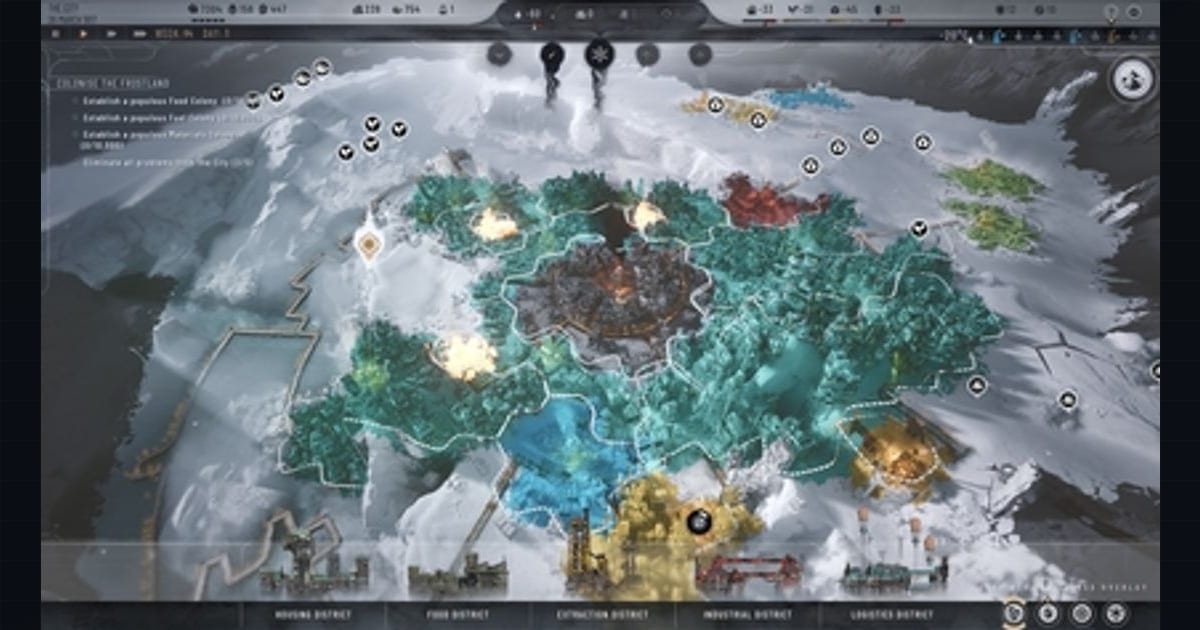
Expanding New London in Frostpunk 2 moves away from individual street building to large-scale hexagonal Districts. Each district—whether Housing, Food, Extraction, or Industrial—demands massive amounts of heat from the central generator. Without intelligent spatial planning and district clustering, your coal and oil reserves will vanish during the first whiteout.
Key Takeaways
- Hexagonal Adjacency Bonuses: Placing districts adjacent to each other provides mutual insulation, reducing heat demand by up to 20 heat per shared border.
- Sheltered Terrain Placement: Building districts inside deep rock valleys or against high cliff walls shields them from freezing northern gale winds.
- Thermal Hub Networks: Overlapping heat hubs extend generator efficiency into distant oil extraction zones without requiring dedicated local generator installations.
District Thermal Efficiency Metrics
| District Type | Base Heat Demand | Optimal Neighbors | Adjacency Savings |
|---|---|---|---|
| Housing District | 40 Heat | Housing, Food Districts | -20 Heat per 3 shared edges |
| Food District | 60 Heat | Housing, Deep Geothermal vents | -15 Heat when sheltered |
| Extraction District | 80 Heat | Industrial Districts | -20 Heat from factory exhaust |
| Industrial District | 100 Heat | Extraction, Logistics | Generates minor heat exhaust to adjacent tiles |
Generator Fuel Transition Strategy
- Early Coal Reliance: Icebreak directly toward nearby surface coal deposits to stabilize basic heating before the first temperature drop (-40°C).
- Oil Pipeline Conversion: Construct logistics districts to reach distant Frostland oil wells. Retrofitting the Generator with an Oil Burner core yields 2.5x more heat output per fuel unit than raw coal.
- Managing Overdrive: Engaging Generator Overdrive temporarily boosts heating by two full thermal tiers during severe whiteouts, but operating above 85% generator stress risks catastrophic structural explosion.
Whiteout Preparation Checklist
Two weeks before a whiteout strikes, pause non-essential production districts, stockpile 10,000 units of food rations, and route all surplus heat into residential sectors to prevent mass illness.