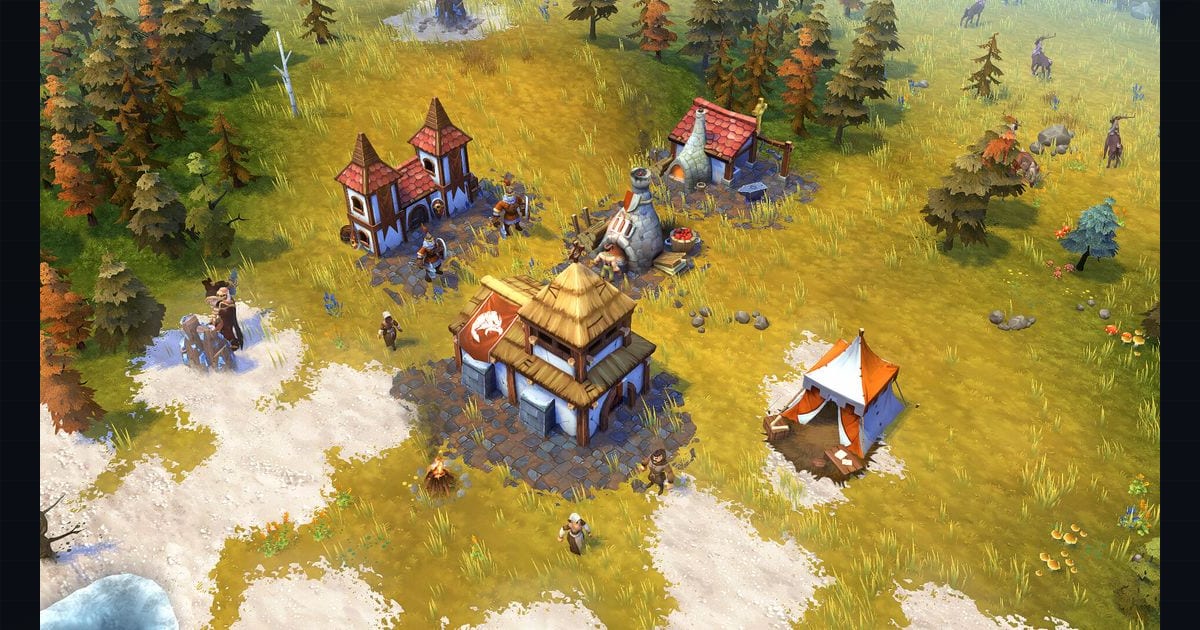
Shiro Games released Northgard - Gardariki, Clan of the Hippogriff on June 10, 2025 as paid downloadable content for the Northgard: Definitive Edition base game. The clan is led by Sindri, eldest brother of Brok and Eitria, returning from the Southern Lands with a forge-and-discipline identity that contrasts sharply with the hit-and-run ethos of most existing clans. Where earlier additions leaned on nature worship, sacrifice, or scavenging, the Hippogriff is built around four interlocking systems: a dedicated military structure, a wood-burning resource engine, a hero-only forge, and a short-range relic catapult. This article breaks down what those systems do and where the clan fits in Northgard’s existing balance.
What changed
Northgard’s clan roster has grown steadily since launch, with additional clans arriving as paid DLC alongside free major updates such as Trials of Odin and Kröwns & Daggers. The official clan list now spans primary clans (Stag, Goat, Wolf, Raven, Bear, Boar) and a long tail of additional clans (Snake, Dragon, Horse, Kraken, Ox, Lynx, Squirrel, Rat, Eagle, Stoat, Owl, Hounds, Turtle) plus the Lion clan from the Cross of Vidar expansion. The Hippogriff is the newest addition to that additional-clan line.
Unlike many recent clans that introduce a single signature twist on an existing economy, the Hippogriff layers several distinct mechanics on top of each other. The store page describes the clan’s theme as “ancient Norse spirit meets the tempered structure of the South,” and the systems reinforce that framing: disciplined military production, a wood-fed economy, and a hero-driven crafting chain.
How the Varangian Guard works
The clan’s military backbone is the Varangian Guard, produced through a dedicated structure line. Players build a Sentry Camp, which can then be upgraded into a Varangian Camp. The store description frames these warriors as “enduring as they are deadly,” which maps onto Northgard’s existing durability-versus-mobility tradeoffs. Most older clans split between aggressive mobile raiders (Wolf, Snake) and slower turtling economies (Goat, Bear); the Varangian Camp upgrade path suggests the Hippogriff is designed for sustained, high-quality infantry rather than early harassment.
This matters because Northgard’s combat leans on population-limited warbands and tile-based zone control. A clan that invests in a dedicated military structure early is committing population and food to defense instead of colonization, which is a meaningful early-game tradeoff. The upgrade from Sentry Camp to Varangian Camp also implies a tiered tech investment, similar to how other clans gate their stronger units behind lore or specialized buildings.
The Brazier: a wood-fed economy
The Brazier is the clan’s identity centerpiece. Rather than a passive building, it is described as “the heart of Gardariki’s identity,” burning wood to empower every aspect of the clan’s development. Feeding the flames bolsters all resource productions. Critically, the Brazier rekindles Norse traditional feasts, but fueled by wood rather than food — and those feasts last two months and amplify the effects of all active Braziers.
This is a notable inversion of Northgard’s usual food-pressure model. Food scarcity in winter is the core survival pressure that defines most clan openings, and many clans (Goat, Squirrel, Eagle) build around food generation or conservation. A clan that converts wood into both production bonuses and feast uptime redirects pressure onto the wood economy instead. Wood is already contested because it feeds building construction and winter heating; routing it through Braziers tightens that competition and rewards players who secure forested tiles early.
The “two months” feast duration interacts with Northgard’s seasonal calendar, where winter is the dangerous season. A feast that persists across a winter boundary can offset the production collapse that defines early-game winters, giving the Hippogriff a safety valve that other clans must buy through lore or trade.
The Forge and Sindri’s relic chain
The Forge is a specialized building usable exclusively by Sindri. Through it he can gear up military units and forge the clan’s relic. This mirrors the existing Horse clan’s crafting identity — Brok and Eitria are already established as master craftsmen — but concentrates that identity onto a single hero rather than a clan-wide bonus. Sindri’s exclusivity means the Forge is gated behind hero survival, which adds risk: if Sindri falls, the crafting pipeline stops.
The relic itself is a catapult with a one-tile range. The store page is explicit that the range is modest but the raw destructive force makes it “a formidable siegesiege. A timed, large-scale attack on a settlement — attackers try to destroy it, defenders try to hold it. tool, perfect for softening defenses and pressuring opponents from a safe distance.” One tile is short in Northgard terms — most ranged pressure and relic effects reach across multiple zones — so the catapult is best read as a committed push tool rather than a standoff weapon. It demands that the player already control the adjacent tile, which means it rewards clans that have won the colonization fight first and now need to crack a fortified enemy zone.
Where the Hippogriff fits the existing clan balance
Placing the Hippogriff against the existing roster clarifies its niche. The Stag clan is an ambitious expansionist economy; the Goat clan survives anything; the Wolf clan raids aggressively; the Raven clan trades and explores. Among the additional clans, the Snake favors guerrilla tactics, the Dragon uses sacrifice and slavery, the Horse crafts, and the Ox leans on ancestral military might under Torfin.
The Hippogriff overlaps most with the Horse and the Ox. Like the Horse, it has a crafting hero and a forge identity. Like the Ox, it has a dedicated military structure and a leader-centric design. The differentiator is the wood-fueled economy and the one-tile siege relic. Where the Ox scales military might through ancestor devotion, the Hippogriff scales economy through wood throughput and then converts that economy into a finite siege window via the relic catapult.
That makes the Hippogriff a mid-to-late-game clan. Its strongest tools — the relic catapult, the upgraded Varangian Camp, a fully fed Brazier network — all require infrastructure investment. A clan that needs wood for feasts, wood for the Forge chain, and wood for normal construction is competing with itself early, so openings likely favor securing forest tiles and a defensible core before committing to the Varangian upgrade line.
What it means for players
For solo players, the Hippogriff rewards a deliberate pacing style: build a stable wood economy, layer Braziers, then convert that surplus into a siege push. The two-month feast window is a safety net through winter that other clans lack, which can make the clan forgiving in survival-heavy scenarios and Conquest mode.
For multiplayer, the clan’s identity pushes toward a controlled mid-game timing. The one-tile relic range means the catapult cannot win a war on its own; it needs a warband already at the enemy’s border. That dependency makes the clan vulnerable to early rush clans (Wolf, Snake) that can disrupt the Brazier economy before the Varangian Camp comes online. Conversely, against turtling clans (Goat, Bear), the relic catapult gives the Hippogriff a tool those clans struggle to answer, since their economies are built for endurance rather than breaking sieges.
The clan’s reliance on Sindri for the Forge also creates a single point of failure. Protecting Sindri becomes a higher priority than protecting a generic warchief, because losing him halts both unit gearing and relic production. Players who treat Sindri as a frontliner will likely underperform; those who keep him safe behind the Varangian line and cycle him through the Forge will extract the clan’s full value.
How the four systems chain together
The real depth of the Hippogriff is that its systems reinforce one another rather than standing alone. The Brazier converts wood into production bonuses and feast uptime, which accelerates the resource stockpile needed to build and upgrade the Varangian Camp. A stronger economy feeds the Varangian Guard, which holds the tiles and protects the hero that the Forge chain depends on. The Forge then gears those same Varangian units up, raising their combat value, and finally produces the relic catapult that converts the assembled warband into siege pressure.
Each link in that chain has a wood cost or a hero dependency, which is what keeps the clan from running away with the game. A player who skips the Brazier investment cannot afford the Varangian upgrade; a player who skips the Varangian line cannot protect Sindri; a player who loses Sindri cannot build the relic; and a player who builds the relic without a warband at the border cannot use its one-tile range. The clan punishes shortcuts, and that is exactly what makes it a coherent design rather than a pile of strong bonuses.