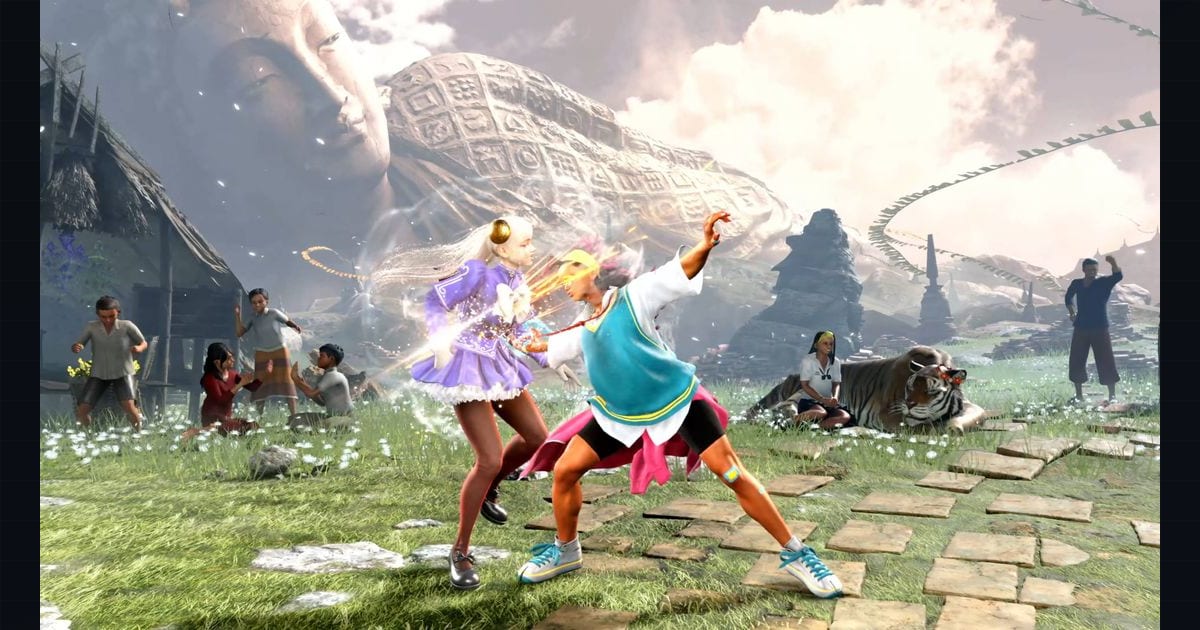
On August 3, 2026, Capcom released Yasmine as the first character in Street Fighter 6 Year 4. The Filipino martial artist is the first Eskrima practitioner on the Street Fighter roster and joins the game across PlayStation 5, PlayStation 4, Xbox Series X|S, PC, and Nintendo Switch 2.
Who is Yasmine
Yasmine learned Eskrima alongside her Kuya—her older brother—under the guidance of her Lolo, her grandfather. After her brother disappeared, she put down her karambit knife and stepped away from fighting. FooTube videos of a certain French supermodel eventually inspired her to pick the blade back up and search for her sibling. That backstory frames a fighter built around speed, aggressive pressure, and the Eskrima tradition of close-range weapon work.
Yasmine is available now to players who own or purchase the Year 4 Character Pass or Year 4 Ultimate Pass. She is the first of four Year 4 additions, with Arjun, Tifa from the Final Fantasy VII Remake series, and Bosch still to come.
Core moves and chains
Yasmine’s moveset favors rapid movement and sustained offense. Many of her techniques are designed to chase opponents down, extend combos, or bait responses.
- Daloy ng Tubig: A quick advancing knife attack that can open a combo or extend one that is already in progress. It is one of her primary neutral tools.
- Alon: A follow-up to Daloy ng Tubig where Yasmine lashes out with a multi-slice hit. The attack’s ending changes depending on the strength used, and successful strikes place her in Bayani Mode.
- Talim ng Hangin: A spinning low sweep that advances forward. Depending on strength, it can close distance or bait an opponent’s attack. Landing it also activates Bayani Mode.
- Mukha ng Langit: A forward flip that can mix up opponents with either a forward swipe or an upside-down spinning back hit, giving Yasmine additional close-range options.
- Lipad ng Agila: A multi-hit aerial attack where Yasmine leaps into the air in a flurry of kicks.
- Pangil sa Likuran: A swirling projectile that travels at varying speeds, letting Yasmine pressure opponents and pursue openings from a distance.
Together, these moves create a toolkit that rewards players who want to stay on the offensive. Several of them naturally chain into Bayani Mode, which is the central mechanic that separates Yasmine from the rest of the cast.
Bayani Mode explained
Bayani Mode is a powered-up state that Yasmine enters after landing specific moves. Once active, the mode changes her attacks and lets her apply more pressure. Capcom designed the trigger conditions to be easy to meet: Daloy ng Tubig into Alon is a common input pattern, and the Level 1 Super Art Hiwa ng Kalangitan also transitions directly into the state.
Because the activation is built into everyday specials, players can enter Bayani Mode without memorizing an unusual sequence. The mode then rewards aggressive decision-making by making her specials and pressure stronger. This makes Yasmine appealing to both newer players who want straightforward access to a powered-up state and experienced players who can layer Bayani timing into longer combos.
Bayani Mode also interacts with Yasmine’s Super Arts. Her Level 2 Super Art, Nakatagong Lakas, grants a temporary boost that lets her continue using special moves while remaining in Bayani Mode. During that Super Art she can also use Linya ng Liwanag, a dash-through attack that strikes from behind.
Super Arts
Yasmine’s three Super Arts give her damage, setup, and extended pressure:
- Hiwa ng Kalangitan (Level 1): Yasmine kicks the opponent into the air, slams them back down, and transitions into Bayani Mode. The input cost is relatively low, so it works as both damage and a state activator.
- Nakatagong Lakas (Level 2): Yasmine focuses her energy for a limited-time boost that keeps her in Bayani Mode while letting her use special moves. It also unlocks Linya ng Liwanag, a behind-the-dash strike.
- Pamumukadkad ng Sampaguita (Level 3): Yasmine spins the opponent, gathers energy, and unleashes an all-out finishing attack.
The Level 1 Super Art is particularly notable because it turns a common resource spend into a persistent advantage. Rather than treating Bayani Mode as a rare power-up, Yasmine can treat it as a regular part of her game plan.
Costumes and customization
Yasmine launches with two outfits. Outfit 1 shows her in Eskrima combat attire, while Outfit 2 places her in a school uniform. The second outfit can be unlocked by maxing out her Acquisition Gauge in Avatar Arcade Mode or by purchasing it with Fighter Coins.
Year 4 and battle balance
Yasmine’s release coincides with Battle Balance adjustments for the entire Street Fighter 6 roster. Capcom published a Battle Change List ahead of maintenance, so players should review those notes to see how the broader cast was adjusted alongside the new fighter.
The Year 4 pass structure also gives a clear view of Capcom’s remaining DLC plan. After Yasmine, Arjun, Tifa, and Bosch will round out the Year 4 roster. That lineup mixes a new original character, a returning guest from Final Fantasy VII, and a World Tour figure, suggesting Capcom wants to keep the player base engaged across multiple audience segments.
Yasmine arrives alongside a Battle Balance update that touches every member of the cast. That timing is typical for Capcom: new fighters are paired with tuning changes so the overall meta shifts rather than simply adding one more character. Players should expect ranked and casual queues to reflect both Yasmine’s arrival and the broader adjustments.
Practical combos and game plan
A straightforward opening for Yasmine is to confirm a hit with a normal and cancel into Daloy ng Tubig, then choose Alon based on the situation. Light Alon is safer on block, while heavier versions lead to better damage and a longer Bayani Mode. Once Bayani Mode is active, players can press advantage with enhanced specials, drive rushes, or throws to keep the opponent guessing.
Talim ng Hangin serves as both a combo extender and a bait tool. Because the move advances low to the ground, it can catch opponents who expect a standing approach. Mukha ng Langit adds an overhead flip option that can be followed by Kulog or Ulan depending on spacing, creating mix-ups at close range. Lipad ng Agila can be used as an anti-air or a pressure tool, while Pangil sa Likuran helps close distance against cautious opponents.
Her Level 1 Super Art is cheap and useful, which means players can build a game plan around entering Bayani Mode early and often. The Level 2 Super Art is best saved for moments when a long combo or a tricky escape is needed, since the temporary boost and Linya ng Liwanag extension can turn a defensive scramble into an offensive opportunity.
Because Bayani Mode is tied to common moves, Yasmine players will need to avoid becoming predictable. An opponent who expects the Daloy ng Tubig into Alon pattern can block or interrupt it. Mixing in throws, Drive Rushes, and the low-hitting Talim ng Hangin will be essential to keep opponents honest.
How Yasmine fits the Street Fighter 6 roster
Yasmine’s design leans into mobility and pressure rather than zoning or defensive control. Her projectile is more of a spacing and chase tool than a keep-away weapon, and her close-range chains emphasize frame advantage and mix-ups. The Bayani Mode mechanic gives her a consistent reward for landing hits, which should make her feel threatening once she finds an opening.
For players who enjoy rush-down characters, Yasmine offers a relatively accessible entry point. The Daloy ng Tubig chain uses familiar quarter-circle inputs, and the follow-up Alon changes based on punch strength, giving players a simple but expressive decision tree. Her Super Arts then layer additional options on top of that foundation.
Capcom has positioned Year 4 as a continuation of the post-launch support that has helped Street Fighter 6 sell more than seven million units. By adding a fighter with a clear mechanical identity and an easy-to-understand powered-up state, the studio is reinforcing the game’s reputation for approachable but deep characters.