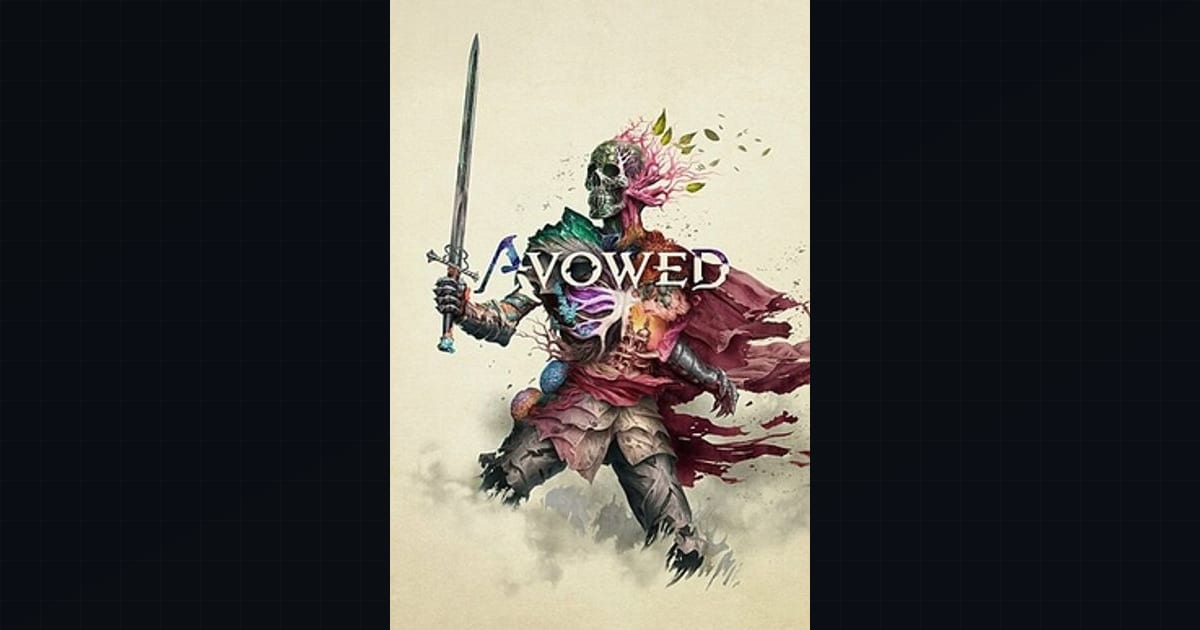
Obsidian Entertainment has published extensive combat loadout notes for Avowed, set in the world of Eora (Pillars of Eternity). The first-person RPGRPG. Role-Playing Game — a game built around character progression, story, and player choices. emphasizes fluid weapon and magic swapping without rigid class restrictions.
TL;DR
- What changed: Obsidian detailed Avowed’s dual-wield combat, elemental synergies, and factionfaction. An in-game group or nation players can align with or fight against, with its own goals and reputation system. reactivity.
- Why it matters: Dropping the alignment meter signals faction-level consequences over binary morality.
- Who should care: Obsidian fans and first-person RPG players craving systemic depth.
Loadout & Combat Mechanics
- Dual-Wielding Variety: Players can dual-wield pistols, pair a sword with a spell grimoire, or hold two elemental wands simultaneously.
- Elemental Synergies: Freezing an enemy with ice magic makes them susceptible to crushing bludgeoning damage from heavy warhammers.
- Companion AI Tactics: Companions provide active crowd-control abilities and comment on quest choices based on alignment values.
The headline here isn’t the weapon list — it’s the loadout philosophy. Obsidian’s Pillars of Eternity games classically enforced party roles and ability trees; Avowed instead collapses that structure into a first-person hybrid builder where the combination of items in your left and right hands effectively becomes your class. A sword-plus-grimoire pairing, a dual-wand casting setup, and a pistol dual-wield are not cosmetic variants but three meaningfully different combat grammars — melee-poise management, spell-cadence juggling, and ranged burst pressure respectively. The absence of rigid class gates signals a deliberate shift from build-sheet theorycrafting toward moment-to-moment loadout switching as the primary skill expression.
The elemental synergy example is the most mechanically revealing detail. Freezing a target to open it up to bludgeoning damage from a warhammer is a soft version of the “status-then-detonator” loop that built Immortals of Aveum and the better action-RPGs of the last decade, but with an Obsidian flavor: the payoff window rewards weapon switching rather than stacking more of the same element. If ice opens bludgeoning vulnerabilities, the design is implicitly nudging players to carry complementary gear rather than min-max into one damage type — a build constraint enforced by design instead of by stat sheets.
Narrative Choice & Reactivityreactivity. When the game world changes in response to player choices — NPCs remember your deeds, towns reshape, dialogue shifts.
Quests feature branching dialogue outcomes with no singular binary moral alignment meter. Regional factions react dynamically to decisions made throughout the Living Lands.
This is the more consequential half of the disclosure for Obsidian’s audience. The studio’s reputation — Fallout: New Vegas, Pillars of Eternity II, Tyranny — rests on consequence webs rather than moral thermometers, and dropping a binary alignment meter is less a new design than a recommitment to that identity after The Outer Worlds’ comparatively binary flavor alignments. Faction-level reactivity across the Living Lands implies state flags tracked per region rather than a single reputation axis, which is the architecture that actually enables replayable quest lines: a decision that alienates one faction while strengthening another creates mutually exclusive content rather than recolored endings.
The companion layer reinforces this. Companions that comment on quest choices “based on alignment values” — plural, per-companion values, not the player’s global karma — is structurally closer to New Vegas’s companion reactivity than to a simple approval slider. Combined with their active crowd-control role in combat, companions are being positioned as both mechanical units and narrative witnesses, which is where Obsidian’s writing has historically done its best work.
Why the Combat Model Matters
First-person hybrid combat has a poor track record. Dark Messiah of Might and Magic (2006) remains the reference implementation, and most attempts since — including the Elder Scrolls games’ own melee — have leaned on AI generosity to mask floaty hit response. The genre’s problem has never been imagination; it’s feedback density. Attack cadence, hit-stop, enemy reaction states, and input buffering determine whether dual-wielding a wand and a sword feels like a system or like swinging through fog.
That Obsidian is publishing loadout notes this granular, ahead of the February 18, 2025 window, suggests the studio knows first-person combat will be Avowed’s live-fire exam. The elemental-synergy loop is the right bet strategically: it moves the depth axis from animation polish (where a mid-budget RPG cannot outspend action specialists) to system interaction (where Obsidian’s systems-design bench is its actual strength). Freeze, shatter, control, reposition — if encounter design consistently supports those chains, player reviews will credit “combat depth” even if raw melee weight only clears the genre’s middle bar.
The companion crowd-control detail matters for the same reason. Offloading stuns, roots, and interrupts onto directed companion abilities converts the player from the sole source of crowd control into a commander of it — a meaningful genre departure from Skyrim-likes where companions are inventory mules with aggro problems, and a direct descendant of Pillars’ party-tactics DNA ported into a first-person frame.
The Take
Avowed’s design sketch reads like a studio playing to its comparative advantages: consequence-driven narrative systems and combinatorial loadout depth, wrapped in a presentation tier it finally has the budget to ship. The honest risk is the opposite of most reveals — the systems sound right, and the execution surface is enormous. Dual-wheel weapon pairing across melee, firearms, and two schools of casting means the animation, collision, and balance workload is several times that of a class-locked game, and every undercooked loadout combination will be discovered and dissected in week one.
But the absence of an alignment meter is quietly the strongest signal in the whole briefing. Studios drop binary morality systems when they expect their writing to carry reactivity instead of their UI. That’s a confidence statement.
What It Signals
For Obsidian under Xbox Game Studios, this is the first post-acquisition tentpole where the studio isn’t rescuing a licensed property or shipping a lower-scope project — it’s expanding its own IP universe with first-party resources. The Living Lands setting, new to Eora fans, de-risks continuity baggage from the Pillars games while retaining the lore substrate, which is the exact playbook Bethesda ran when it moved Fallout from isometric to first-person.
More broadly, Avowed lands in a first-person RPG segment with remarkably little current competition at the systemic end: Bethesda’s next Elder Scrolls is years out, and most first-person fantasy releases trend toward survival or action. If the loadout-switching and faction-reactivity systems deliver at even 80% of the briefing’s ambition, Obsidian owns the “systemic first-person RPG” lane by default — and the impact score of 9 reflects how rare that positioning window actually is.
The PC spec line also quietly confirms a current-gen-scoped title without next-gen gatekeeping:
| Tier | CPU | RAM | GPUGPU. Graphics Processing Unit — the chip that renders the game's visuals; the main driver of framerate and image quality. |
|---|---|---|---|
| Minimum | Intel Core i5-8400 / AMD Ryzen 5 2600 | 16 GB | NVIDIA GTX 1070 |
| Recommended | Intel Core i7-10700K / AMD Ryzen 5 5600X | 16 GB | NVIDIA RTX 3070 |
A GTX 1070 floor and RTX 3070 recommendation with 16 GB RAM means accessible to the installed base, but with enough recommended headroom that fidelity scaling won’t be the story. The story, for once, is the systems.
Avowed shipped on February 18, 2025, so every system described here is now testable rather than theoretical. The loadout-switching thesis either survives contact with shipped balance or it doesn’t — and post-launch patch notes are where that verdict will surface.
Next read
- For the mechanical follow-up, see the Avowed companion ability synergy build guide.
- Both Avowed breakdowns live at the Avowed coverage hub.