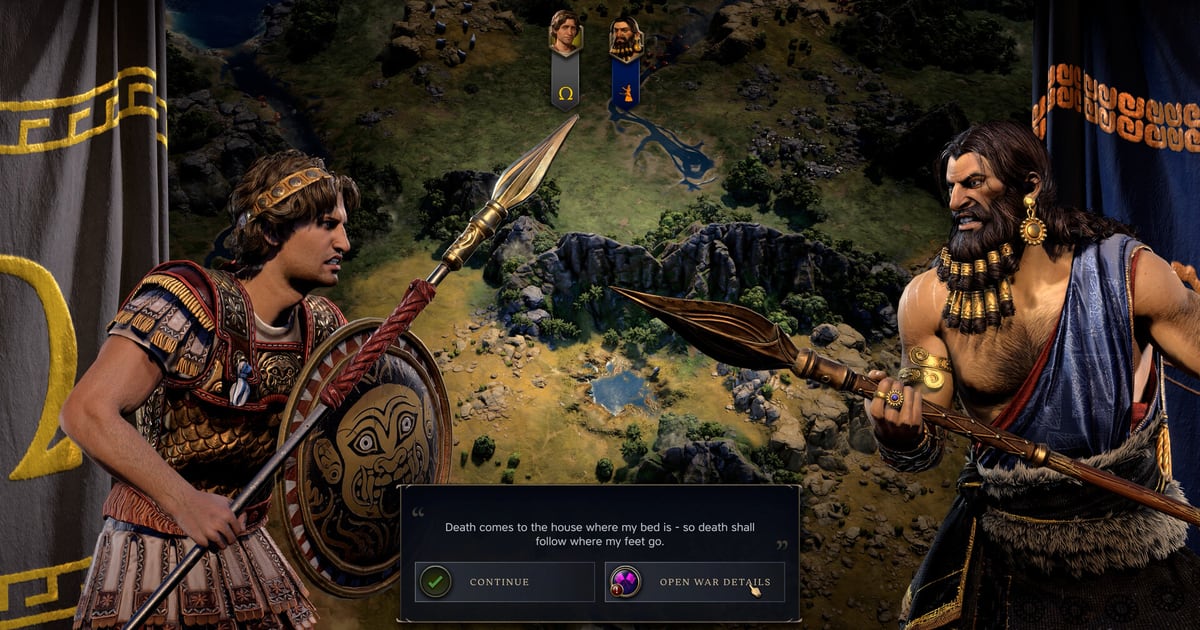
The most revolutionary departure in Sid Meier’s Civilization VII is the abolishment of the monolithic 4,000-year uninterrupted campaign. Instead, games are divided into three distinct, self-contained historical Ages: the Antiquity Age, the Exploration Age, and the Modern Age. At each transition, the world enters a period of crisis, geographic horizons expand, and players evolve their civilization into a new culture matching their historical achievements.
What this covers: Age Crisis milestones, Triumph and Dedication scoring (since the 1.4.0 Test of Time update), Civilization switching, and carried-over perks. Why it matters: Entering a new Age without banking Major Triumphs resets your geopolitical standing, wiping out technological leads. Who should pick this: Leaders preparing for their first Antiquity-to-Exploration transition without collapsing into dark age crises.
The Three Ages Framework
Unlike previous entries where you led one civilization (e.g. Rome) from stone age spears to space shuttles, Civ 7 mirrors historical evolution:
| Historical Age | Map Scope & Horizons | Gameplay Focus | Example Civilization Evolution |
|---|---|---|---|
| Antiquity Age | Regional home continent | City founding, resource claims, local pantheons | Rome, Egypt, Greece, Maurya |
| Exploration Age | Ocean navigation, new continents | Colonial expansion, world religion, maritime trade | Songhai, Spain, Normans, Abbasids |
| Modern Age | Complete interconnected globe | Industrial production, ideological blocs, World Wars | French Empire, America, Meiji Japan |
At 70% of the Age meter, a themed Crisis triggers. A random theme strikes every empire — Invasion, Plague, or Revolts in the Antiquity Age; Plague or Religious Revolts in the Exploration Age — forcing players to slot mandatory Crisis Policies while negative events such as building destruction and unrest spread through their settlements.
Triumphs and Dedications: Earning Your Carried-Over Perks
At launch, each Age measured performance across four distinct Legacy Paths — but the free Test of Time update (1.4.0, May 2026) retired them: “Legacy Paths have been replaced with Triumphs.” The live game now scores optional Triumphs tied to six attributes — Militaristic, Cultural, Scientific, Economic, Diplomatic, and Expansionist — and the Classic Triumph set keeps the original goals playable:
- Militaristic: Conquering and holding rival settlements.
- Economic: Establishing extensive trade routes.
- Cultural: Building world wonders and earning social civics.
- Scientific: Completing historical codices and researching era master technologies.
Major Triumphs require long-term commitment — Firaxis cites goals like having a Commander with 8 Promotions, and the final tiers of the old paths, such as conquering and holding six settlements, live on among them. Each Major Triumph grants a Dedication for the next Age. When the Age concludes, you no longer spend points: you simply pick three Dedications from the ones you have unlocked, with five defaults always available and more earned from leader level-ups and managing the previous Crisis well. Veteran Commanders carry over for free — they are never removed at an Age transition, and a fallen one respawns in your Capital with all its Promotions intact, each protecting up to four additional units from deletion.
Choosing Your Next Civilization
When entering the Exploration Age, your starting Antiquity civ transforms. You are not forced into a single path; evolution options unlock based on:
- Historical Continuity: Rome naturally qualifies to transition into the Normans or the French Empire.
- Geographic Reality: Possessing extensive horse herds unlocks Mongolia or steppes empires.
- Leader Archetype: Your immortal Leader (e.g. Augustus, Hatshepsut) remains constant throughout all three Ages, maintaining their unique leader traits while guiding the evolving civilization.
How Age Progress and Crises Actually Work
The Age meter is the timer that ends each era. Every turn adds a small amount of progress; researching Future Techs and Future Civics accelerates it and actively penalizes civilizations that have fallen behind, and eliminating a rival civilization delivers a significant jump. On standard speed an Age runs roughly 75-125 turns, and the Antiquity Age normally carries the most turns of the three.
At 70% the Crisis opens with a Narrative Event that reveals its theme, and the pressure escalates in three stages:
| Age Meter | Crisis Policies Required | Event Severity |
|---|---|---|
| 70% (Stage 1) | 1 mandatory Crisis Policy | Light negative events begin |
| 80% (Stage 2) | 2 mandatory Crisis Policies | Negative events fire more often |
| 90% (Stage 3) | 3 or 4 mandatory Crisis Policies | Severe events, maximum instability |
Crisis Policies occupy their own separate policy set and are largely negative, closer to Civ VI: Rise and Fall’s Dark Age cards than to the beneficial policies you slot from Civics. Larger empires draw harsher scaling, so a dominant civilization can be dragged back even though it has more tools to respond. Yields slow across the board during a Crisis, which makes banking Triumphs before the meter turns the safer play.
Age Transitions: What Changes and What Persists
Once the meter hits 100%, the Age ends and every player transitions simultaneously. Three things happen: you pick the civilization for the new Age, you choose which Foundations to carry forward, and the map itself evolves. Civilization selection now resolves at the end of the outgoing Age, so you can review your empire before committing.
Your next-civ options are not a free-for-all. They unlock through three channels:
| Unlock Channel | How It Works | Example |
|---|---|---|
| Historical / geographic tie | A rooted, historically plausible successor | Egypt to Abbasid; Maurya India to Chola India |
| Leader identity | Some leaders always unlock a specific civ | Himiko always unlocks Meiji Japan in the Modern Age |
| Gameplay condition | In-game actions open non-historical paths | Owning 3 Horse Resources unlocks Mongolia in the Exploration Age |
A new Age resets the Civics and Technology Trees, swaps in a fresh Resource set, and expands the playable map. Reaching Distant Lands is gated behind Shipbuilding in the Exploration Age. You can also overbuild: placing new Buildings on top of obsolete ones, which keep reduced yields because they are weaker in the new Age.
What survives is what keeps your empire recognizable. Leaders persist and keep leveling their attributes; Traditions unlocked from any civ’s Civic tree can be slotted in any Age; Wonders and Unique Quarters are Ageless and stay on the map; and Commanders carry their attributes and experience forward. If you are falling behind, a transition is explicitly a comeback window, and snowballing is deliberately harder to reach than in earlier games in the series.
Time-Tested Civs and Syncretism
Since Update 1.4.0 you are no longer forced to swap. You can start and stay as any civilization in any Age. Playing a civ outside its Apex Age - the era where it fields its full set of Unique Units, Unique Infrastructure, and bespoke Civic Tree - makes it Time-Tested, and the game keeps it competitive instead of stripping it down. Time-Tested civs receive a purpose-built Civic tree containing a civ-specific Civic, an Attribute-based Civic shared with other Time-Tested civs of that attribute, and a Syncretism Civic. A civ’s Unique Ability now carries across all Ages and often scales up to keep pace.
Syncretism is the payoff: finish the Syncretism node and you may adopt the Unique Unit or Unique Infrastructure of another civilization, limited to civs currently in their own Apex Age and to those with an unlock relationship to your leader or current civ. You choose once per Age. The alternative is Affirmation, which reinforces your own identity with civ-specific Traditions instead of borrowing. As a worked example, Rome in the Exploration Age can take Spain’s Tercio for stronger infantry or the Norman Motte and Bailey for Culture and defence. Rome in the Exploration Age is itself Time-Tested, and that is precisely the state that unlocks Syncretism.
Triumph Sets and Minor Triumphs
Triumphs are not one fixed list. Triumph Sets, configured in Advanced Options before a campaign, change which goals are live:
| Set | What It Changes |
|---|---|
| Default | The standard 30 Triumphs per Age |
| Trailblazer | Every Triumph becomes a race - only the first player to complete it is rewarded |
| Conqueror | Militaristic-focused Triumphs only |
| Classic | Only Triumphs that mirror the original Legacy Paths |
| Explorer | A mix of old and new goals built around exploration and the high seas |
Minor Triumphs are the lower-stakes half of the system: they pay out instantly with a free unit, Population, or Production, and many require you to be first, so prioritizing Philosophy for a Minor Triumph can compete directly with your Unique Civic. Major Triumphs are the long-investment half and grant the Dedications. In the Modern Age every Triumph is Minor - they function as accelerants, and some grant Victory Points such as GDP or Dominion. A random Crisis theme can also surface exclusive Crisis Triumphs in the Triumphs Screen, echoing the old hidden Crisis Legacy Cards.
Dedications at the Transition Screen
Dedication selection replaced point-spending outright. After the transition you choose three Dedications, all drawn from the ones you have unlocked and all equal in value - there are no individual point costs to weigh against each other. Five defaults are always available, and additional Dedications come from completing Major Triumphs, leveling up a leader, and managing the previous Crisis successfully. Because you can only field three, the intent is that you chase the Major Triumphs that fit your strategy rather than grinding every one available. One Workshop-era cost was removed outright: changing your Capital no longer consumes a Dedication.
Victory Scoring, Since 1.4.0
Triumphs feed a reworked Victory system that runs across all three Ages. Each of the four victory types now has its own score, and each can be started in the Antiquity Age:
| Victory | Score | Earned By |
|---|---|---|
| Military | Dominion | Settlements controlled, plus bonuses for original capitals, captured Settlements and Distant Lands Settlements |
| Cultural | Tourism | Wonders, Natural Wonders, Relics, Artifacts, Unique Buildings and Improvements; every Celebration |
| Economic | GDP | Slotted Resources and Gold Buildings each turn; returning Treasure Convoys; slotted Factory Resources |
| Scientific | Innovation | Techs, Codices and Special Projects; a race to 100 points plus an active Launch Pad held for five turns |
Military, Cultural and Economic victories are dominance checks against the runner-up. The required multiple falls as the campaign advances - 6x the second-place score between 50% and 80% Age Progress in Exploration, then 4x4X. eXplore, eXpand, eXploit, eXterminate — a grand-strategy subgenre about building a civilization over a long arc., 3x, 2x, 1.5x and finally 1.25x across the Modern Age - and holding the lead for five turns converts it into a win. If Modern reaches 100% with no winner, the highest score takes it, with tiebreakers that include your placement across all Victories and how many Major Triumphs you completed.