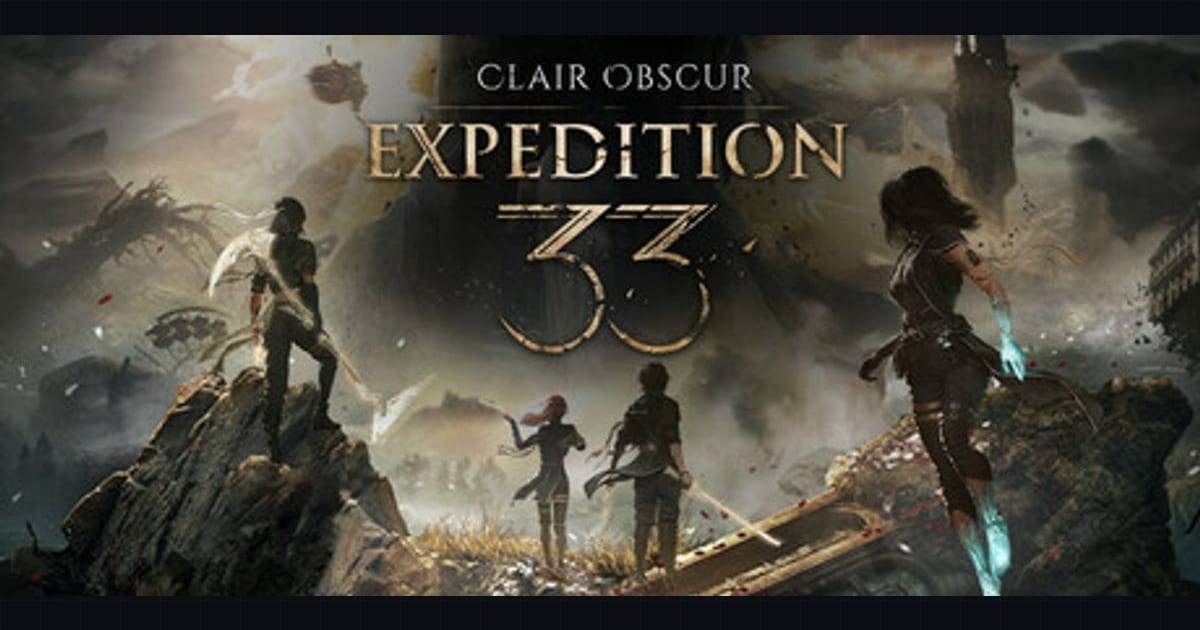
Clair Obscur: Expedition 33 layers a turn-based RPGRPG. Role-Playing Game — a game built around character progression, story, and player choices. over real-time defensive actions, and the difference between struggling and steamrolling in Act 3 comes down to two systems: Lumina, the passive-ability layer shared across the party, and the five attributes you raise every level. This guide covers how Pictos and Lumina interact, how the attribute system scales your weapons, and how to spend both across the five Expeditioners you field by Act 3 — Lune, Maelle, Sciel, Verso, and Monoco — for the strongest build you can field heading into the late game.
What changed
Clair Obscur: Expedition 33 launched April 24, 2025 on PC, PlayStation 5, and Xbox Series X|S, the debut title from French studio Sandfall Interactive, published by Kepler Interactive. The game bills itself as a turn-based RPG with unique real-time mechanics, where real-time actions — dodge, parry, counter, and free-aim — enhance the heart of turn-based combat. The build system sits at the intersection of gear, stats, skills, and character synergies, and the two customization layers that grow the most across the campaign are Pictos/Lumina and attributes.
The party evolves across the story. Gustave is the engineer protagonist of the early game, building Overcharge with his sword and pistol; by Act 3 he has stepped back and Verso — the dodge-and-parry-focused offensive support — has taken his roster slot, joining Maelle, Lune, Sciel, and the Gestral Monoco. That leaves five Expeditioners for your Act-3 build, each with a distinct mechanic: Maelle’s stance system, Lune’s elemental stains, Sciel’s card-deck and Twilight mode, Verso’s defensive counterplay, and Monoco’s stolen-Nevron skill set driven by his Bestial Wheel.
How it works
Pictos and Lumina
Pictos are items each character equips to boost core stats — health, attack power, speed, defense, critical rate — and each character can carry up to three. Beyond the stat boost, every Pictos carries a passive effect called a Lumina. Win four fights with a Pictos equipped and you “master” it, which unlocks its Lumina for any character to use. Other party members then spend acquired Lumina Points to equip that passive bonus, and they do not need the original Pictos it was attached to.
This is the core optimization loop: rotate Pictos between characters to master them quickly, because a mastered Lumina becomes shareable across the whole party. The practical effect is that one powerful passive — for example, a bonus that grants extra action points (AP) on kill — can be put on the menu for everyone, not just the character who first found the Pictos. Finding or buying a higher-level version of a Pictos you already own upgrades your copy, increasing its level, so revisiting Gestral Merchants and exploring for copies is worthwhile for both the stat floor and the mastery unlock.
Attributes
Each level grants points to spend on five attributes, and each attribute raises both a stat and your damage through weapon scaling. Next to each attribute you see a letter grade indicating how much damage a given weapon gains from that stat, so the weapon you have equipped should guide where your points go.
- Vitality increases maximum health.
- Might increases all damage dealt.
- Agility increases the speed stat, bumping you up the turn order and potentially letting you act more often.
- Defense reduces incoming damage.
- Luck boosts critical hit chance.
You can respec attribute points from the same Upgrade Attributes menu you use to spend them — resetting costs a Recoat and can only be done at an Expedition Flag rest point. Recoats are rare — earned mainly from bosses, Petank chases, merchants, and exploration finds — so early point placement matters. Vitality is the safe baseline for every character because it widens the survival margin between rests.
Build path
Lune — Agility and Might, with Defense
Lune is the party’s spellcaster and healer, and her utility makes keeping her alive a priority, so Defense plus regular Vitality investment is the defensive floor. Her mechanic relies on setting up elemental stains and then consuming them with skills, so the action economy matters: Agility lets her sneak into the turn order earlier to generate a stain you can follow up on the same round. Might amplifies the skills that consume stains. The pattern is to spend enough on Defense and Vitality to survive, then push Agility and Might so she acts early and her combos hit harder.
Maelle — Agility, Might, and Luck
Maelle’s stance-based combat makes her a versatile single-target DPS. Agility is the priority so she goes first, applying weakness or removing an enemy from the board before it acts. Several of her skills — Sword Ballet, Rain of Fire — hit multiple times, so Luck (critical hit chance) converts those multi-hits into burst damage. Her late-game Void skills such as Gommage and Stendhal are among the hardest-hitting single hits in her kit, so building her crit chance rewards you even more once they unlock. Might rounds out her all-damage scaling. Aim for an Agility-first build with Luck as the second priority and Might as the consistent baseline.
Sciel — Might and Luck
Sciel pairs a scythe with a deck of cards and is another strong damage dealer. Most of her skills hit multiple times, so Luck is a priority to maximize crits on those multi-hits. Might is worth heavy investment, especially later, because some of her late weapons — Charnon, for instance — already supply plenty of critical hit chance during Twilight mode, which frees you to lean on Might for raw damage. The Act-3 build is Luck early for consistent crits, then Might as the dominant stat once her weapon pool covers crit chance natively.
Verso — Vitality and Agility
Verso’s playstyle is built on dodging and parrying, so Defense is largely redundant — if you struggle to land his defensive inputs, he is not the right pick for you. Several of his skills sacrifice his health or debuff him, so Vitality softens that self-damage and widens his margin. As an offensive support, Agility lets him act early to use buff skills like Powerful, giving the team a head start, and his Speed Burst skill scales its damage off his speed. Vitality first for survivability, then Agility for turn order and skill scaling.
Monoco — Might and Luck, flexing
Monoco breaks the attribute rules more than any other Expeditioner. He does not learn new attacks from spending skill points in an ability tree — instead he steals powers from Nevrons defeated while he is in the active party by collecting their feet, and his Bestial Wheel cycles through masks that buff his skills. Because the skills he has available change as you defeat new enemies, the attributes worth investing in can shift across the playthrough. Might and Luck are the safe defaults: Might for all-damage scaling that works regardless of which stolen skill he is using, and Luck to convert multi-hit stolen abilities into crits. Treat Monoco as a flex build and re-evaluate his attributes whenever his kit changes meaningfully.
Lumina spending strategy
The Lumina layer is where the party becomes more than the sum of its parts. The objective is to master Pictos fast so their Lumina passives become shareable, then spend Lumina Points to equip the highest-impact passives on each Expeditioner.
A few principles shape the spend:
- Master before you spread. Equip a freshly found Pictos on whoever is about to fight four battles, so the mastery unlock happens quickly. Only after a Lumina is mastered does it become available party-wide.
- Match Lumina to mechanic. Passives that grant extra action points on kill pair naturally with multi-hit characters (Maelle and Sciel). Stain-related passives belong on Lune. Defensive and parry passives belong on Verso.
- Respect the attribute plan. A Lumina that boosts critical hit chance compounds with Luck investment, so put it on the characters you have built for crits rather than wasting it on a Might-focused character with low crit chance.
- Reserve points for new unlocks. Because new Pictos appear throughout the world and from Gestral Merchants, holding some Lumina Points in reserve lets you immediately equip a strong newly mastered passive instead of having to re-earn the points.
Act-3 team composition
With five Expeditioners on the roster, your Act-3 team picks three for the active party, while the rest go into reserve and step in only if the front line falls. A balanced loadout fields a primary DPS (Maelle or Sciel), a combo engine (Lune), and either an offensive support (Verso) or a flex (Monoco), with the unused Expeditioners waiting in reserve. The DPS slot’s attribute plan — Agility-first for Maelle, Luck-and-Might for Sciel — sets the team’s damage profile. Lune’s early turns generate the stains the DPS consumes, so her Agility investment is what makes the combo fire in the right order. Verso’s buffs and counters buy the turns the combo needs. Monoco fills whatever the encounter demands, with his Bestial Wheel supplying the buffs the rest of the team cannot.
What it means
By Act 3, the optimization that matters is not maxing one stat — it is the interaction between attributes and the Lumina layer. Attributes decide how hard each Expeditioner hits and how often they act; Lumina decides which passives compound across the party. The characters that share a stat priority (Luck for Maelle and Sciel, Agility for Lune and Verso) also share the Lumina passives that feed off those stats, so mastering the right Pictos early lets you equip the same crit or speed passive on multiple characters at once. Recoats are scarce, so the attribute decisions you make as each character joins are the ones you will mostly live with — which makes the first few levels with a new Expeditioner the most important build choices in the run.