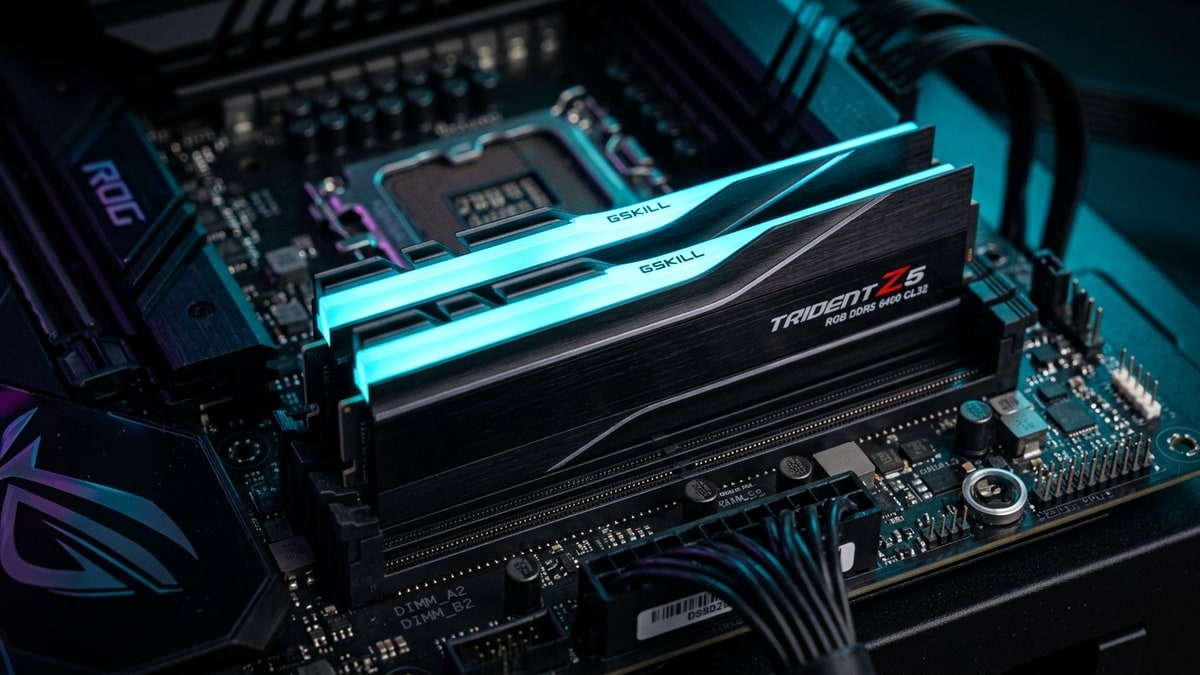
A new DRAM supplier rarely changes what you pay at the counter overnight. CXMT’s move into DDR5DDR5. A generation of system RAM (memory); newer and faster than DDR4. is the rare case where the supply effect is more visible than the price effect — and that distinction matters for anyone shopping memory in 2026.
Who CXMT is
ChangXin Memory Technologies, or CXMT, is China’s domestic DRAM champion, state-backed and headquartered in Hefei. The company has been producing DDR4 since 2019 on the back of heavy government investment, and its DDR5 push is the next step in a long-running effort to give China a credible domestic memory source. CXMT’s July 2025 IPO reinforced the scale of the ambition: the offering raised 57.9 billion yuan and the stock surged to make CXMT briefly China’s most valuable domestically listed company, with a market capitalization around 3.3 trillion yuan.
The IPO prospectus is revealing about where the money goes. Nearly 70 percent of the roughly 29.5 billion yuan earmarked for named projects goes to wafer lines and upgrading the DRAM processes CXMT already runs, with the rest funding forward-looking DRAM research. Notably, the filing discloses no dedicated high-bandwidth-memory project, which SemiAnalysis reads as an acknowledgment that CXMT is not yet ready to scale HBMHBM. High Bandwidth Memory — fast stacked memory used by some high-end GPUs and AI chips. profitably. The company’s HBM is roughly two generations behind the leaders, with an HBM3 8-high yield modeled around 25 percent. The strategic bet is conventional DRAM — exactly the part of the market the three leaders have been vacating.
Why the leaders left a gap
The three established DRAM makers — Samsung, SK hynix, and Micron — have spent two years redirecting wafer capacity toward HBM and high-capacity server DRAM, which pay far better. The trade is correct for their margins, but it has a cost: every line converted to HBM subtracts more bits than it adds, because a gigabyte of HBM eats roughly three times the wafer area of ordinary DRAM. SemiAnalysis models the market as short by a high-single-digit percentage of the bits it needs in 2026, widening into the low-to-mid teens in 2027. DRAM contract prices rose nearly 95 percent quarter-on-quarter in early 2026, per industry estimates, and PC makers went looking for anyone else who would sell to them.
That vacancy is what CXMT is filling. Its output is reportedly booked through the end of 2027, with Dell, HP, Lenovo, and Apple first in line and smaller brands waiting. Its server share of revenue rose from 8.4 percent in 2024 to 26.5 percent in 2025, and it has signed a five-year, $7 billion-plus server DRAM deal with ByteDance plus a reported $3 billion deal with Tencent. CXMT is scaling capacity aggressively — estimates put its 2024 output in the low hundreds of thousands of 300-mm wafer starts per month, climbing toward the mid-two-hundred-thousands through 2025.
The price myth
The expectation in the PC sector was that a new Chinese supplier would flood the market with cheap DDR5 and pull prices down. That is not what happened. Module vendors report that CXMT is not offering low-cost DDR5 supply; its output sells at parity with the three leaders and was recently above Samsung’s price for comparable server modules, per Reuters. SemiAnalysis puts CXMT’s cost per bit on DDR5 more than 30 percent above the leaders, partly because CXMT’s G4 process is a 1z-class node that trails the leaders’ current lithography, leaving its dies larger and more expensive per bit than Samsung’s.
That cost disadvantage is the structural reason the “cheap Chinese DDR5” story does not hold. CXMT cannot profitably flood the market at a discount when each die costs meaningfully more to make. What it can do, in a supply-constrained market, is sell everything it makes at parity because buyers simply need the volume. Its value to the market right now is availability, not price competition.
What to check when buying non-A-brand kits
CXMT’s chips are already reaching consumers through familiar packaging. The brand that ships in the box is not always the brand that made the silicon — vendors like Corsair have shipped Vengeance DDR5 kits using CXMT dies, and Chinese module brands market DDR5-6000 kits advertised as made with domestic CXMT ICs. The latency figures on those kits (CL36 timings) are on par with kits using Samsung, SK hynix, or Micron dies, and early retail pricing has been competitive.
For a buyer, that means the die source is a question worth asking but not a dealbreaker. The practical checks are:
- Vendor RMA policy and brand reputation. A kit’s warranty and return path are governed by the module brand, not the die maker. A recognized vendor with a clear RMA process matters more than the IC origin for most buyers.
- Rated speed and timings. CXMT-based kits are reaching DDR5-6000 with competitive CL36 timings, and reviewers have pushed CXMT memory to high speeds on AMD platforms in testing. Match the kit to your platform’s XMP or EXPO profile and verify the rated speed is supported by your motherboard and CPU.
- Voltage scaling and overclocking headroom. Independent testing of early CXMT dies found more resistance to voltage scaling and less manual-overclocking headroom than SK hynix dies. If you tune memory manually, that is worth knowing in advance; if you run at rated XMP/EXPO speeds, it is largely irrelevant.
- Thermal behavior. Early CXMT dies required redesign work to stabilize, and quality has improved though analysts note it still trails the leaders. Yields were still below commodity-DRAM norms mid-2025, so early-run kits warrant a stability check under your normal operating temperature.
- Capacity and platform limits. None of this is CXMT-specific, but in a tight market, 32 GB kits at DDR5-6000 remain the practical sweet spot for most builds; higher capacities and speeds carry the premium that supply constraint creates.
What it means for the market and for buyers
The net effect of CXMT’s DDR5 entry is not lower prices — it is more allocation. In a year when a memory crunch has pushed contract prices up sharply and the three leaders are busy with HBM, a fourth supplier selling at parity keeps the market from being tighter still. That helps PC makers secure volume, and it is why major OEMs are first in line. For an individual buyer, the benefit is indirect: kits stay available, and the brand on the box increasingly does not tell you whose silicon is inside.
CXMT’s cost disadvantage and yield gap mean it is not yet a true price competitor, and analysts frame its current volume push as the least threatening of its possible moves — the scenarios that would worry the leaders most are credible HBM and recognition as a second source by Western buyers, both still years out. For now, the practical guidance is to buy on brand reputation, warranty, and rated spec, to treat CXMT dies as a legitimate option at rated speeds rather than something to avoid, and to verify stability if you are tuning beyond spec. The market has a new memory maker. It just has not yet given buyers a reason to chase its chips specifically.
The thing to watch over the next 18 months is not price but yield and qualification. CXMT’s DDR5 quality has improved, and if yields climb from the below-norm levels reported mid-2025 toward the industry average, the cost disadvantage narrows and the parity pricing starts to leave room for movement. Validation by major PC makers is the other milestone — once CXMT dies appear as a qualified, not opportunistic, source in OEM spec sheets, the question for buyers shifts from “whose silicon is this?” to “does it matter anymore?” Until then, treat CXMT-based kits as a reasonable option at rated speeds, hold the brand and warranty above the die name, and let the market keep sorting itself out.