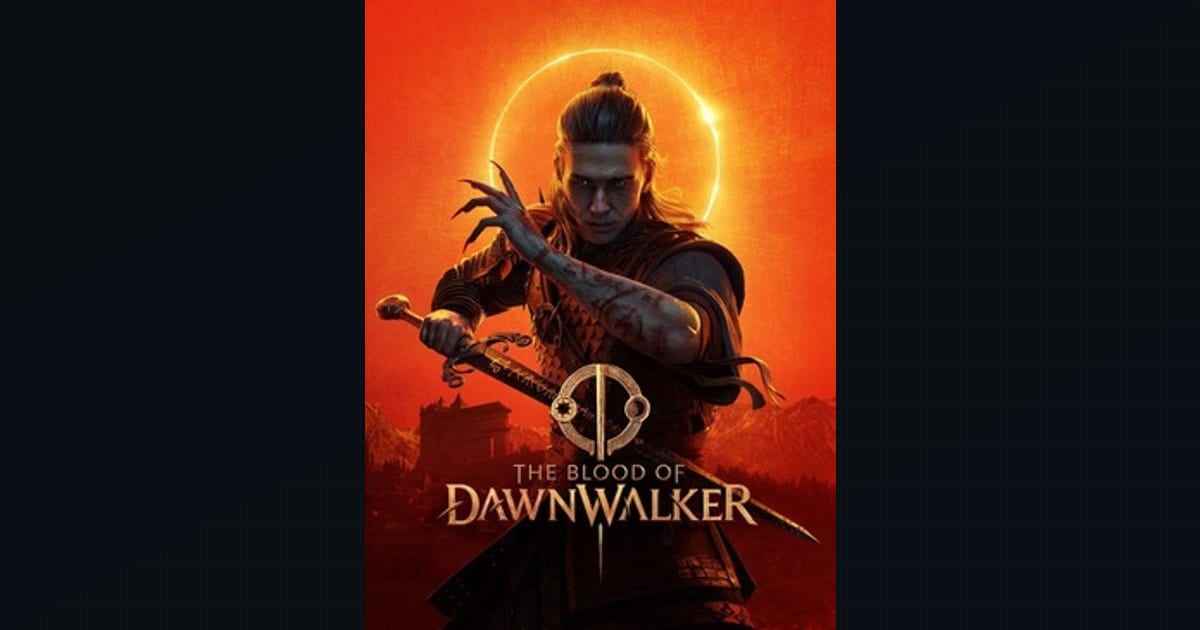
Rebel Wolves (founded by former The Witcher 3 game director Konrad Tomaszkiewicz) and publisher Bandai Namco have detailed preliminary technical goals for Dawnwalker, a AAA dark fantasy narrative RPGRPG. Role-Playing Game — a game built around character progression, story, and player choices. built on Unreal EngineUnreal Engine. A widely-used commercial game engine from Epic Games; powers many large-studio (AAA) games. UE5 is the current generation. 5.
What changed: Rebel Wolves detailed UE5 dialogue tooling, single-player focus, and a vampire-clan dark fantasy world. Why it matters: Custom narrative tech targets the branching-conversation bottleneck that caps narrative RPG scope. Who should care: Witcher 3 fans and single-player RPG players tracking the 2026 target window.
Studio & Technical Focus
- Unreal Engine 5 Narrative Tech: Custom dialogue tools enable dynamic camera placement and facial micro-expression rendering during branching storyline conversations.
- Single-Player Focus: Rebel Wolves reaffirmed a commitment to single-player story design, avoiding forced live-service mechanics or microtransactions.
- Gothic European World: Setting features a medieval European dark fantasy realm populated by rival vampire clans and occult factions.
Production Milestone
The development team confirmed that full production is underway, targeting native console performance along with high-end PC ray-tracing features.
Why the Narrative Tech Matters
The most quietly important line in this reveal isn’t the UE5 splash — it’s that Rebel Wolves is investing engineering hours in dialogue tooling rather than combat spectacle. Branching narrative RPGs live or die on their conversation systems, and the historical failure mode is well documented: games with thousands of branching lines frequently collapse into a “two characters stand still and trade lines in a locked over-the-shoulder shot” loop, because building bespoke cinematography for every conversation branch doesn’t scale. The result is the uncanny flatness that defined the weakest moments of even genre-defining titles.
A custom toolset that automates dynamic camera placement and micro-expression rendering during branched conversations is an attempt to kill that failure mode at the pipeline level. If the staging of a dialogue scene is derived from the dialogue graph rather than hand-authored per branch, then a writer adding a late-game branch gets cinematically staged delivery for free. That has a direct knock-on effect on how much branching content a studio of Rebel Wolves’ size can afford to ship — which is the single clearest constraint on narrative RPG scope. The pedigree here matters, too: Tomaszkiewicz directed The Witcher 3, a game whose quest design remains the genre’s reference point precisely because its conversations carried dramatic weight rather than functioning as exposition kiosks. This is a team that understands the problem from the inside, and it’s choosing to solve it in the engine rather than leave it to content teams to work around.
The Single-Player Signal
The reaffirmation of a purely single-player design — explicitly ruling out forced live-service mechanics and microtransactions — reads as more than PR comfort. It tells you where the production budget goes. Live-service scaffolding (server backends, seasonal content cadence, storefront plumbing, progression systems tuned around retention metrics) consumes an enormous share of a modern AAA RPG’s engineering capacity. Stripping that out means the UE5 investment lands in narrative systems and world simulation instead of monetization infrastructure. Bandai Namco’s involvement as publisher is worth noting here rather than treating as a footnote: a publisher greenlighting a single-player-only dark fantasy RPG in a 2026 window signals continued institutional confidence that the premium narrative RPG remains a viable commercial model, even as the wider industry’s live-service reckoning has made publishers twitchy about anything that isn’t a recurring-revenue machine.
The Context: Post-Sapkowski Gothic
A medieval European dark fantasy world of rival vampire clans and occult factions immediately invites the comparison Rebel Wolves surely expected: this is the space The Witcher vacated when CD Projekt RED pivoted toward full production on a new saga with an extended timeline. But the vampire-clan framing also puts Dawnwalker in conversation with a lineage that runs from Vampire: The Masquerade – Bloodlines through Vampyr — games where factionfaction. An in-game group or nation players can align with or fight against, with its own goals and reputation system. politics among the undead doubled as the social-simulation layer. The difference is scale and tech budget: none of those predecessors had UE5-fidelity animation and camera tooling behind their faction intrigue. If Rebel Wolves pairs clan politics with the reactive-world systems the studio has hinted at, Dawnwalker could occupy the “systemic dark fantasy” niche that the AAA space has largely abandoned to indies and AA studios.
The hardware targets reinforce the positioning. The confirmed spec floor — an i5-10400F or Ryzen 5 3600, 16 GB RAM, and an RTX 2070 as minimum — confirms native current-gen console parity with high-end PC ray tracingray tracing. A rendering technique that simulates how light bounces, for realistic shadows, reflections, and lighting — costly to compute. as a showcase tier. The recommended tier (i7-13700K / Ryzen 7 7800X3D, 32 GB RAM, RTX 4070 Ti) suggests Dawnwalker is targeting the kind of CPU-heavy world simulation that makes the X3D chips sing.
The Take
The risk profile here is schedule and scope, not concept. “Full production underway” for a 2026 target on UE5 is ambitious but plausible for a studio built around veterans who shipped under far worse constraints. The genuinely encouraging part is what Rebel Wolves chose to talk about in a technical reveal: not Nanite demos, not open-world square mileage, but the tooling that keeps branching narrative from collapsing under its own weight. That’s the reveal of a studio that has correctly identified its genre’s bottleneck. If the dialogue-tech investment pays off at scale, Dawnwalker won’t just be a Witcher spiritual successor by lineage — it’ll be one by mechanical competence, which is the only lineage that players actually feel. Keep this on the radar; the narrative-architecture deep dives are where we’ll learn whether the ambition is real.
Next read
- For the latest on the release itself, see The Blood of Dawnwalker Locks September 3 Release, 10 Minutes of New Gameplay.
- Weighing it against the year’s other RPGs? See the 2026 Action & Narrative RPG Buyer-Guide.
- All our Dawnwalker reports live on The Blood of Dawnwalker coverage hub.