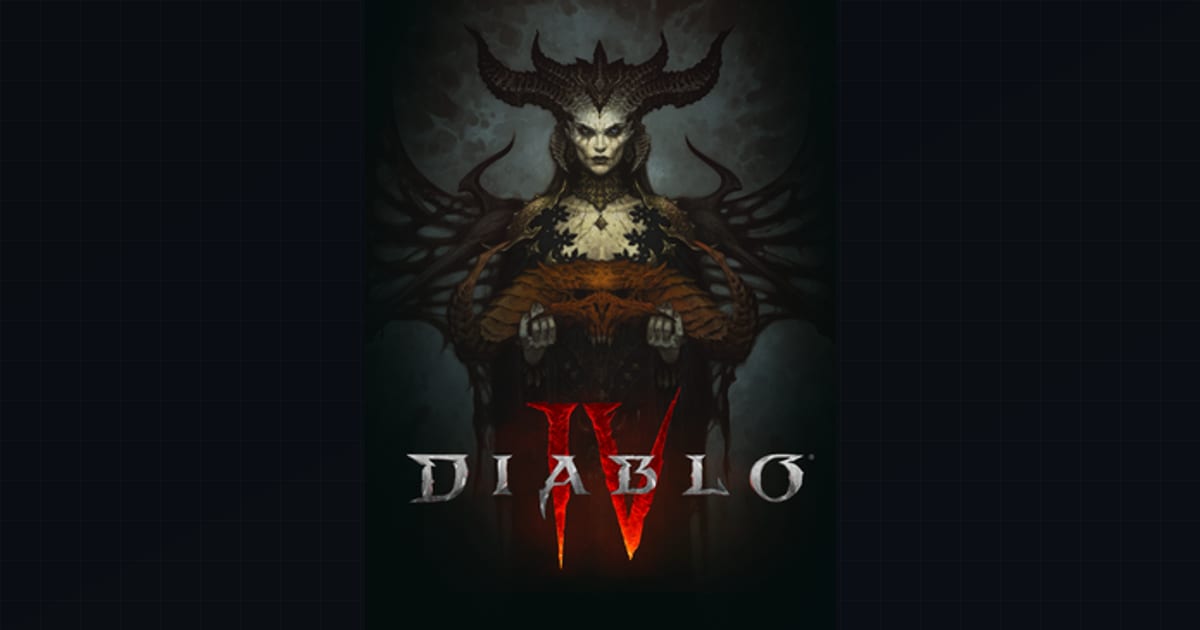
Season of Death Awakening launched June 30, 2026 as Diablo IV’s Season 14, and it rewired how loot flows through Sanctuary. The seasonal mechanic, the economy it feeds, and the 3.1.x patch notes together moved the game toward a system where Mythic crafting, Lair Boss farming, and a new reputation board sit at the center of the grind.
What changed
The seasonal theme is built around Pandemonium Ruptures — arcane rifts torn between Sanctuary and Pandemonium. Three types appear:
- Ruptures (Normal) spawn throughout the overworld and are especially common in Helltides.
- Surging Ruptures can spawn in place of any local event inside a Helltide.
- Colossal Ruptures appear only in the Fields of Desecration, the World Boss Arena southeast of Zarbinzet.
Players kill guardians around Death’s Head Idols to open a Rupture, then hold it open by killing monsters and closing Tears. The longer a Rupture stays open, the more rewards it pays. Closing it earns Glints of Hope, which are redeemed at the reputation board in Zarbinzet.
Layered on top are two encounters that turn the season into a farming loop. Realmwalker 2.0 is summoned by completing Surging Ruptures with Mastery or by clearing a Colossal Rupture, and defeating it opens a portal to the Deathtoll Chamber — a one-room mini-dungeon that also appears inside Nightmare Dungeons with the Rupture affix after enough Tears are closed. The Deathtoll Chamber is the best source of Superior Lair Keys, which open the seasonal Lair Boss’s Hoard in Torment I and above.
The seasonal Lair Boss is the Corrupted Reaper, found in the Pandemonium Threshold in Zarbinzet. Defeating it during the seasonal questline unlocks it as a repeatable Lair Boss, and it offers the best direct drop chances for Mythic Uniques and for Pandemonium Fragments, the seasonal currency that drives the new crafting economy.
How the economy works
Season of Death Awakening introduced Mythic Uniques 3.0, where Mythic becomes a modifiable Item Quality rather than a fixed rarity. Any Unique can now drop as a Mythic Unique or be converted into one. Mythic Uniques are always Ancestral, gain a 30% boost to their Unique Power, and roll all other affixes at maximum values.
Pandemonium Fragments are the currency that powers conversion, and they enter the economy from three official sources:
- The Season Reputation board and Resplendent Caches.
- Killing the Corrupted Reaper Lair Boss.
- The repeatable Glints of Hope reputation reward, which the 3.1.1 patch set to guarantee a Pandemonium Fragment.
Conversion happens through two paths. The Horadric Cube’s Upgrade to Mythic recipe costs five Pandemonium Fragments (reduced from five to four in 3.1.1, then the recipe was renamed from “Upgrade” to “Craft” in 3.1.2 for naming consistency). The Jeweler path costs 18 specific Runes and 3 Resplendent Sparks. A Unique for a given slot produces a Mythic Unique for the same slot — boots in, boots out — and the result is always usable by the class crafting it.
One constraint matters: players can only equip one crafted Mythic Unique at a time. Mythic Uniques from drops or caches have no such limit. The patch also clarified that Iconic Mythics like Melted Heart of Selig and Ring of Starless Skies can no longer be made at the Jeweler, but random Iconic Mythics can still be produced at the Blacksmith — a deliberate move to stop a small set of items from crowding every endgame build.
The loot-tuning patch notes
The 3.1.0, 3.1.1, and 3.1.2 patches adjusted drop rates and itemization in ways that directly feed the seasonal economy.
Ruptures and density tuning. The 3.1.0 PTR-to-live changes reduced elite spawn rates and mob density on Normal difficulty so early leveling did not feel overtuned, while Tears now close faster and appear more often, and Ruptures spawn less frequently inside the Pit so they do not crowd the endgame dungeon. Rewards for completing Ruptures and Realmwalker encounters were generally improved.
Lair Boss key flow. Superior Lair Keys replaced the old Betrayer’s Husk naming now that Belial is not the only Tier 3 boss, and Deathtoll Chambers always reward at least one Superior Lair Key in high Torment levels. The Corrupted Reaper now drops up to two Pandemonium Fragments, scaling with Torment level, and the repeatable Glints of Hope reward guarantees one. The Echoing Hated key drop rate from Elites and Champions was increased, and Echoing Hatred now caps at wave 150.
Mythic and Unique drop chances. The base-game fixes included a correction that was preventing certain Unique sources — including Lair Bosses — from dropping as Mythic, and an increased chance that naturally dropped Mythics roll as Iconic Mythics. El’Druin, Sword of Justice was added to the Mythic Unique Cache from the Blacksmith, and Mythic Unique items can now be recycled. The 3.1.3 patch also fixed the Corrupted Reaper boss to clear its previous corpse on resummon, and allowed party members joining an active Echo of Mephisto encounter to use a portal into the fight’s third stage — both small quality fixes that smooth the seasonal boss loop.
Crafting material tuning. Refined Primordial dust drop rates were increased significantly in Torment VII and above, while Chromatic Tuning Prism drop rates were reduced. Baleful Fragments can now convert to Forgotten Souls at the alchemist, and Helltide chest rewards were improved. These changes make high-Torment farming the clear path to crafting materials and push the seasonal loop toward Lair Boss and Rupture farming rather than open-world chests.
Unique itemization. All Unique, Mythic Unique, and Iconic Mythic items now carry two guaranteed affixes — a reversal of the PTR’s single-affix plan after feedback that one guaranteed affix diluted item identity. Affixes added through Enchanting, Transfiguration, and Tempering are now always max rolls when added to a Mythic Unique, and Unique items can have one affix rerolled at the Enchanter. Chaotic and Focused Reroll were removed for Unique and Mythic Unique items.
War Plans and party economy. War Plans now support fully shared party boards with synchronized progression and objectives, Helltide quest progress moved from opening chests to collecting a flat Cinder spend (75 in Normal through Penitent, 250 in Torment I+), and experience rewards were increased in Torment 8 and above. The Infernal Hordes Gold Chest now grants more gold scaling with Aether. Additional War Plan options were added for Helltide and Nightmare Escalations, and the messaging around how party-based board generation behaves was clarified to match the host player’s progression.
What it means for players
Season of Death Awakening’s loop is clear: hold Ruptures for Glints of Hope, redeem them at the reputation board for Pandemonium Fragments and caches, farm the Deathtoll Chamber for Superior Lair Keys, then spend those keys on the Corrupted Reaper for direct Mythic drops and more Fragments. Convert a target-slot Unique into a Mythic through the Cube or the Jeweler, and remember only one crafted Mythic can be equipped at once.
The loot-tuning patches tilted the economy toward high-Torment farming: better material drops, better Lair Boss key flow, and improved chest rewards make T7+ the efficient band. For players who want to engage the seasonal mechanic without chasing Mythics, the reputation board and Glints of Hope alone provide a steady stream of caches, runes, and charms. For those pushing the top end, the Corrupted Reaper and the Deathtoll Chamber are where the season’s best rewards concentrate.
A practical rotation that fits most schedules: spend a session running Ruptures and Realmwalkers to bank Glints of Hope and Superior Lair Keys, redeem at the reputation board between sessions, then dedicate the next session to Corrupted Reaper kills and Cube conversions. Because only one crafted Mythic can be equipped at a time, plan which slot to craft first — the one that unlocks a build — rather than scattering Fragments across random conversions. The economy rewards focus over volume.