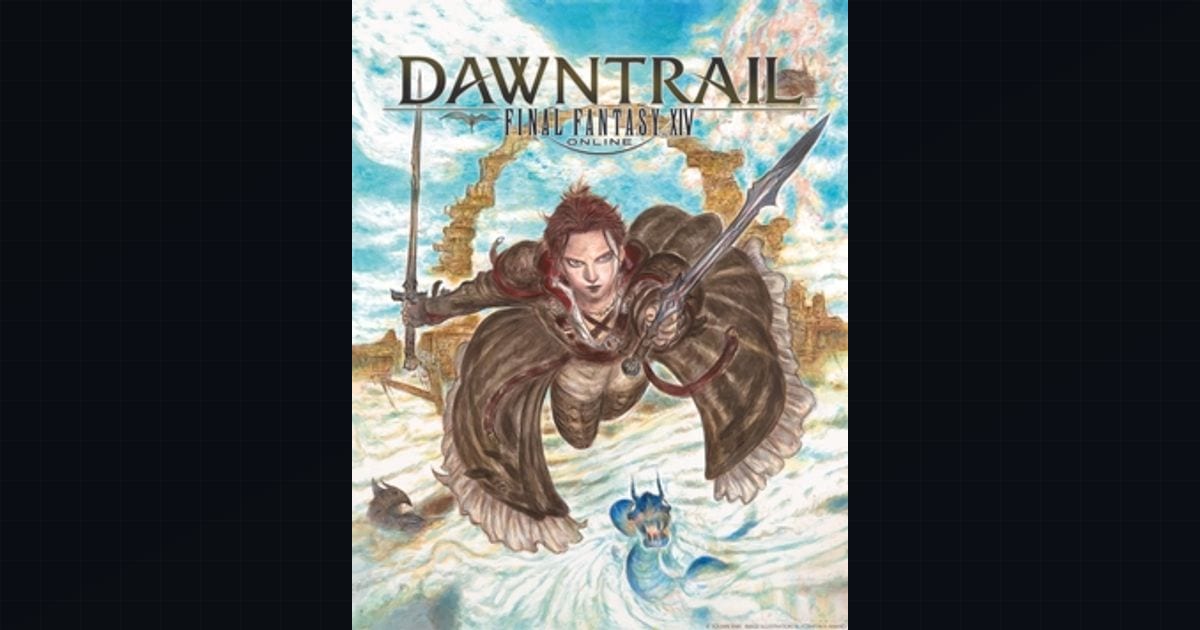
Square Enix and Producer Naoki Yoshida have published full patch technical documentation for Final Fantasy XIV: Dawntrail, detailing the MMOMMO. Massively Multiplayer Online — a game that hosts very large numbers of players together in one shared, persistent world.’s first major graphics engine overhaul alongside new job specializations (Viper and Pictomancer). It is the most consequential visual systems update the title has received since the 2013 A Realm Reborn rebuild — not a re-skin, but a sustained asset and shader pipeline refresh layered onto a decade-old client.
What changed: 7.0 brings a graphics engine overhaul, dual-dye armor channels, and the AAC Light-heavyweight Savage tier. Why it matters: Recommended specs rise to RTX 2060 and 16 GB RAM without a client break. Who should care: Active FFXIV players, glamour collectors, and static raiders planning Savage progression.
Engine & Render Overhaul
- Texture & Material Shader Upgrades: Character models, skin textures, metals, and environmental assets feature updated sub-surface scattering and ambient occlusion maps. The changes target the read quality of close-up cutscenes and Duty cinematics rather than gameplay performance envelopes; the underlying Lighting Probe system and deferred lighting passes are largely retained.
- Dual-Dye System: Armor pieces now support two independent color channels, expanding glamour customization options across all gear sets. This is a material-authoring change as much as a UI one — every dyeable asset now carries two palette slots rather than one, which has knock-on effects for how the art team batches and versions gear.
- System Memory Requirements: System RAM targets have been updated to 16 GB for optimal performance in 24-player Alliance Raid instances. The new recommended spec (RTX 2060, Ryzen 7 3700X) moves the floor up meaningfully from the Stormblood-era baseline that long-defined FFXIV’s famously gentle hardware ask.
High-End Raid Content
The AAC Light-heavyweight Savage raid series introduces:
- Updated boss encounter mechanics
- Weekly loot lockouts
- Weapon token exchanges
It is a continuation of the modern Savage structure: weekly-capped token economy, deterministic weapon upgrade path, and a tuned encounter difficulty curve designed around the current job action pool rather than a re-tread of prior tier math.
Why It Matters
The headline here is not “FFXIV looks nicer now.” It is that Square Enix is performing a live, in-place engine migration on the single most concurrent-population MMO in the genre, without a client break, without a paid re-release, and while continuing to ship a content cadence. That is genuinely rare. Most live-service graphical overhauls either arrive as a sequel (the original 1.0 → 2.0 split), a separate “next-gen” client that forks the playerbase, or a paid remaster. Dawntrail is doing the work in-band, on the same install, across five platforms simultaneously — PC, PS5, PS4, and Xbox Series X|S all receive the upgrade.
The trade-off is visible in the spec sheet. The recommended GPUGPU. Graphics Processing Unit — the chip that renders the game's visuals; the main driver of framerate and image quality. jumping to an RTX 2060 and RAM to 16 GB tells you the texture and material pipeline is no longer bound by PS3-era design assumptions that quietly lingered in FFXIV’s assets well into Endwalker. The 24-player Alliance Raid RAM target in particular signals that the engine now holds substantially more high-resolution material data in resident memory when many character models share a scene — the exact scenario where the old pipeline first began to choke.
The Take
The dual-dye system is the sleeper feature of the expansion. Glamour is FFXIV’s true endgame and one of its most reliable long-tail retention engines; doubling the expressive surface of every dyeable piece meaningfully increases the combinatorial value of the existing gear catalog without requiring the art team to ship new sets. From a product standpoint that is a remarkably efficient retention lever — you are multiplying the value of work already in players’ inventories.
On the raid side, the Savage token structure is conservative by design, and that conservatism is correct. The Savage raid economy is not where FFXIV experiments; it is where it provides a stable, legible progression ladder for the static-raid audience that structures much of the social graph. The risk in any engine overhaul year is that visual changes destabilize encounter readability — new shader effects can muddy telegraph clarity, denser particle work can mask mechanics. The fact that the Savage tier ships in the same window as the graphics update puts a real burden on QA to keep encounter legibility intact under the new material pipeline.
What It Signals
Two things are worth reading into the spec uplift. First, Square Enix is preparing the client for a longer tail — you do not invest in sub-surface scattering and dual-channel dye materials for an expansion you expect to sunset in two years. The engine work is foundation for content through the late 2020s, and the platform list (PS4 still present, PS5 and Xbox Series as the modern targets) implies a managed generational wind-down rather than an abrupt cut.
Second, the conservative recommended spec — an RTX 2060 is now five-plus years old — tells you the team is still optimizing for the widest possible installed base rather than chasing a visual frontier. This is the correct call for an MMO whose population advantage depends on accessibility, but it also means the overhaul is a quality-of-readability upgrade, not a competitive visual showcase against newer genre entrants. Dawntrail will look materially better in cutscenes and close-quarters Duties; it will not suddenly out-render a 2026-built engine.
Context
FFXIV’s graphics update lands in a genre moment where several long-running MMOs are confronting the same question: how do you modernize a client that millions of players depend on without fracturing the audience? Dawntrail’s answer — incremental, in-band, multi-platform, spec-bumped but not spec-abandoned — is becoming the template. The RAM and GPU floor moving up is the honest cost of that approach, and the dual-dye glamour expansion is the retention dividend that helps pay for it.
The next indicator to watch is encounter readability under the new shader pipeline once the AAC Light-heavyweight Savage tier settles in — telegraph clarity was the standing risk of shipping both in one window. Past that, the rebuilt material system is the foundation Square Enix will be building on through the late 2020s, so how players receive this overhaul sets the terms for everything after it.
Next read
- For the new jobs mentioned above, see FFXIV Dawntrail — Viper & Pictomancer Rotation Mechanics Guide.
- For the Savage side, see FFXIV 7.x — Savage Raid Gear Progression & BiS Roadmap.
- All our Dawntrail reports live on the Final Fantasy XIV: Dawntrail coverage hub.