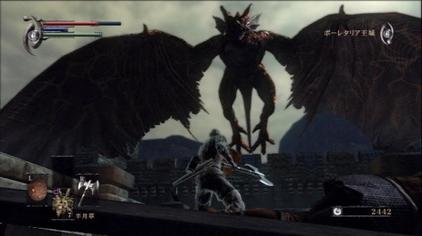
The PS5 remake of Demon’s Souls runs on a high‑end PC build at frame rates well beyond the console’s native cap, demonstrating measurable progress in next‑gen console emulation. A system equipped with an RTX 5070 GPUGPU. Graphics Processing Unit — the chip that renders the game's visuals; the main driver of framerate and image quality. and a Ryzen 7 9800X3D CPU delivers a stable 120 FPSframerate. How many images (frames) the game shows per second; higher = smoother motion. 60 fps is a common target. at 1440p when 2× DLSS Frame Generation is enabled, while the same emulator without Frame Gen settles around 70 FPS. On the official PS5 hardware, the title is locked to 60 FPS.
What changed – The remake reaches 120 FPS on a PS5 emulator using an RTX 5070 and DLSS Frame Generation.
Why it matters – Emulation now outperforms the console’s hard‑coded limit, highlighting GPU‑accelerated frame‑generation’s impact on legacy titles.
Who should care – PC gamers with high‑end rigs, performance‑focused streamers, and developers tracking console‑to‑PC port pipelines.
| Configuration | Resolution | FPS (average) | Notes |
|---|---|---|---|
| Native PS5 (stock settings) | 4K | 60 | Fixed lock by the game engine |
| PS5 emulator – default settings (no FG) | 1440p | ~70 | Slight gain from hardware scaling |
| PS5 emulator – 2× DLSS Frame Generation | 1440p | 120 | Requires RTX 5070, Ryzen 7 9800X3D CPU |
Performance Overview
The benchmark, first posted by Geralt Benchmarks and referenced by PCGamer, isolates three variables: console baseline, emulator without frame‑generation, and emulator with 2× DLSS Frame Generation. The 120 FPS result is achieved at 1440p, a resolution the emulator can render more efficiently than the PS5’s 4K output. Frame Generation inserts interpolated frames via the RTX hardware, effectively doubling perceived fluidity without a proportional increase in native render workload.
Key observations:
- GPU demand rises modestly; the RTX 5070 maintains full load while preserving thermal headroom.
- CPU load stays within the Ryzen 7 9800X3D’s capacity, suggesting the bottleneck is primarily GPU‑side.
- Visual fidelity remains consistent with the console version thanks to DLSS’s upscaling quality, though motion artifacts can appear during rapid camera pans.
Implications for PS5 Emulation
The result validates a broader trend where high‑end PC hardware can not only replicate but surpass console performance for recent titles. Sony’s recent decision to phase out physical media and the closure of older digital storefronts has increased interest in preserving access to console exclusives via emulation. The demonstrated capability suggests that upcoming titles, including those yet to receive native PC ports, could become viable on similarly equipped rigs before official releases.
- Developers can monitor the emulator’s API utilization to anticipate future compatibility patches.
- Streamers gain a concrete benchmark for configuring hardware to deliver smoother gameplay.
- Consumers receive tangible data when weighing a high‑end GPU purchase against waiting for official PC releases.
The next milestone will likely involve testing the emulator on slightly lower‑tier GPUs to map performance scaling, with results expected in the coming weeks as the community refines the configuration scripts. Continued improvements may push the envelope further, potentially enabling full 4K 120 FPS playback on future hardware iterations.