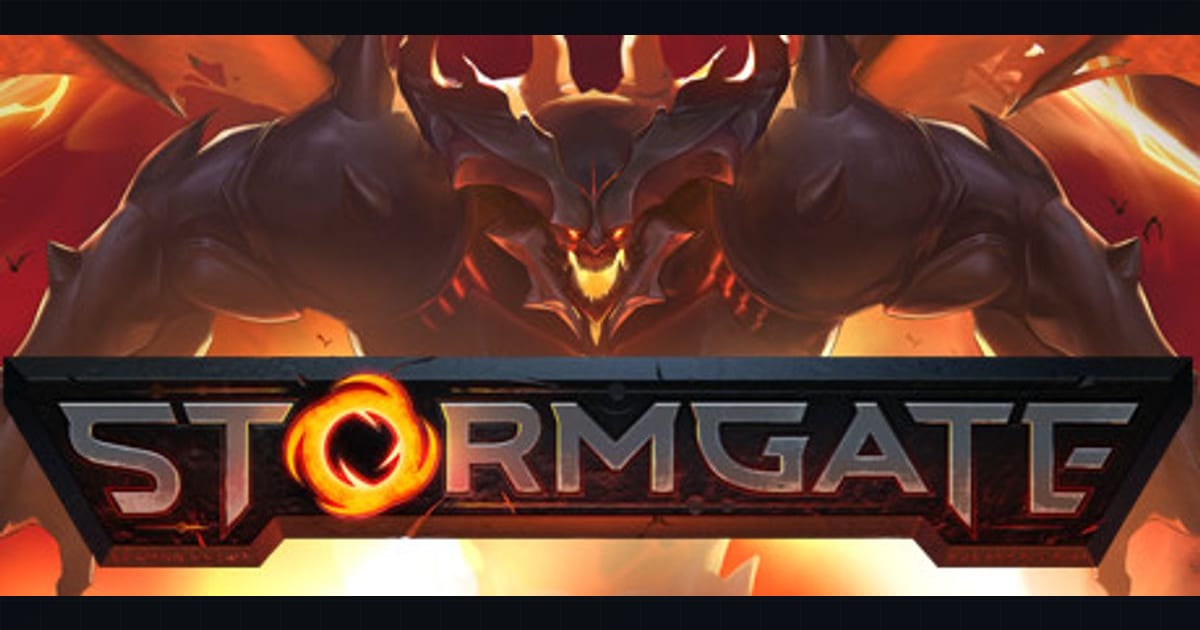
Stormgate entered Steam Early Access on August 13, 2024, shipping with three asymmetric factions built by a Frost Giant Studios team largely composed of ex-Blizzard RTSRTS. Real-Time Strategy — a strategy game where everyone plays at the same time, continuously, instead of taking turns. veterans. The three races — Vanguard, Infernal, and Celestial — do not share a common economic skeleton the way StarCraft’s three races do. Each one restructures how you gather, where you build, and what your opponent has to kill to set you back. This guide breaks down how each factionfaction. An in-game group or nation players can align with or fight against, with its own goals and reputation system. plays, then walks the three pairwise matchups.
What it covers: All three Stormgate factions and their pairwise matchups — economy, rosters, and win conditions. Why it matters: The factions share no common economic skeleton; your pick changes what the opponent must kill. Who should pick this: Ladder players deciding a main faction or learning a specific matchup.
The three races at a glance
| Dimension | Vanguard | Infernal | Celestial |
|---|---|---|---|
| Identity | Human survivors, fortified defense | Demonic invaders, aggression | High-tech progenitors, mobility |
| Economy | Worker-based (Servo), multi-build | Imp workers + summon-based production | Power grid / Cascade Field, no workers |
| Base building | Multi-build (Powerbuild), walls/towers | Summoned structures, forward pressure | Energy grid expansion (Cascade Field) |
| Core playstyle | Turtle, tech-up, ranged + mechs | Rush, harass, map control | Mobility, harassment, tech vectors |
| Mid-game fork | Linear tiered tech tree | Shroud pressure / area denial | Branching mid-game tech paths |
| Harassment target | Worker lines | Forward summon anchors | Sever the energy grid |
| Skill ceiling driver | APM + positioning | Tempo + map presence | Spatial planning + scouting |
Vanguard: fortified defense and tech progression
Vanguard is the faction most players will recognize on contact. It is the human-survivor lineup: infantry, ranged units, mechs, walls, and towers, all gated behind a tech tree that rewards sitting behind a fortified line and climbing to higher-tier hardware. If you have played Terran in StarCraft II, the shape is familiar — but the macro is not.
The defining Vanguard mechanic is its multi-build system. Vanguard’s worker bots — the Servo, also called the B.O.B. — can stack onto the same construction project, with each extra worker cutting build time. That turns base layout and expansion timing into a worker-allocation puzzle: the same Servos you need to wall a ramp or throw up a Sentry Tower are the ones mining your Luminite and Therium, so committing them to defense costs you income. A base that you wall quickly is a base whose worker line paused to do it; a base that keeps mining freely is a base that is slower to seal. That tension is the whole Vanguard macro game.
Economically, Vanguard runs on Servos that harvest Luminite and Therium from mining nodes. Because workers exist and are vulnerable, Vanguard has the most traditional harassment surface of the three races — an opponent can cripple you by killing workers, the way they can in any worker-based RTS. The trade is that Vanguard’s tiered tech tree produces the strongest defensive and ranged tools in the game: towers, walls, and high-value mech units that punish opponents who attack into a prepared position.
Vanguard’s identity is reinforced by Veterancy — surviving units earn experience and level up, gaining health — and by Versatility, since several Vanguard units and the Sentry Post can convert between modes. Heroes, persistent ability-carrying units featured in Co-op and the 3v3 Team Mayhem mode rather than the hero-free 1v1 ladder, lean toward area denial and fortification buffs. The faction’s weakness is tempo: if an opponent refuses to attack into your walls and instead takes the map, Vanguard has to break containment to stay relevant, and its early-game unit roster is not built for trading across open ground.
Infernal: aggression and map control
Infernal is the inversion of Vanguard. Where Vanguard wants to build a wall and tech behind it, Infernal wants to be on your side of the map from minute one. The faction is the demonic invasion force, and its mechanics are authored around forward pressure and map presence rather than base defense.
The load-bearing Infernal mechanic is its summon-based production. Infernal units are not trained one at a time the way they are in worker-based factions; they are summoned from structures in batches by expending spawn charges, with each charge teleporting a unit in near-instantaneously and the structure’s summon ritual coming back off a short cooldown. That decouples production rhythm from a fixed, slow queue and lets the faction project force forward. The matchup consequence is that you cannot simply win against an Infernal by finding and killing a single “base” the way you can against a Vanguard, because the production surface is distributed across Shroud-generating structures. The counter is to intercept those structures and deny the forward position, not to raid a main.
Infernal’s second signature mechanic is the Shroud — a dark fog generated by Shroudstones and Shrines that spreads across the map. Infernal units that absorb the Shroud gain a temporary health shield (so-called White Health), making them harder to kill, and the Shroud also denies ground and vision to the enemy. The Shroud is the high-skill, high-variance play: it is both a harassment and zoning tool that doubles as a siegesiege. A timed, large-scale attack on a settlement — attackers try to destroy it, defenders try to hold it. mechanic, because you push the Shroud forward, deny ground, and let your empowered units win the fights that happen inside it. It is also the mechanic most likely to be balanced around, because a faction that grows stronger the more map it blankets has a fundamentally different win condition than one that has to win fights outright.
Infernal’s economy still runs on workers — Imps gather Luminite and Therium like any other faction, and Imps also sacrifice themselves to summon Infernal structures onto the battlefield. Layered on top are Animus, a resource harvested from dying units and spent on Rituals (including the apex Flayed Dragon summon), and the Shroud itself, which rewards spreading across the map. The practical effect is that Infernal’s power scales with how much ground its Shroud covers, which reinforces the aggression loop: an Infernal that stops pushing cedes Shroud territory and starts losing the empowerment that makes its army punch above its weight. That is a self-reinforcing design — the faction is balanced to never stop attacking.
Celestial: mobility and the power grid
Celestial is the third faction and the most structurally ambitious. Per Frost Giant’s own faction breakdown, Celestial construction does not use workers at all. Structures materialize from orbit anywhere inside a Cascade Field — an area projected by the flying Arcship and by Power-generating structures — and Morph Cores can morph into buildings even outside the Cascade Field. That means the faction’s economy is a placement, routing, and power-budget problem rather than a worker-management problem.
The Celestial grid is the faction’s defining asymmetry. Where a Vanguard player protects a worker line and an Infernal player protects forward summon anchors, a Celestial player protects the grid itself — the Cascade Field and the Power Banks that feed it. An opponent attacking a Celestial is trying to sever energy flow, collapse a pocket of the grid, and strand the structures that depend on it — a meaningfully different defensive problem than “kill the workers.” The skill ceiling shifts from APM-heavy worker micro toward spatial planning, closer to Zerg creep-tumor routing or tower-defense pathing than to Terran SCV management.
Celestial’s mid-game fork is its branching tech choices. Distinct unit and structure upgrades — rather than flat stat boosts — unlock as you climb from Arcship to Arcstation to Arcfortress, which means a single Celestial faction can play out in meaningfully different ways depending on which path you commit to and which one your opponent reads you as taking. That multiplies build-order space without multiplying the unit roster, and it changes the scouting loop: against a Celestial, knowing the faction is not enough. You have to identify the path before it comes online, or your counter-units may be dead weight.
The trade Frost Giant has described is that Celestial trades raw resource throughput for high-mobility harassment units — a lower economic ceiling and a higher map-presence floor. Whether that holds in the current balance state, which Frost Giant continues to iterate on, is a separate question from whether the framework is sound, and the framework — Cascade Field plus Power plus the rollback netcode the engine runs on — is the most ambitious RTS architecture any independent studio has shipped in years.
Matchup breakdown
Vanguard vs Infernal
This is the matchup the game is balanced around: the turtle versus the aggressor. Infernal wants to push the Shroud forward, plant summon anchors near the Vanguard base, and deny expansions before the tech tree comes online. Vanguard wants to survive the early pressure, wall the natural expansion, and reach the mech tier where ranged units and towers can hold a fortified line against a forward Infernal army.
The decision point is the third expansion. If Infernal has map control when Vanguard tries to take a third base, the Shroud and forward summons can prevent the expansion from going down, and Vanguard’s economy starves behind its walls. If Vanguard gets the third base walled, Infernal’s distributed economy — which scales with map presence — starts to hit diminishing returns, and Vanguard’s higher-tier units trade efficiently into the Infernal roster in a straight fight. The matchup rewards Infernal players who never let the game go late and Vanguard players who are willing to build aggressively defensive expand timings rather than wait passively.
Vanguard vs Celestial
This matchup is a war of geometries. Vanguard’s multi-build base construction and Celestial’s Cascade Field grid are both placement puzzles, but they resolve in opposite directions: Vanguard consolidates into defensible clusters, Celestial spreads to project harassment. The Celestial game plan is to use high-mobility units to sever Vanguard’s expansions at the edges — cutting off new bases before walls go up — while routing the Cascade Field around Vanguard’s fortified core.
Vanguard’s advantage is that its ranged and tower tools are well-suited to holding fixed positions against hit-and-run harassment. Celestial’s mobility is less valuable against a faction that does not need to chase. The risk for Vanguard is the tech-path read: if Celestial commits to an upgrade path that counters Vanguard’s current tech and Vanguard has not scouted it, the fortified line can find itself built against the wrong unit composition. Scouting the mid-game tech commitment is the single highest-value action in this matchup.
Infernal vs Celestial
This is the most volatile pairing because both factions want map presence and neither wants to sit behind a wall. Infernal pushes forward with summons and Shroud; Celestial spreads the grid and harasses with mobility. The matchup tends to be decided by who controls the contested ground between the two forward positions.
The Shroud is Celestial’s biggest threat in this pairing. Celestial structures depend on the Cascade Field and Power grid, and the Shroud is an area-denial tool that can contest the ground the grid has to cross. An Infernal that pushes the Shroud onto a Celestial grid pocket can pressure it without needing to grind through individual structures. Celestial’s answer is mobility — pulling harassment around the Shroud to hit Infernal’s summon anchors and economy from angles the Shroud is not covering. The matchup rewards active scouting on both sides and punishes any faction that lets the other set the terms of where the fight happens.
Which race should you pick?
- Pick Vanguard if you like fortified positions, tech-tree progression, and trading efficiently from behind a wall. The faction has the most recognizable RTS macro loop and the gentlest on-ramp for players coming from StarCraft or Command & Conquer.
- Pick Infernal if you want to dictate tempo from the first minute, project force forward, and win with map presence and Shroud pressure. The faction’s power scales with aggression, which makes it punishing if you stop pushing but overwhelming if you never stop.
- Pick Celestial if you prefer spatial planning over worker micro, want a mid-game tech fork that multiplies your build-order space, and like high-mobility harassment. The grid system is the steepest learning curve of the three but also the most distinct from any existing RTS faction.
All three factions remain in active balance iteration as part of Stormgate’s ongoing live development, so specific unit stats, resource costs, and the Shroud’s coverage and unit-empowerment rules should be treated as moving targets — check the in-game client or the official patch notes for current values.
Sources & further reading
- Official Stormgate site — https://playstormgate.com/
- Stormgate on Steam — https://store.steampowered.com/app/2012510/Stormgate/
- Frost Giant Studios developer blog — https://www.frostgiant.com/blog
- Official Stormgate Wiki — https://stormgate.wiki.gg/
- Stormgate subreddit community discussion — https://www.reddit.com/r/Stormgate/
Next read
- For the human faction in depth, see Stormgate Vanguard: Roster and Build Order Primer.
- For the monster faction in depth, see Stormgate Infernal Host: Lava, Creep, and Mutation.
- All our coverage lives on the Stormgate hub.