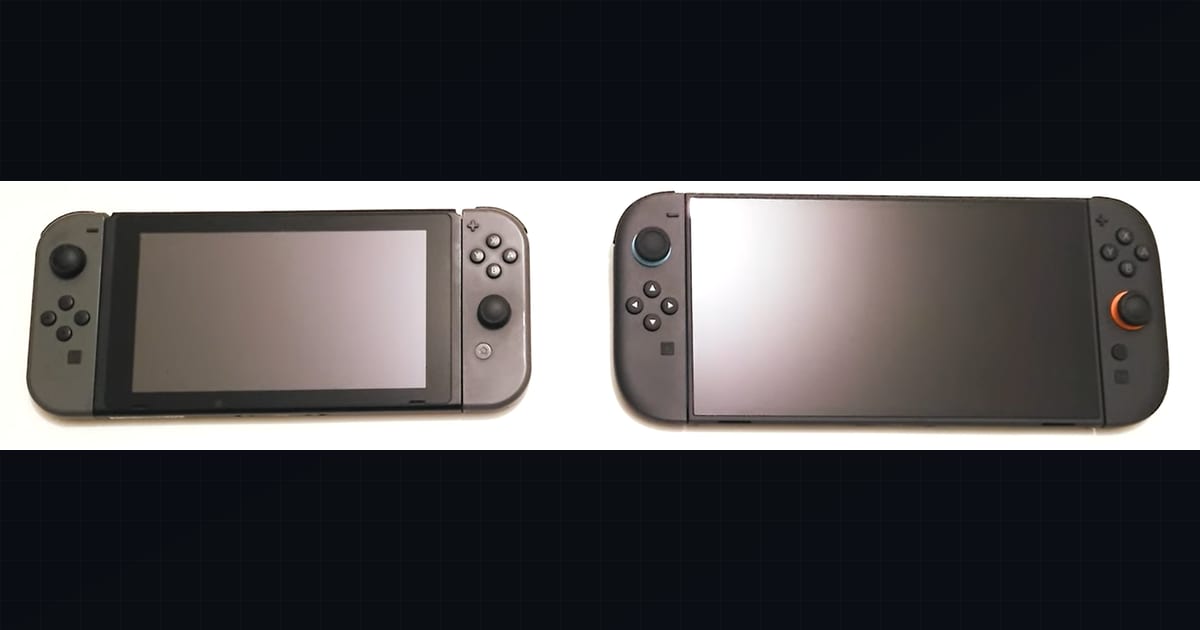
What the T239’s DLSS Block Actually Upscales in Handheld Mode
The Nintendo Switch 2 represents a significant leap forward in handheld gaming technology, largely thanks to its custom NVIDIA T239 processor that brings modern GPUGPU. Graphics Processing Unit — the chip that renders the game's visuals; the main driver of framerate and image quality. features like DLSS (Deep Learning Super Sampling) to Nintendo’s hybrid console. But what exactly does this DLSS hardware do in handheld mode, and how does it affect your gaming experience? This primer examines the technical realities behind Switch 2’s upscaling technology, separating marketing claims from measurable performance based on extensive analysis by Digital Foundry and hardware teardowns.
The Technical Foundation: NVIDIA’s T239 Processor in Handheld Mode
At the heart of the Switch 2’s DLSS capabilities lies the custom NVIDIA T239 System-on-Chip (SoC), a significant evolution from the Tegra X1 that powered the original Switch. Based on NVIDIA’s Ampere architecture (the same foundation as the RTX 30-series graphics cards), the T239 features 1,536 CUDA cores dedicated to parallel processing tasks including AI-based upscaling via DLSS.
In handheld mode, the T239 operates under strict power and thermal constraints that directly impact DLSS implementation. The GPU clocks at 561MHz (compared to 1007MHz in docked mode), while memory bandwidth is reduced from 102GB/s when docked to 68GB/s in handheld play. This 33% reduction in memory bandwidth significantly affects how much data the GPU can process per frame, creating a hard limit on computational complexity for real-time applications like DLSS.
The system utilizes 12GB of LPDDR5X memory running at 6400MT/s, with NVIDIA confirming a 3GB reservation for the operating system and background services, leaving 9GB available to game developers. This memory configuration, combined with the reduced bandwidth in handheld mode, creates the primary bottleneck that shapes how DLSS can be practically implemented for portable play.
Understanding Switch 2’s Two Distinct DLSS Variants
Digital Foundry’s extensive analysis of launch titles and developer communications revealed that the Switch 2 doesn’t implement a single DLSS solution but rather two distinct approaches tailored to different performance and quality requirements:
Variant 1: PC-Comparable CNN Model DLSS
The first and higher-quality variant closely mirrors the Convolutional Neural Network (CNN) model found in DLSS 3 on PC graphics cards. This implementation has been positively identified in titles such as Cyberpunk 2077: Ultimate Edition and Street Fighter 6 through frame analysis and comparison with PC equivalents.
Key characteristics of this variant include:
- Consistent image quality at 1080p output resolution
- Proper anti-aliasing on both static and moving objects
- Effective reconstruction during camera cuts without significant artifacts
- Performance cost comparable to PC DLSS CNN mode (approximately 3-4ms per frame at 1080p)
- Compatibility with NVIDIA’s tensor cores for efficient AI processing
When using this variant, developers typically render at internal resolutions between 540p and 720p before upscaling to the native 1080p display. For example, Cyberpunk 2077 on Switch 2 has been observed using dynamic resolution scaling that frequently hits 720p internal before applying DLSS to reach 1080p output.
Variant 2: “Tiny” DLSS / DLSS Light Model
The second variant represents a custom, lightweight implementation designed specifically for the Switch 2’s constrained resources. Digital Foundry dubbed this the “Tiny” DLSS model after observing its characteristics in games targeting higher resolutions like Hogwarts Legacy (1440p), The Tourist (4K), and Fast Fusion (4K at 60fps).
This model exhibits distinct trade-offs:
- Sharper static image appearance compared to the PC-like variant
- Significantly reduced anti-aliasing effectiveness during motion
- Noticeable aliasing and pixelation on moving objects
- Minimal reconstruction during camera cuts, often revealing the native internal resolution
- Approximately 50% lower computational cost than the PC-comparable variant
- Effective cost of roughly 1.5-2ms per frame, enabling higher resolution targets
As Digital Foundry’s Alex Battaglia noted in their analysis, this model “looks like it’s not working in motion” - a direct consequence of prioritizing static image sharpness over temporal coherence. When objects move, the reconstruction appears to break down, revealing stair-stepped edges and a distinctly lower-resolution appearance that betrays the upscaling process.
Handheld Mode Implementation Realities
In handheld mode, the Switch 2’s 7.9-inch LCD displays at a native resolution of 1920x1080 pixels with HDR10 support and VRR up to 120Hz. Despite these capabilities, the practical implementation of DLSS in handheld scenarios follows predictable patterns dictated by hardware constraints.
Internal Resolution Patterns
Extensive testing by Digital Foundry and developer interviews confirm that handheld DLSS implementations overwhelmingly favor the PC-comparable CNN variant for several compelling reasons:
-
Display Limitations: The handheld screen’s native 1080p resolution means there’s negligible benefit to targeting higher output resolutions - any extra detail would be lost on the physical display.
-
Power Efficiency: Rendering at lower internal resolutions (540p-720p) and upscaling to 1080p consumes significantly less power than native 1080p rendering, directly extending battery life.
-
Thermal Management: The compact handheld form factor has limited thermal dissipation capacity. Lower computational load from DLSS means less heat generation, preventing thermal throttling during extended play sessions.
-
Consistent Quality: The PC-comparable variant maintains proper anti-aliasing during both gameplay and cinematic sequences, providing a uniformly polished experience.
Specific internal resolution patterns observed in handheld titles include:
- Mario Kart World: Primarily native 1080p rendering
- No Man’s Sky: DRS between 648p-720p with DLSS to 1080p
- Cyberpunk 2077: DLSS with dynamic scaling for 1080p output in handheld
- Street Fighter 6: DLSS upscales from 960x540/640x360 to 1080p/720p, maintaining fighting game clarity
The 540p-720p Sweet Spot
Digital Foundry’s technical analysis revealed why the 540p-720p range represents an optimal balance for Switch 2 handheld DLSS:
At 540p internal resolution (960x540 pixels), the GPU processes approximately 518,400 pixels per frame before upscaling. At 720p (1280x720), this increases to 921,600 pixels - a 78% increase in computational load. The jump to 1080p internal (2,073,600 pixels) would require 4x4X. eXplore, eXpand, eXploit, eXterminate — a grand-strategy subgenre about building a civilization over a long arc. the processing power of 540p, making real-time DLSS application prohibitively expensive within the handheld’s power envelope.
The 68GB/s memory bandwidth in handheld mode further constrains options. Texture sampling, frame buffer operations, and DLSS tensor core computations all compete for this limited bandwidth, making lower internal resolutions essential for maintaining target frame rates (typically 30fps or 60fps) while applying AI-based upscaling.
Why Battery Life Directly Caps DLSS Aggressiveness
The Switch 2’s power architecture creates a direct relationship between DLSS implementation choices and achievable battery life, a constraint that shapes every aspect of handheld performance.
Power Budget Mathematics
Nintendo states the Switch 2 has a 19.75Wh battery providing 2-6.5 hours of gameplay. DF’s measurements show:
- System idle consumption: Approximately 1.5-2W
- Menu/UI navigation: 3-4W
- Less demanding 2D/indie titles: 4-6W
- Moderate 3D titles: 6-8W
- Demanding 3D titles (Cyberpunk, Hogwarts Legacy): 8-10W
- Peak docked performance: 20-22W (measured at wall outlet)
These measurements confirm Nintendo’s claim of a ~10W ceiling for demanding handheld gameplay - a hard limit imposed by the battery’s capacity to deliver sustained current without voltage sag or excessive heat generation.
The DLSS Power Curve
DLSS computational cost scales non-linearly with both internal resolution and output target. Based on Digital Foundry’s analysis of the T239’s capabilities relative to PC GPUs:
- DLSS at 540p→1080p: ~1.2-1.8ms frame time, ~0.8-1.2W additional GPU power
- DLSS at 720p→1080p: ~1.8-2.5ms frame time, ~1.2-1.8W additional GPU power
- Native 1080p rendering: ~2.5-3.5ms frame time, ~1.8-2.5W GPU power
- Hypothetical 1080p→1440p DLSS: ~3.5-5.0ms frame time, ~2.5-3.5W+ GPU power
This power curve explains why developers avoid aggressive upscaling in handheld mode. The jump from 720p→1080p DLSS to targeting 1440p output would potentially double the GPU power draw from the upscaling stage alone - potentially pushing total system consumption beyond the 10W threshold and triggering thermal throttling or rapid battery depletion.
Real-World Battery Impact
Digital Foundry’s battery life testing showed that conservative DLSS implementation can extend battery life compared to native rendering by reducing GPU pixel processing load while maintaining image quality through AI reconstruction.
What This Means for Players: Practical Expectations
Understanding these technical realities helps Switch 2 owners set appropriate expectations for their handheld gaming experience:
Image Quality Expectations
- Native 1080p titles (Mario Kart World, many indie games): Pixel-perfect clarity with no upscaling artifacts
- DLSS-assisted titles (Cyberpunk 2077, Street Fighter 6): Consistently sharp 1080p image with proper motion anti-aliasing
- Higher-resolution docked titles played handheld (via cloud streaming or remote play): May show motion-dependent quality drops if using the “Tiny” DLSS variant
Performance and Stability
- Frame rate consistency: Titles using the PC-comparable DLSS variant maintain locked 30fps or 60fps more reliably than those pushing resolution limits
- Thermal behavior: Conservative DLSS use results in lower surface temperatures during extended play sessions
- Battery predictability: More consistent power draw leads to predictable battery life rather than sudden drops during intensive scenes
Developer Trends and Future Outlook
Early adoption patterns reveal meaningful trends in how developers approach Switch 2 DLSS in handheld scenarios:
- Priority on handheld experience: Most major third-party ports prioritize consistent handheld performance over docked resolution bragging rights
- Dynamic resolution scaling: Increasingly common implementation that adjusts internal resolution in real-time based on scene complexity while maintaining DLSS upscaling to 1080p
- Selective DLSS application: Some developers apply DLSS only to specific elements (UI, distant objects) rather than full-frame to optimize the power/quality ratio
- Growing expertise: As developers become more familiar with the T239’s capabilities, we’re seeing more sophisticated implementations that balance internal resolution, DLSS mode, and post-processing for optimal results
The Bottom Line on Switch 2 Handheld DLSS
As platform matures and developers gain deeper familiarity with the T239’s capabilities, we can expect to see even more refined uses of DLSS that continue to prioritize the handheld experience - leveraging AI upscaling not as a spec-sheet checkbox, but as a genuine tool for delivering consistent, enjoyable portable gaming sessions.
This approach delivers the best possible image quality within the Switch 2’s handheld power envelope - providing consistently clear 1080p visuals with proper motion handling while maximizing battery life. For players, this means their handheld experience focuses on what matters most: enjoying games at the system’s intended resolution without unpredictable performance drops.