The Witcher IV is real, and CD Projekt Red has now shown it twice in public: a near six-minute cinematic reveal at The Game Awards 2024, and a live Unreal EngineUnreal Engine. A widely-used commercial game engine from Epic Games; powers many large-studio (AAA) games. UE5 is the current generation. 5 tech demo at Unreal Fest 2025. Everything else — combat depth, witcher-school progression, the shape of the open world — is being communicated in careful, deliberate doses, with the studio openly citing the Cyberpunk 2077 launch as the reason it is holding back the full marketing push until closer to release.
This primer separates what CDPR has actually confirmed from what remains rumor, so you can calibrate expectations for a game that has no announced release date and won’t launch before 2027 at the earliest.
What changed
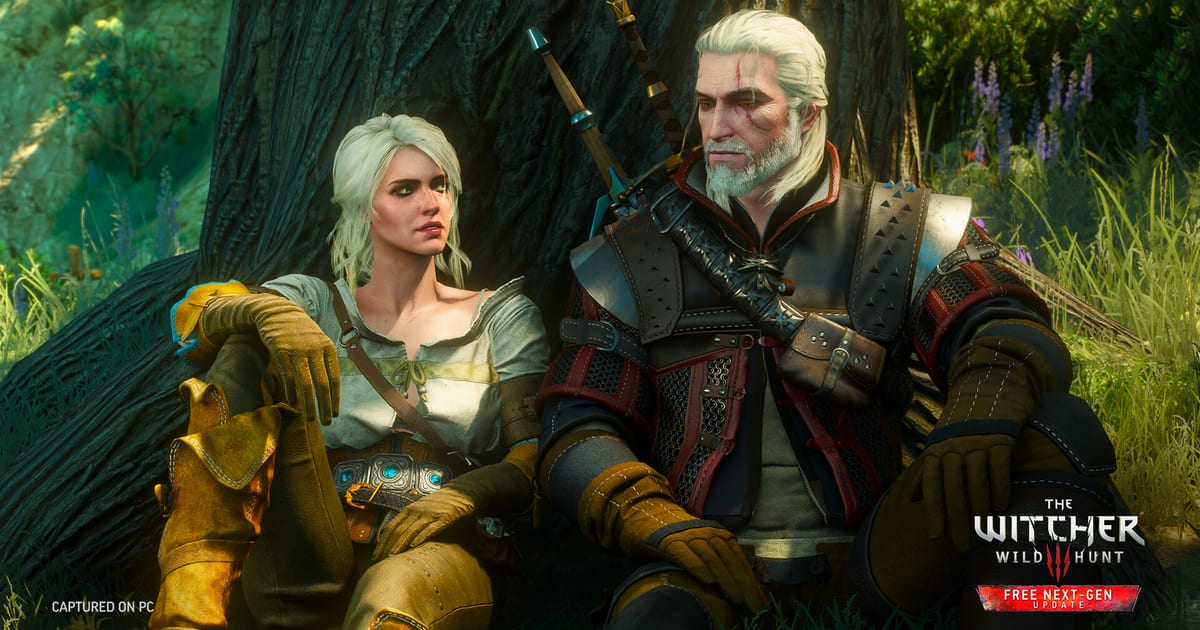
The single biggest shift is the protagonist. After three games led by Geralt of Rivia, The Witcher IV puts Ciri — Geralt’s adopted daughter and the secondary protagonist of both Andrzej Sapkowski’s novels and The Witcher 3: Wild Hunt — at the center. Game director Sebastian Kalemba said the choice was made roughly nine years ago and described it as obvious rather than contentious: “for the longest time we knew that we wanted Ciri to be the protagonist of The Witcher IV; it just felt natural to us and we believe that Ciri deserves it.”
The framing is deliberately an origin story. Executive producer Małgorzata Mitręga confirmed to GameSpot that Ciri has now passed the Trial of Grasses — the mutation ritual Geralt underwent in earlier lore, which Ciri had not completed in The Witcher 3. Kalemba calls her “the very first witcher by choice,” someone who decides to walk the Path rather than being shaped into it. That distinction matters: it gives the studio room to build a progression arc around a character who is still defining herself, and it lets new players enter the saga without needing the backstory of the trilogy.
The saga designation is the other structural change. CDPR explicitly labels The Witcher IV “the beginning of a new Witcher saga” (previously codenamed Polaris), and the studio has indicated it will favor sequels over large expansions for the Witcher 4, 5, 6 arc. So The Witcher IV is a foundation, not a one-off.
How it works
Confirmed: Ciri’s combat toolkit. The reveal trailer, which CDPR states was pre-rendered in a custom build of Unreal Engine 5 on an unannounced NVIDIA GeForce RTX GPUGPU. Graphics Processing Unit — the chip that renders the game's visuals; the main driver of framerate and image quality. using in-game assets, showcases two new tools the studio is keen to highlight: a chain and “advanced magic powers.” Mitręga told GameSpot that the chain is one of several new tools, with “more of them” to come. Kalemba added that Ciri is a Source — a being who can sense and channel magic in the world — and that the spell glimpsed in the trailer draws on water as a magical source. That is a meaningful departure from Geralt’s mostly-sign-based magic (Aard, Igni, Quen), though CDPR has not detailed a full magic system.
Confirmed: Ciri’s identity and growth. Because Ciri has now undergone mutation, CDPR frames her as a “true witcher” who is still deciding how to perform the role. Mitręga told GameSpot the player will “grow with her and help her to make those choices,” suggesting the character-progression choices are part of the fantasy CDPR is selling. Kalemba explicitly noted that Ciri was overpowered in Wild Hunt by design, and that in The Witcher IV the team intends to let players “build her up in your way, with the tools we’ll give you.”
Confirmed: a new monster and contract structure. The trailer’s antagonist is the Bauk, a creature based on Serbian folklore. Kalemba and Mitręga describe it as intelligent, capable of sensing a victim’s fears and manipulating perception before striking — a spider-like being that “gets in the heads of its victims.” The trailer frames the contract as a self-contained Witcher story: a remote village has for generations sacrificed a young person to the Bauk, and Ciri intervenes to save the next victim, only to confront the lesson that “monsters come in all forms.” CDPR says the trailer is representative of the kind of side content the game aims for, not a literal copy of an in-game quest.
Confirmed: the new region — Kovir. The June 2025 tech demo takes place in Kovir, which CDPR states “will make its very first appearance in the video game series in The Witcher 4.” The demo follows Ciri and her horse Kelpie through Kovir’s mountains and forests to the port town of Valdrest. The reveal trailer’s village is set “far north, in an isolated village” and is described as new-region content rather than a return to familiar Witcher 3 locales. New regions, plural, are confirmed.
Confirmed: the open-world philosophy. Narrative director Phillipp Weber told VGC the team wants a “deeper and more immersive, more systematic” open world rather than a simply larger one: “the open world doesn’t necessarily need to be bigger and bigger and bigger.” Weber also said content stops being meaningful past a certain point, and that repetition is the signal a map is “too big.” The official line, repeated across announcements, is that The Witcher IV “aims to be the most immersive and ambitious open-world Witcher game to date.” CDPR has confirmed the game will not release in 2026, with earliest launch window being 2027.
Confirmed: Unreal Engine 5 and the Epic partnership. The Witcher IV is built on customized Unreal Engine 5 technology. CDPR’s multi-year partnership with Epic Games has produced five tools the studio showed at Unreal Fest 2025 and says will ship to all UE developers, starting with the UE 5.6 release: FastGeo Streaming (rapid environment loading), Nanite Foliage (dense vegetation without performance loss), Mass System (large dynamic AI crowds), ML Deformer (subtle character-animation detail down to muscle), and the Unreal Animation Framework. The tech demo ran on a PlayStation 5 at 60 frames per second, and CDPR says the features will be supported across all launch platforms.
Confirmed: romance and Gwent. Kalemba confirmed romance is in the game (“it’s a part of the way we make games”) and that CDPR wants it “super compelling and very meaningful,” not perfunctory. On Gwent, Kalemba told GameSpot the studio heard the community and that “it’s a part of this world” — a soft confirmation without a system reveal.
Rumored / unconfirmed: a formal witcher-school progression system. The original project tease used a new wolf-medallion silhouette, and CDPR talks constantly about Ciri “becoming” a witcher and the player “growing with her.” That language strongly implies a school- or trial-based progression layer. But CDPR has not named a specific school, a skill-tree structure tied to schools, or any progression mechanic. Treat any detailed “witcher school progression” system as rumor until CDPR shows gameplay.
Rumored / unconfirmed: release date and platforms beyond PC. CDPR has not announced a release window or date. In March 2025, the company confirmed The Witcher IV will not launch in 2026, with earliest release being 2027. A GameSpot listing displays a placeholder date, which is not authoritative. The tech demo ran on PS5, and CDPR references PC, PlayStation, and Xbox in the tech-demo announcement — but the studio has not issued a formal platform lineup for the final game. Assume TBA on both counts.
Build path
If you want to follow The Witcher IV on its own terms rather than the hype cycle, the path CDPR itself recommends is restrained:
- Watch the official reveal trailer and the trailer breakdown. CDPR published a “Cinematic Reveal Trailer Breakdown” with game director Sebastian Kalemba on its official Witcher site. It is the studio’s own annotation of what the trailer is and is not.
- Watch the Unreal Engine 5 tech demo, and read it as tech, not gameplay. CDPR is explicit that the State of Unreal 2025 demo is “a showcase of some of the technology being used to create it,” not gameplay of The Witcher IV itself. It tells you about Kovir, Valdrest, Kelpie, and the engine; it does not tell you about combat balance or quest design.
- Play The Witcher 3: Wild Hunt – Complete Edition. CDPR is currently using the IV marketing window to discount and resurface Witcher 3, and Weber has said IV is a full sequel that respects the prior games’ stories and characters while remaining accessible to new players. Witcher 3 is the canon reference point.
- Track the official channels, not leaks. CDPR’s own lesson from Cyberpunk 2077, per Mitręga, is to “communicate honestly” and start the real campaign “much closer to release when everything is settled.” That means long silences are intentional, and unsourced “leaks” about dates or systems should be treated as rumor.
- Set expectations on scope. Weber’s “deeper, not larger” framing is the clearest signal of design intent. Expect fewer but more consequential open-world activities rather than a map covered in map markers.
The honest bottom line: CDPR has confirmed the protagonist, the engine, the new region, the new monster, the new combat tools (chain, expanded magic), the romance, and the open-world design philosophy. It has not confirmed a release date beyond “not before 2027,” a full platform lineup, a detailed combat system, a skill-tree or witcher-school progression structure, or a map of the world. Everything beyond that is, for now, speculation.