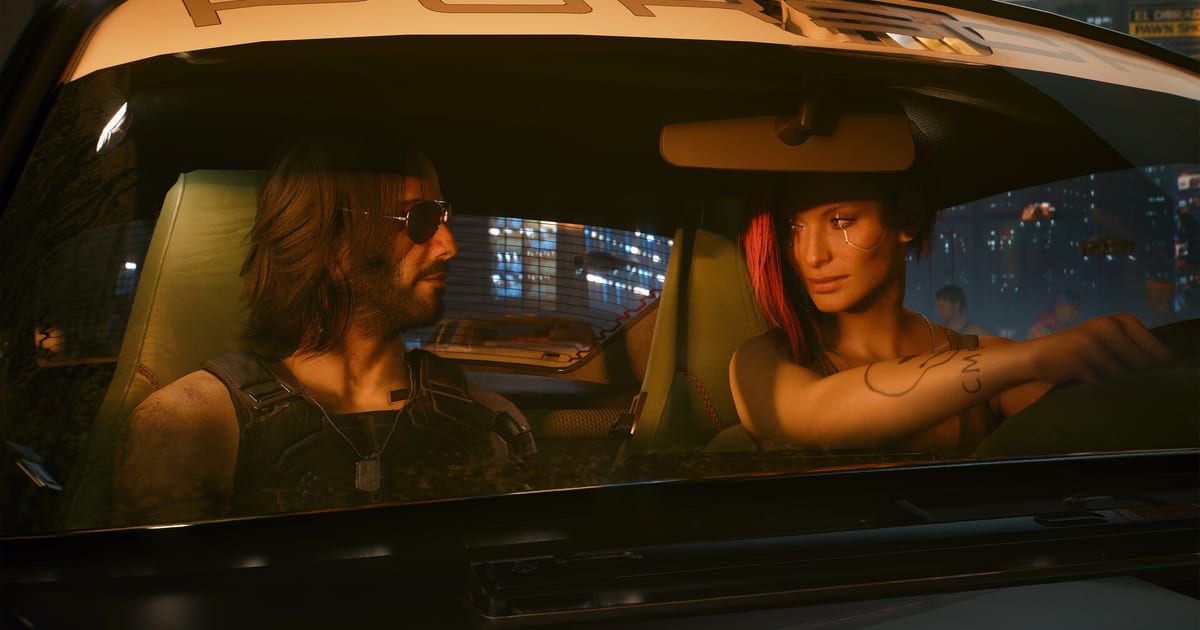
CD Projekt Red’s sequel to Cyberpunk 2077, internally known as Project Orion and now publicly referred to as Cyberpunk 2, remains in pre-production with no release date announced. The studio’s most recent public update placed the team at 163 developers as of April 30, 2026, up from 149 in February and 84 a year earlier in February 2025. (ScreenRant, FRVR, CDPR Press Center)
Where the project actually sits
CD Projekt first confirmed the sequel under the Project Orion codename in its October 2022 strategy update. The North America studio effort followed: the Boston hub opened in the fourth quarter of 2023, a Vancouver presence was added later, and the team was built around several high-profile hires announced in February 2024: Dan Hernberg (ex-Amazon Games, Blizzard) as Executive Producer, Ryan Barnard (ex-Massive Entertainment, IO Interactive) as Design Director, Alan Villani (ex-WB Games) as Engineering Director, Anna Megill (ex-Remedy, Arkane, Playground Games) as Lead Writer, and Alexander Freed (ex-BioWare) on writing. Existing CDPR veterans continued in their roles: Gabriel Amatangelo as Game Director, Paweł Sasko as Associate Game Director, Igor Sarzyński as Creative Director, Andrzej Stopa as Cinematic Director, Kacper Niepokólczycki as Environment Art Director, Sarah Grümmer as Acting Lead Quest Designer, and Kacper Kościeński as Engineering Director. (CDPR Press Center)
In its Q1 2025 earnings report (May 2025), CD Projekt announced that the team responsible for the next big game set in the Cyberpunk universe had completed the conceptual phase, moving the project into pre-production. As of that update, 96 of CD Projekt’s roughly 730 developers were working on Cyberpunk 2, with about 420 working on The Witcher 4 (which had entered full production). The company described the conceptual-to-pre-production transition as a “key milestone” in the work on the successor to Cyberpunk 2077. (IGN, GamesRadar, FRVR)
Co-CEO Michał Nowakowski addressed the timeline question directly in a May 2025 investors call. Asked whether The Witcher 4’s pre-production-to-launch arc (which began in 2022, with a release now targeted for late 2027 or early 2028) is a reliable indicator for Cyberpunk 2, Nowakowski said: “Our journey from the pre-production to the final release date takes four to five years on average. Having said that, and keeping in mind that each project is unique and there are many variables that influence the final outcome, I will not lead you into specific years.” The Witcher 4 itself is the studio’s near-term priority and is currently slated for late 2027 or early 2028. (GamesRadar)
In January 2026, CDPR published a long-form interview with Jess Scott, Engineering Director on Cyberpunk 2, who joined the company in August 2025 from Insomniac. Scott described a still-hiring team split between three Engineering Directors — herself on gameplay, Pierre Fortin on engine, and a third on the remaining discipline — with a heavy focus on cross-discipline collaboration. Her team includes remote engineers from Poland to Vancouver. She specifically called out the engine team’s relationship to gameplay: “Pierre Fortin, who is the engine Engineering Director, is going to be working with folks in the Environment team to figure out worldbuilding, loading, and streaming — but this is also very related to crowd work from the Gameplay team.” (CD Projekt Red blog)
Headcount trajectory
The team size has been one of the few public, hard numbers CDPR has shared. The concept-to-pre-production milestone was disclosed in CDPR’s Q1 2025 results (May 2025). A year later, in the FY2025 earnings (March 2026), management noted that more than 220 developers had joined CDPR over the prior year across The Witcher 4, Cyberpunk 2, the Witcher spinoff codenamed Sirius, and the unannounced Project Hadar. The specific Cyberpunk 2 headcount curve is the clearest indicator of the project’s pace:
- February 2025: 84 developers
- February 2026: 149 developers
- April 30, 2026: 163 developers
The April 30 figure is the most recent public count, sourced from a CDPR social media post summarized by ScreenRant. In late 2024, CDPR management said it planned to roughly double the Cyberpunk 2 team over the following year; the broader arc — pre-production giving way to full production as headcount climbs — mirrors the cadence CDPR used for The Witcher 4. (FRVR, ScreenRant, GamesRadar)
Engine and city
The sequel is being developed in Unreal EngineUnreal Engine. A widely-used commercial game engine from Epic Games; powers many large-studio (AAA) games. UE5 is the current generation. 5, a change from Cyberpunk 2077’s proprietary REDengine. CDPR announced the Unreal Engine 5 partnership in March 2022 (initially for the new Witcher saga), and then-CTO Paweł Zawodny framed the move in terms of open-world scope at Epic’s State of Unreal showcase that April: “This opens a new chapter for us where we really want to see how our experience in building open-world games gets combined with all the engineering power of Epic.” Both The Witcher 4 and Cyberpunk 2 teams are working with Epic to tailor the engine for large-scale open worlds, a co-development arrangement that goes beyond simply licensing it. (CDPR, TechRadar, IGN)
The game’s setting extends beyond Night City. Tabletop creator Mike Pondsmith, the source material’s original author, said at the Digital Dragons 2025 conference that the sequel will include a second city alongside a returning Night City, describing the new location as “Chicago gone wrong” — a different feel from Night City’s Blade Runner-inspired look. The 2023 Phantom Liberty expansion remains part of the setting; Cyberpunk 2077’s continued sales — most recently reported at 40 million copies in July 2026 — plus the Nintendo Switch 2 and macOS ports released in 2025 help explain why CDPR can fund a long sequel development cycle without financial pressure. (IGN, CDPR)
How the build is shaping up
What is publicly known about gameplay remains thin. Creative director Igor Sarzyński has used Bluesky posts (early 2026) to argue for first-person, “uninterrupted” cutscenes on immersion grounds — a stance consistent with Cyberpunk 2077’s design and a contrast to the third-person presentation of The Witcher 4. He was careful to add, however, that those remarks were not an official confirmation of Cyberpunk 2’s perspective (“it might be a play-doh stop-motion RTSRTS. Real-Time Strategy — a strategy game where everyone plays at the same time, continuously, instead of taking turns. for all we know”). The stronger signal comes from CDPR’s own job listings, which have called for “immersive 1st person view model animation,” pointing toward a first-person sequel — but no trailer, screenshot, or confirmed mechanic has been released in writing.
Beyond camera and city choice, CDPR has not published any gameplay details. The most concrete public signals are the engine choice, the city choice, the headcount growth, and the Boston team’s continued hiring through 2025 and 2026 — including senior engineers whose backgrounds span Harmonix, Amazon Games, and Insomniac.
What it means for the RPGRPG. Role-Playing Game — a game built around character progression, story, and player choices. calendar
Realistically, a 4-to-5-year pre-production-to-launch arc that began in 2025 would put Cyberpunk 2 around 2029–2030 at the earliest, and more likely 2030 or 2031 if Nowakowski’s average holds. The Witcher 4 is the next major CDPR release, and CDPR has publicly committed to a multi-year gap between flagship launches rather than annual releases. Several Cyberpunk 2077 and Phantom Liberty veterans — including Game Director Gabriel Amatangelo and Associate Game Director Paweł Sasko — have moved onto the sequel, but the new North American studio also brings in fresh creative leadership from outside CDPR.
The Boston team’s continued hiring through 2025 and into 2026, including senior engineers from Harmonix, Amazon Games, and Insomniac, signals CDPR is treating this as a long, well-funded project rather than a rushed follow-up to Cyberpunk 2077’s 2020 launch. CDPR has publicly framed the 2020 launch’s backlash as a key motivator: in prior investor calls, management has said the lessons of Cyberpunk 2077’s release inform both The Witcher 4 and Cyberpunk 2’s development approach, and the studio has committed to not repeating the launch-window crunch that produced the 2020 disaster. The doubling of Cyberpunk 2’s headcount by 2027 — if it happens — would put the project at a similar scale to The Witcher 4’s current production, suggesting the studio is planning Cyberpunk 2 as a true full-cycle sequel rather than a smaller spinoff.
What remains unconfirmed
No public announcement covers: a release year or window, the protagonist, the full city list beyond Night City and a Chicago-inspired location, the game’s subtitle or whether “Cyberpunk 2” is the final title, the marketing roll-out plan, or any platform exclusivity arrangements. All of those are working assumptions, not confirmed facts. The engine change is officially confirmed by CDPR; the Chicago-inspired second city, by contrast, has only been described by Pondsmith to press and at a conference, not via a formal CDPR feature page.