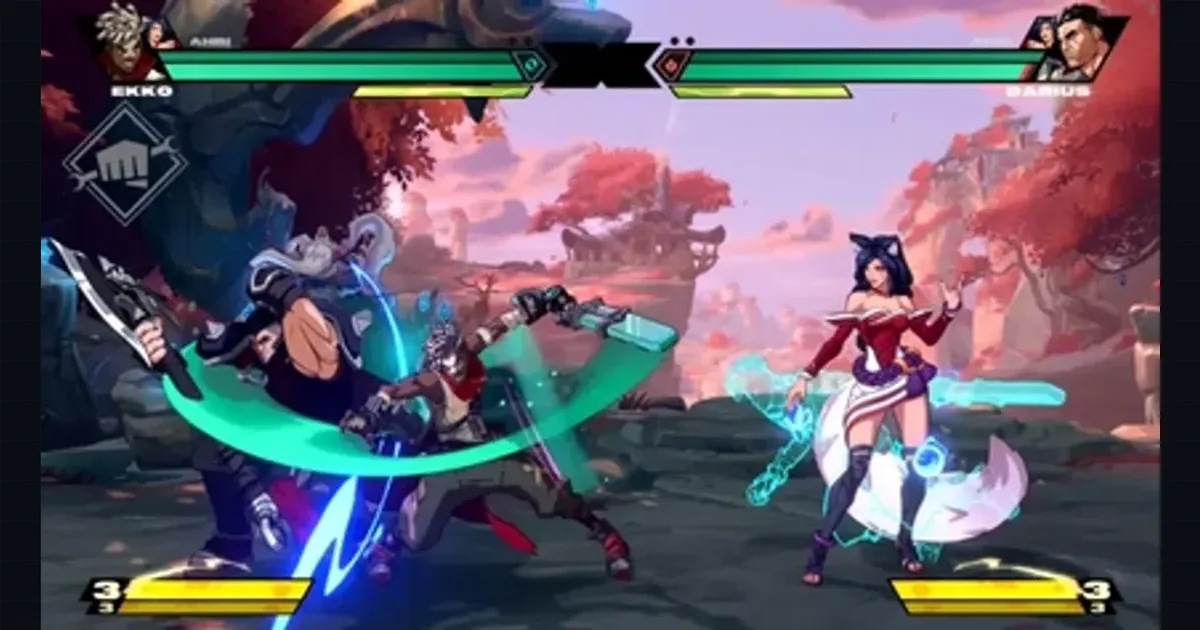
On August 20, 2026, Riot Games announced that active development for its free-to-play League of Legends tag fighter 2XKO will conclude in December 2026. Servers will remain online beyond 2026, and the game will stay playable on all platforms, but the team will finish its remaining in-progress content and deliver a final bug-fix patch rather than continue a full live-service roadmap.
What Riot announced
The announcement is direct: 2XKO’s active development will end at the end of this year. Riot will continue releasing content and feature improvements through the rest of 2026, including two new champions—Lux in September and Samira in October—before a final bug-fix patch in December. After that, the studio plans to keep servers running to support online play, while offline play remains unaffected.
Riot also said it will disable new KO Points purchases immediately. Physical prepaid cards will no longer work inside 2XKO, though they remain valid for Riot’s other games. Any remaining KO Points can still be spent in the rotating store until patch 1.3.1 arrives.
What 2XKO set out to accomplish
Riot’s stated goal was to build a tag fighter that the fighting game community could enjoy with friends. The team wanted to respect the genre’s history while bringing Riot’s live-service approach to a new audience. That meant trying to address problems the fighting game community had struggled with, including unreliable netcode, lonely ranked grinds, and infrequent updates.
On the business side, Riot hoped that making the game free-to-play would lower the barrier to entry and help new players discover fighting games. The plan was to earn the trust of core players first, then grow the audience as more features and content arrived. Riot also acknowledged from the start that free-to-play carries a minimum player requirement to support those ambitions.
Early signs were promising in places. Tournament organizers added 2XKO to weekly lineups, high-level players pushed the game to its limits, and duos became a casual way to play together. Players asked for more champions, events, and features. However, that energy was not widespread enough. Riot said diehard tag-fighter players loved the game, but most other fighting-game players struggled to find reasons to stay.
Why active development is ending
Riot explained the decision as a result of player retention and sustainability. The company said it had monitored 2XKO’s trajectory over the last few months and saw a clear pattern: many players tried the game, and a dedicated community still plays every day, but not enough of them stayed to put the project on a sustainable path.
The studio evaluated revenue, retention, new player acquisition, and engagement through 2026. While Riot noted positive reactions to releases such as Akali, Senna, Thresh, The Climb PvE mode, and competitive events, it said these moments produced no meaningful, sustained change in the game’s overall trajectory. According to Riot, 2XKO costs substantially more to operate than it brings in, and engagement has stayed relatively flat despite larger updates.
“We would have continued active development if we saw any viable future,” Riot wrote, “but 2XKO costs us substantially more to operate than it brings in, and engagement has stayed relatively flat despite our larger updates.” After considering alternatives such as reducing team size, changing patch schedules, or adjusting the business model, the studio concluded that finishing work-in-progress content and sunsetting active development was the best route forward.
What is changing for players
The transition centers on making 2XKO more generous for the players who remain. Patch 1.3.1, scheduled for September 8, will unlock every champion for all players. Fuses will still be unlockable through tutorials, but no one will need to purchase or grind for characters.
At the same time, Riot is bundling nearly all cosmetic content into a single $39.99 / £33.99 / €39.99 “2XKO Ultimate Bundle.” That bundle includes all skins, skin chromas, and taunts for every champion up to and including Lux, plus all currently released finishers. The bundle will be updated in October to include the remaining cosmetics for Samira and the rest of the roster.
Items will also become available for Credits, the earned in-game currency. Avatar items, select base champion chromas, stages, and player profile items will be purchasable with Credits, and the previous 12,000 Credit cap will be removed. Avatar and player profile items will be unlockable for Credits as well.
To make this possible, Riot is removing several progression systems: Battle Passes, KO Points, Champion Tokens, seasons, and events will all be retired. Ranked lobbies will be disabled so matchmaking can operate within a single pool of players per server. Casual lobbies will continue to be matchmade by skill, and private lobbies will not be affected.
Patch 1.3.1 also adds practical features for private sessions. Voice chat is being added, along with a large map for private lobbies that can hold up to 40 players in one instance. These additions make private lobbies a more social space while the public matchmaking pool is consolidated.
What players keep
Riot emphasized that any content players already own is theirs to keep. Skins, chromas, finishers, and other unlocked items will remain on accounts. The shift is about how future items are obtained, not about taking away past purchases. Refunds cover money spent on or before August 20, while owned cosmetics stay in inventories.
The transition also removes the friction of champion unlocks. New or returning players who join after patch 1.3.1 will have immediate access to the full roster, including Lux once she launches. Only Fuses, the assist-style modifiers, still require tutorial completion to unlock.
Refund and platform details
Riot is refunding all money spent in 2XKO on or before August 20, 2026. For PC players, all KO Points and Starter Edition purchases made before that date will be refunded to the original payment method, with most refunds expected within two weeks and all PC refunds targeted for completion by November 2026. PlayStation and Xbox players will receive refunds through their respective platforms, and Riot said platform customer support may reach out to confirm payment details. Players on the Japan or Korea servers will have refunds handled in compliance with local law, with further details to come.
The 2026 content roadmap
Here is the remaining update schedule as Riot laid it out:
- August 20, 2026: KO Points purchases are disabled, and refunds begin.
- September 8, 2026 (Patch 1.3.1): Lux, the Lady of Luminosity, is added. Riot describes Lux as a shoto-inspired character who uses light-based attacks. The Ultimate Bundle, champion unlocks, Credits changes, system removals, and Ranked lobby disable arrive. Voice chat and a large map for private lobbies are also added.
- October 2026 (Patch 1.3.3): Samira, the Desert Rose, becomes the final new champion. The Ultimate Bundle is updated with all remaining cosmetics. This patch is described as the final major content patch.
- December 2026 (Patch 1.3.5, optional): If required, a bug-fix patch with no major new content will be released.
After that, 2XKO servers will remain online. The game will still be free to download on PC, PlayStation 5, and Xbox Series X|S.
Competitive and community support
The 2XKO Competitive Series is unchanged through 2026. Riot said it will continue to support players and tournament organizers, including prizing for all Major and Challenger events. The final Competitive Series event is scheduled for November 2026. Beyond 2026, organizers can still run 2XKO events using the existing Community Competition Guidelines, online or offline.
Riot also said it will have conversations with community leaders over the coming weeks and will share additional updates as the studio figures out what more it can do for players, tournament organizers, competitors, and creators.
What this signals
2XKO’s wind-down is part of a broader industry recalculation around live-service fighting games and free-to-play sustainability. Riot entered the genre with promises of reliable netcode, frequent updates, and a ranked experience that felt less lonely. The studio said it believes the game delivered on many of those promises, especially for diehard tag-fighter players, but that most other fighting-game players struggled to find reasons to stick with the title.
The decision highlights how even a well-funded publisher can conclude that a game’s audience is too small to justify ongoing active development, especially when operating costs exceed revenue and engagement remains flat. Riot’s response—refunding purchases, unlocking all characters, and keeping servers online—attempts to reduce the sting for existing players while the studio returns to research and development.