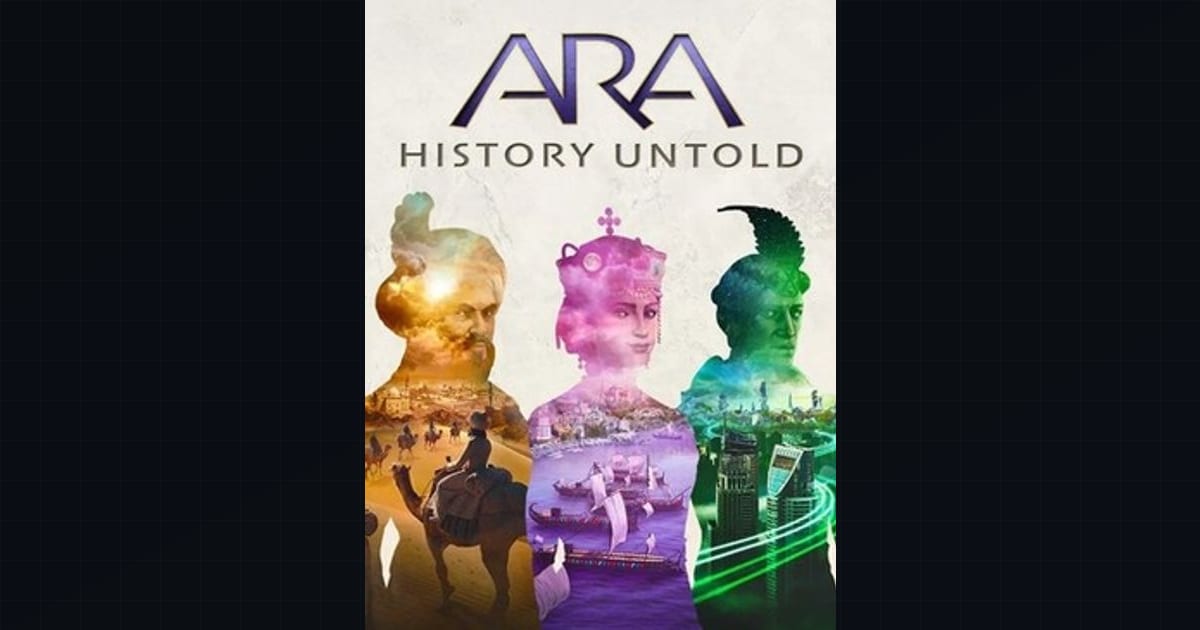
Ara: History Untold is a turn-based grand strategy game developed by Oxide Games and published by Xbox Game Studios. Released for Microsoft Windows on September 24, 2024, the game tasks players with building and leading a nation through an alternate history. The development team includes former members of Firaxis Games, the studio behind the Civilization franchise.
That lineage matters, and it’s worth stating plainly: Ara is not a random new 4X4X. eXplore, eXpand, eXploit, eXterminate — a grand-strategy subgenre about building a civilization over a long arc. contender. It is, in part, a statement from people who helped define the modern historical 4X and then left to challenge it. When veterans of the studio behind Civilization build a competing take on the genre — one where all player actions resolve simultaneously and the economy is a crafting system rather than a slider panel — they are implicitly arguing that the genre’s classic formula has structural weaknesses worth breaking. The Invisible Hand update, arriving less than two months after launch, shows Oxide is willing to keep breaking and rebuilding those systems in public.
Development and Technology
Oxide Games, based in Lutherville-Timonium, Maryland, built Ara using their in-house Nitrous Engine, previously utilized for Ashes of the Singularity. The game features a dynamic living world with multiple biomes and cultures, where citizens react to conditions like health, sickness, war, and peace. All player actions execute simultaneously. The title supports both synchronous and asynchronous multiplayer modes. The soundtrack, composed by Michael Curran, Geoff Knorr, and Jonathan Peros, contains over seven hours of original music with five distinct layers that dynamically adjust based on game state.
The Nitrous Engine pedigree deserves attention. This is the same technology Oxide built to render the massive unit counts of Ashes of the Singularity — an engine designed from the ground up to keep thousands of independently simulated entities on screen without choking on the CPU. Porting that philosophy to a turn-based game sounds counterintuitive until you consider what Ara is simulating: citizens who individually react to health, sickness, war, and peace, across multiple biomes and cultures. That’s not window dressing. A “living world” where population states visibly respond to your decisions is only credible if the engine can track and render that granular simulation as scenery rather than abstracting it into a tooltip. Nitrous is what makes that feasible.
The composer list carries its own subtext. Michael Curran and Geoff Knorr are defining voices of Civilization’s musical identity, and seven hours of original music with five adaptive layers — dynamically responding to game state — is an unusually heavy investment in audio for a strategy title. It signals Oxide understood that competing with Civ means competing on atmosphere and session feel, not just systems.
The Invisible Hand Update
In November 2024, Oxide Games released the “Invisible Hand” update. This major patch overhauls several core systems, introducing a refined economy system and terrain-based combat mechanics. It also adds new unit upgrades, a balanced world map, and expanded modding support. Additionally, the update introduces the historical leader John A. Macdonald to the roster.
Read the changelog as a diagnosis. The economy got refined — which concedes the national crafting economy, Ara’s most distinctive system, shipped rougher than intended. Combat gained terrain mechanics — which concedes the launch warfare layer was too flat relative to the genre standard. The world map was rebalanced, and modding support expanded. This is not a cosmetic content drop; it is a structural patch aimed at the two systems critics most often flagged. Releasing it within roughly seven weeks of launch, under Xbox Game Studios publishing, suggests Oxide has both the mandate and the runway for a long post-launch arc — the kind of multi-year support history shows a 4X title needs to reach its final form.
Gameplay Mechanics
Ara offers a non-linear technology tree and a national crafting economy. Players can construct various improvements, ranging from forges to libraries, alongside monumental architectural structures. The gameplay involves exploring new lands, developing arts and culture, conducting diplomacy, and engaging in strategic warfare.
The design decisions worth dissecting are the non-linear tech tree and simultaneous resolution. A non-linear tree removes the genre’s comfortable illusion of an “optimal path.” When there’s no universally correct research order, scouting, economy, and opponent reading stop being secondary skills and become the game itself. That is a direct challenge to the Civilization template, where experienced players largely execute memorized openings.
Simultaneous action resolution is the boldest mechanical bet. In classic 4X design, turns are sequential: one side acts, observes, and the other responds. Simultaneous resolution reintroduces genuine uncertainty — you commit to your orders without seeing your rival’s, and the game adjudicates the collision. It compresses the endless “I wait for you to wait for me” rhythm of multiplayer and makes the asynchronous mode actually viable, since players aren’t locked into strict turn order. For a genre whose multiplayer has historically been its weakest mode, this is arguably Ara’s most consequential contribution.
Critical Reception
Upon release, Ara: History Untold received “generally favorable” reviews, holding a score of 77/100 on Metacritic. OpenCritic reported that 67% of critics recommended the game. Review scores from individual publications varied, including an 8/10 from PCGamesN and Shacknews, 70/100 from PC Gamer, 3.5/5 from Digital Trends, and 6/10 from IGN.
What the Score Spread Actually Tells You
A 77 Metacritic with an internal spread from 8/10 down to 6/10 is the signature of a polarizing foundation, not a mediocre one. Publications that rewarded Ara — PCGamesN and Shacknews at the top of the range — were effectively scoring its ambition: simultaneous resolution, the living world, the crafting economy, the sheer technological muscle of Nitrous. Publications at the bottom, IGN’s 6/10 in particular, were scoring its shipping state: systems whose promise outpaced their balance and polish at launch. Both readings are defensible, and the Invisible Hand update is best understood as Oxide siding with the optimists — fixing the execution gaps that dragged the low scores rather than retreating from the ideas that earned the high ones.
The 67% OpenCritic recommendation rate reinforces this: a clear majority saw enough to endorse, but a third found the launch package incomplete. For a September 2024 release on Game Pass-adjacent Xbox publishing, that profile is workable. 4X games are marathons; players who buy in week one are buying the roadmap as much as the build.
Context: Where Ara Sits in the 4X Contest
Ara launched into the most contested moment the historical 4X space has seen in years, with the genre’s incumbent franchise between major installments and several challengers vying for the audience that grew up on it. Oxide’s positioning is distinctive precisely because it attacks the incumbent’s assumptions rather than imitating them: simultaneous turns instead of sequential, crafting chains instead of abstract yields, a non-linear tree instead of a fixed ladder, and an engine that can physically show you your population suffering when you mismanage them.
The open question the Invisible Hand update doesn’t fully answer is pacing. Simultaneous resolution and layered crafting are systems that reward mastery, but they also front-load complexity — the very thing that keeps 4X a niche. If Oxide’s post-launch cadence continues at this scale, Ara has a credible path from “promising, uneven” to the genre fixture its engine and pedigree suggest it could be. Six weeks from launch to a core-systems overhaul is an encouraging pace. Whether the audience gives it the customary 4X grace period is the bet Xbox Game Studios has placed, and the one we’ll be watching play out.