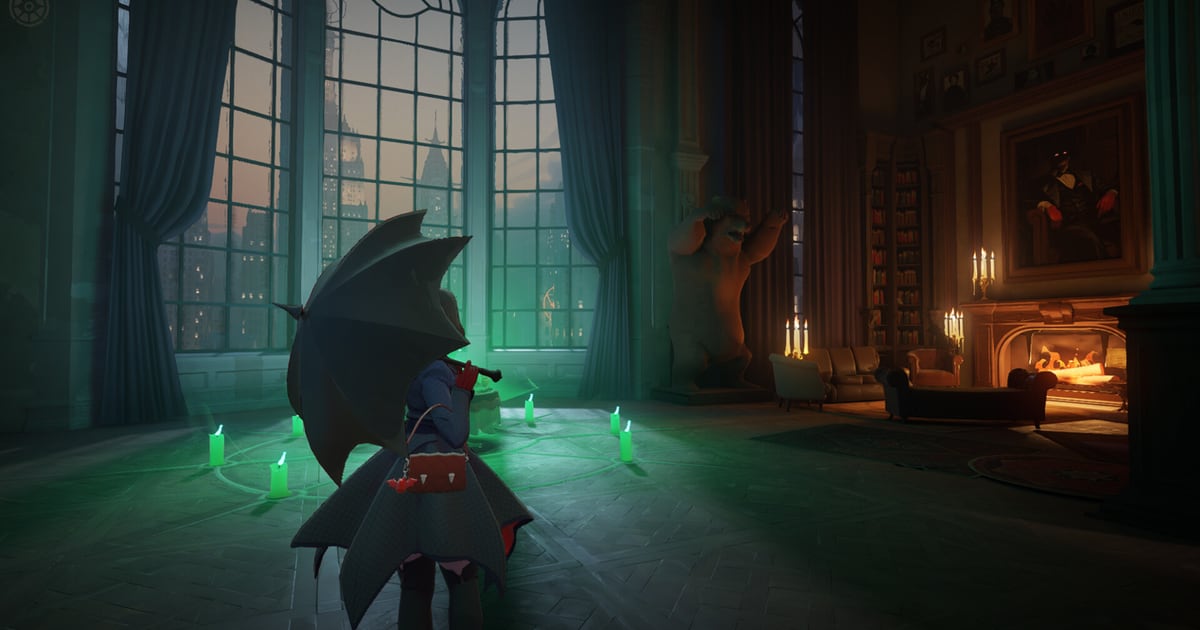
Deadlock’s City Never Sleeps update did not put six heroes into the game on one day. It put them on a clock. Valve released one at a time on Tuesdays and Fridays, starting with Rat King on October 2 and finishing with the last two on October 16 and 20, and a balance patch landed in the middle of that run, on October 5, with a second on October 14. This guide tracks what shipped when, what the patch actually changed, and what a staggered rollout like this means if you are deciding when to come back.
What this covers: the City Never Sleeps hero rollout — the six heroes, their Tuesday and Friday release slots, the 5 October balance patch and the two things Valve removed along the way. Why it matters: a hero’s release date decides when you can pick it, when it can be banned and when it is ranked-legal, and the 5 October patch moved one of the new heroes sharply. Who should care: returning Deadlock players, anyone watching how live-service games space out content, and Rat King players still working out the post-nerf build.
| Date (2026) | What shipped |
|---|---|
| September 29 | City Never Sleeps: map rework, Haunts jungle camps, six new heroes named |
| October 2 | Rat King goes live; the Broker removed from Standard and Ranked |
| October 4 | Corrupted items pulled from Street Brawl |
| October 5 | A balance patch: Rat King and Sinclair nerfed |
| October 6 | Baba goes live; Ranked Season 1 extended to November 5 |
| October 9 | Solomon goes live |
| October 13 | Deadman Danny goes live |
| October 16 and 20 | Nurse Harrow and Violet, in the order players voted |
A rollout built on Tuesdays and Fridays
City Never Sleeps arrived on September 29, 2026 with six new heroes attached to it: Rat King, Baba, Nurse Harrow, Solomon, Deadman Danny and Violet. Deadlock Handbook, which keeps a running plain-English summary of the update, describes them as released one at a time on Tuesdays and Fridays. The dates bear that out. Rat King landed on Friday, October 2, Baba on Tuesday the 6th, Solomon on Friday the 9th and Deadman Danny on Tuesday the 13th.
The final two were left to a vote, and both reference sites give the same slots. Handbook and SenseOS, a guide site that dates every 2026 patch note, identify the remaining release dates as October 16 and October 20, with the order belonging to the community rather than the studio. SenseOS lists those hero slots at 21:00 UTC, which is how it expresses the 2:00pm PT unlock Valve’s own notes use. The official October 6 post for Baba ends by telling players to “see you back here on Friday at 2pm PDT to introduce our next hero.”
The cadence is a design choice as much as a schedule. Spacing six heroes one at a time keeps the map of pickable heroes moving for the better part of a month and gives each new kit its own discussion window before the next one lands. The same pattern shows up across the live-service field, and the burnout maths of fast content clocks gets a fuller treatment in our season cadence and burnout breakdown — the difference with Deadlock is that the clock was public and had a named end.
The 5 October balance patch: Rat King and Sinclair
Most of the cycle’s tuning came in two passes. Deadlock Handbook records a balance patch on October 5, and it spends its length on two heroes: Rat King, four days after his release, and Sinclair, who was already in the game. A second pass on October 14 buffed Deadman Danny and nerfed Baba. The 5 October note also fixed a bug that made troopers walk too slowly in lane, which had been slowing every wave down.
Rat King took the larger hit, on the ability that defines his team-fight value:
| Change | Before → after (5 October 2026) |
|---|---|
| Rule, Ratannia! (ultimate) cooldown | 130 → 160 s |
| Rule, Ratannia! damage reduction | 20% → 15% |
| Rule, Ratannia! radius | 24 → 20 m |
| Rule, Ratannia! charge time | 12 → 10 s |
| Fully upgraded ultimate cooldown | 110 → 160 s |
| Fully upgraded damage reduction | 35% → 25% |
| Scrap Grenade damage | 65 → 70 |
| Rat Swarm cooldown | 28 → 24 s |
The two fully upgraded rows are the ones that matter for a finished build. Handbook notes that T1 now gives +2 m/s move speed, up from +1, but no longer cuts the cooldown by 20 seconds; T2 no longer adds eight seconds of charge; and T3’s damage reduction drops from +15% to +10%. Read the pair of rows together and the shape of the change is clear: a fully upgraded ultimate moved from a 110-second to a 160-second cooldown, and from 35% to 25% damage reduction, paid back with a slightly cheaper Scrap Grenade and a shorter Rat Swarm cooldown.
Sinclair’s changes were a spread of smaller cuts rather than one headline number:
| Change | Before → after (5 October 2026) |
|---|---|
| Base health regen | 2 → 1 |
| Gun falloff range | 25–61 m → 20–60 m |
| Base bullet damage | 17.76 → 16.5 |
| Vexing Bolt | now deals half damage to objectives |
| Rabbit Hex radius | 6.5 → 6 m (T3 bonus +3 → +2 m) |
| Audience Participation copied ultimate duration | 12 → 9 s |
| Audience Participation copied cooldown | 40% → 60% |
What the patch did to win rates
Patch notes describe intent; results describe effect. SenseOS, whose Deadlock pages are updated in place, reports that Rat King’s win rate fell from 61.5% to 54.9% after the October 5 nerfs — still 4th of 40 heroes at that point, and still not avoidable in the ban phase, because new heroes cannot be marked for avoidance.
The other two heroes released before that patch tell a different story. Solomon was the most-picked hero in the game and, for a while, the least effective: SenseOS measured him in 89.8% of matches over his first 33 hours with a team win rate of 43.17%, last of 41. Baba went the other way with no balance change at all, climbing from 43.72% on day one to 55.27% and 7th of 41 by October 10. Those figures sit on a sample SenseOS describes as about 332,000 matches since Valve’s October 5 notes, so they are a snapshot of a fast-moving patch window rather than settled tier data.
That spread — a nerfed hero still in the top five, a new hero last, and a hero who climbed with no help — is the argument against judging a kit by its release-day performance. The cadence hands each new hero a few days of skewed data before the community and the studio catch up.
The Broker, and the Corrupted items that left with it
Two things from City Never Sleeps did not survive the rollout. The Broker arrived with the update on September 29 and was quietly removed from Standard and Ranked on October 2, three days after it arrived. Handbook does not rule out a return, saying only that the hero may come back later in a different form. The Corrupted items the update had added to Street Brawl left two days after that, on October 4, in an unannounced change that Handbook ties to the round-5 draft in that mode.
Neither removal came with a balance explanation in the notes Handbook summarises. What they show is the same cadence logic running in reverse: content can leave the game on the same quiet schedule it arrives on, which is worth remembering the next time a new hero or item is described as permanent.
Ranked Season 1 moved to November 5
The staggered hero releases pulled one date with them. The first ranked season was pushed back from October 7 to Thursday, November 5, 2026 at 2:00pm PT, with Season 2 starting straight after. The official October 6 note for Baba carries the same extension.
That is a short window to lock a rank in if you are still qualifying. SenseOS sets the entry bar at 60 Standard wins and three heroes with 15 wins each, across eleven ranks with six subranks, at roughly 250 Rank Points per game and 1,000 per promotion, solo or duo only. Ban rules interact with the rollout too: you mark one hero to avoid and each match bans two heroes, three in Ranked, but new heroes cannot be avoided — SenseOS logged zero bans for Rat King, Baba and Solomon on October 11. Priority Tokens, earned by playing, are the lever for actually getting a new hero into your hands.
For a related look at how a large roster reshapes draft and queue behaviour, our Heroes of the Storm role and queue breakdown follows the same problem from a different game.
The roster maths, and what ends on October 20
The counting is the simplest way to see what the cadence did. SenseOS had Deadlock at 41 playable heroes as of October 10, 2026 on game build 6774 — 13 Mystics, 10 Brawlers, 9 Assassins and 9 Marksmen — with the final three City Never Sleeps slots still to land from October 13, taking the total to 44 by October 20.
After that the public schedule thins out. SenseOS notes that Valve has not dated its next patch notes or its next major update, and that in 2026 the studio has posted 33 sets of notes on Steam and its forum at a median of five days apart. A named end date for a hero run is unusual by that standard, which is what makes October 20 worth planning around. The most recent official note listed by SenseOS is a minor update dated October 14.
If you are coming back now, the practical read is short. The meta on October 16 is not the meta of October 5, which is not the meta of September 29, and none of the three is likely to be the meta in November. The two heroes worth checking first are the ones the patch already moved: Rat King, to see whether the cheaper grenade offsets the longer ultimate, and Sinclair, to see how a base-damage trim of roughly one point lands in your matchups. Then decide whether you want to spend the last stretch of Season 1 learning a hero that may still change under you.