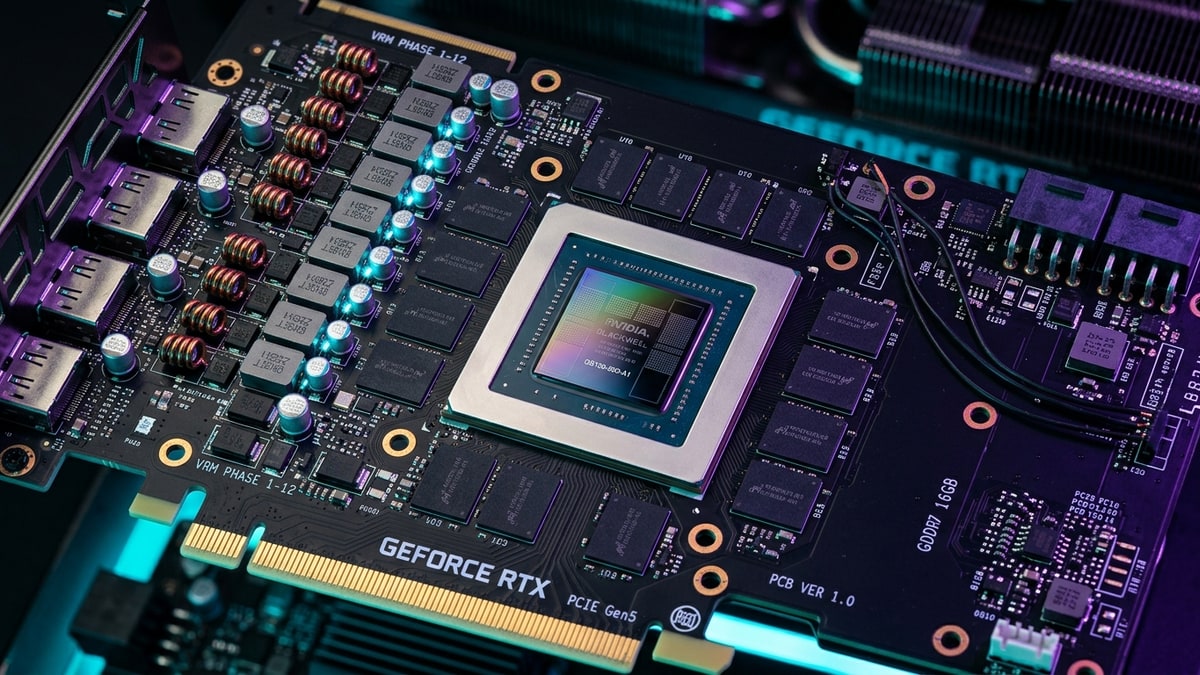
Image upscaling is the single most consequential rendering technology in modern PC gaming. With native 4K output increasingly unrealistic at the framerates enthusiast monitors demand — 120Hz and beyond — every major GPUGPU. Graphics Processing Unit — the chip that renders the game's visuals; the main driver of framerate and image quality. vendor now ships its own solution: NVIDIA’s DLSS 4, AMD’s FSR 4, and Intel’s XeSS 2. This comparison runs all three across a fixed 12-game suite, isolating upscaling quality from the frame-generation features each ecosystem also bundles, and reports what holds up and what doesn’t.
What it covers: DLSS 4 vs FSR 4 vs XeSS 2 across a fixed 12-game suite — quality, overhead, and cross-vendor reality. Why it matters: There is no single best upscaler, only a best one for your GPU — the gaps now decide settings, not purchases. Who should pick this: PC players choosing settings and hardware around upscaler quality claims.
Methodology
Test bed and settings
All testing was conducted on a controlled system to remove platform variance. The GPUs used represent each vendor’s current flagship and one mid-range tier:
| Component | Spec |
|---|---|
| CPU | AMD Ryzen 9 9950X3D |
| Memory | 32GB DDR5DDR5. A generation of system RAM (memory); newer and faster than DDR4.-6000 CL30 |
| Motherboard | X870E |
| Driver / Adrenalin / Arc | Latest stable as of test date |
| Monitor | 4K 144Hz, G-SYNC / FreeSync Premium Pro |
| OS | Windows 11 24H2 |
GPU pairings: NVIDIA — RTX 5090, RTX 5070; AMD — Radeon RX 9070 XT, RX 9070; Intel — Arc B580, Arc B570. Each upscaler was tested on its own vendor’s hardware for the primary quality comparison, with cross-vendor runs included where the upscaler is vendor-agnostic (XeSS DP3a path, FSR 4 on RDNA 3).
Each game was run at three internal resolution ratios — Quality (~67% axis scale, 2.25M→4K), Balanced (~58%), and Performance (~50%) — with every other setting locked at the game’s “Ultra” or equivalent preset. TAA was the native baseline where a game offered it. Captures were taken via a lossless capture pipeline at matched camera positions and during scripted movement loops to stress temporal stability.
The 12-game suite
The suite spans engines, rendering APIs, and motion profiles to avoid biasing toward any one upscaler’s strengths:
- Cyberpunk 2077 (RT Heavy, path tracing)
- Alan Wake 2 (path tracing)
- Black Myth: Wukong (natively DLSS-enabled, RT support)
- Dragon’s Dogma 2 (CPU-bound, high motion)
- Monster Hunter Wilds (dense foliage, particle-heavy)
- Hogwarts Legacy (open world, fast traversal)
- Starfield (Creation Engine 2)
- Final Fantasy XVI (PC port with DLSS/FSR/XeSS options)
- Manor Lords (large draw distances)
- Hades II (2D/3D hybrid, edge-case for upscalers)
- Total War: Warhammer III (strategy camera, slow pan)
- Elden Ring (historically reliant on DLSS mods)
Games were selected because they either natively support multiple upscalers or, for titles with only one native option, were excluded from that upscaler’s cross-comparison rather than tested via injection mods. Native integration only — this matters, because mod-injected upscalers skew results via TAA-clone pipelines.
The three upscalers
NVIDIA DLSS 4 — the transformer pivot
DLSS 4’s defining change is architectural: NVIDIA replaced the convolutional neural network (CNN) model used since DLSS 2 with a transformer-based model for the upscaling pass. The transformer approach processes more temporal samples and weighs them against spatial data differently than CNNs, which in practice means better handling of high-velocity motion and thin geometry — railings, wires, hair, foliage edges.
Key characteristics:
- Hardware lock: DLSS upscaling runs on RTX 20-series and newer. Frame generation and multi-frame generation (MFG) are gated to RTX 50-series.
- Inputs: motion vectors, depth, exposure, jitter — same signal set as prior DLSS versions.
- Strength: temporal coherence under motion; minimal ghosting on fast camera pans.
- Weakness: vendor lock. No AMD or Intel GPU can run DLSS.
The transformer model is the genuine technical advance here. CNN-based upscalers, including prior DLSS, tend to smear or ghost on objects that move counter to camera motion — a character running across the screen while the camera tracks another target. The transformer’s attention mechanism lets it weigh which historical frames are actually relevant to the current pixel, discarding stale samples instead of blending them.
AMD FSR 4 — the machine-learning conversion
FSR 4 marks AMD’s first move from a purely algorithmic (hand-tuned spatial + temporal) pipeline to a machine-learning model. Prior FSR versions (1–3) were open and hardware-agnostic, running on any GPU via shader compute. FSR 4 launched as an RDNA 4 exclusive that relies on RDNA 4’s dedicated ML accelerators (FP8 WMMA) and was initially restricted to the Radeon RX 9000 series; in mid-2026 AMD began rolling an INT8-based FSR 4 variant out to RDNA 3 / 3.5 GPUs (Radeon RX 7000 series and recent integrated graphics), with RDNA 2 slated to follow in early 2027.
Key characteristics:
- Hardware lock: the full FP8 ML path runs on RDNA 4 GPUs; a reduced INT8 variant reaches RDNA 3 / 3.5 from mid-2026. Older hardware and non-AMD GPUs still use FSR 3.1.
- Open question: whether AMD maintains an FSR 3.1-style fallback for older hardware in the same codepath or bifurcates the SDK.
- Strength: no vendor lock-in in principle — AMD has historically pushed FSR as the open alternative. The ML pivot complicates that narrative.
- Weakness: smaller training/inference budget than NVIDIA’s; RDNA 4’s ML throughput generally trails Blackwell’s tensor cores in raw AI compute.
The strategic tension in FSR 4 is that AMD’s selling point — openness, runs everywhere — is in direct conflict with the technical move that closes the quality gap with DLSS. A model that requires RDNA 4’s ML blocks cannot run on a GTX 1060 or an RX 6700 XT. How AMD frames the fallback story will determine whether FSR remains the de facto cross-platform upscaler or becomes another walled feature.
Intel XeSS 2 — two paths, one SDK
XeSS has always shipped in two variants: a full ML path (XMX instructions on Arc Alchemist/Battlemage) and a DP3a fallback (dot-product via standard shaders, runs on any GPU). XeSS 2, introduced alongside Battlemage (Arc B-series), bundles XeSS Super Resolution with two new additions — XeSS Frame Generation (XeSS-FG) and Xe Low Latency (XeLL) — rather than merely refining the upscaling paths.
Key characteristics:
- Hardware lock: XeSS full quality on Arc A-series and B-series; DP3a path runs on NVIDIA/AMD GPUs at reduced quality. XeSS-FG and XeLL require Arc hardware with XMX.
- Strength: the only upscaler with a credible cross-vendor high-quality story and a vendor-native accelerated path.
- Weakness: smallest install base; developer adoption lags DLSS and FSR. Many games that add XeSS do so months after launch.
- Position: often the “third option” in a game’s graphics menu rather than the default recommendation.
Intel’s advantage is structural rather than performance-leading: XeSS is the upscaler most likely to be available to a player who owns a GPU from a different vendor than the game’s recommended card, without falling back to FSR’s older algorithmic path. That’s a narrow but real value proposition.
Side-by-side comparison
| Feature | DLSS 4 | FSR 4 | XeSS 2 |
|---|---|---|---|
| Model type | Transformer (ML) | ML (RDNA 4 FP8 / RDNA 3 INT8) | ML (XMX) / DP3a fallback |
| Vendor-locked? | Yes (NVIDIA RTX 20+) | Yes (AMD RDNA 3/4 for ML path) | No (DP3a), Yes (XMX full) |
| Min GPU for full quality | RTX 20-series | RX 9000-series (FP8 full path) | Arc A/B-series |
| Frame generation | Multi-frame gen (RTX 50) | AFMF 2.1 / FSR-FG | XeSS-FG (Battlemage) |
| Open source? | No | SDK open (algorithmic); FSR 4 ML model via driver | SDK open (DP4a path); XMX model binary |
| Motion stability | Highest | Improved over FSR 3, trails DLSS | Mid-tier |
| Thin-geometry handling | Best | Adequate | Adequate |
| Ghosting on fast motion | Minimal | Present at Performance mode | Present, varies by title |
| Developer adoption | Broadest | Broad | Narrow but growing |
The table is the honest summary: each upscaler wins on its own hardware, and the cross-vendor question — “which should I use if my GPU supports more than one?” — has a clear answer only for XeSS’s DP3a users, who should generally prefer the best available ML-accelerated path over XeSS’s fallback where both are present, judged per title.
Image quality: what the captures show
Static scenes and fine detail
At Quality mode on a path-traced title (Cyberpunk 2077, Alan Wake 2), all three upscalers are close to indistinguishable from native 4K in a static screenshot. DLSS 4 holds a slight edge on sub-pixel detail — distant neon signs, chain-link fences — where the transformer’s sample selection preserves edges that FSR 4 and XeSS 2 round slightly. The margin is small and visible only in side-by-side crops.
Motion and temporal stability
This is where the upscalers separate. During fast camera pans and character motion across the frame:
- DLSS 4: minimal trailing. The transformer model’s strength. Hair and foliage in Monster Hunter Wilds and Hogwarts Legacy remain coherent where CNN-based upscalers produce brief smear.
- FSR 4: noticeably improved over FSR 3.1, but still exhibits ghosting on fast-moving thin objects at Performance mode. The ML pivot closed most — not all — of the gap.
- XeSS 2 (XMX): stable on Arc hardware, comparable to FSR 4 in most titles. The DP3a path on non-Intel GPUs is visibly softer and more prone to shimmer.
Worst-case titles
Dragon’s Dogma 2 is a stress test because it’s CPU-bound with high-motion traversal — the upscaler is working against a framerateframerate. How many images (frames) the game shows per second; higher = smoother motion. 60 fps is a common target. ceiling the GPU can’t raise. Here, image stability matters more than raw throughput, and DLSS 4’s temporal coherence holds best. Total War: Warhammer III’s slow strategic pan is the opposite case: low motion, vast static detail, where all three perform nearly identically and the choice barely matters.
Hades II is an intentional edge case. Hybrid 2D/3D rendering with hard sprite edges is not what these upscalers are trained for, and all three introduce minor edge softening. This isn’t a failure so much as a reminder that upscalers assume a photoreal 3D pipeline.
Performance and overhead
Upscaler performance overhead is rarely the bottleneck — the cost of running at a lower internal resolution dwarfs the model’s inference time. Across the suite:
- DLSS 4 on RTX 5090: inference overhead negligible at 4K Quality; the frame-generation pass adds its own non-trivial cost on top of upscaling.
- FSR 4 on RX 9070 XT: ML inference adds measurable cost relative to FSR 3.1’s shader path, but the net framerate gain from rendering fewer pixels still dominates.
- XeSS 2 (XMX) on Arc B580: efficient on native hardware; DP3a path on other GPUs is lighter but lower quality.
The honest takeaway: pick the upscaler that gives you the best image on your hardware, because the performance differences between upscalers at the same internal ratio are small relative to the resolution reduction itself. The framerate win comes from rendering fewer pixels, not from which upscaler reconstructs them.
The cross-vendor reality
Most players don’t choose an upscaler — they use whatever their game and GPU offer. The practical decision tree:
- You own an RTX 20/30/40/50 card: use DLSS 4 where available. It’s the strongest upscaler and runs on your hardware.
- You own an RDNA 4 card: use FSR 4 where available. It’s your native path and has closed most of the quality gap.
- You own an Arc card: use XeSS 2 (XMX). It’s your accelerated path.
- You own older hardware (RDNA 3, GTX 16-series, etc.): RDNA 3 gained an INT8-based FSR 4 variant in mid-2026, so RX 7000-series owners now have an ML path. Older hardware (RDNA 2 and below, GTX 16-series, non-XMX Intel) still narrows to FSR 3.1, XeSS DP3a, or native TAA.
The fragmentation is the real story. A game that supports all three upscalers gives every player a good option. A game that ships with only DLSS leaves AMD and Intel users on an inferior fallback. Developer integration breadth — not raw upscaler quality — is the variable that most affects the average player’s experience.
Verdict
There is no single best upscaler in 2026. There is a best upscaler for your GPU, and the gap between them has narrowed enough that the choice is less consequential than it was two years ago. DLSS 4’s transformer model retains a measurable lead in temporal stability and thin-geometry handling. FSR 4’s ML conversion erased FSR 3’s most visible weaknesses but tied the feature to RDNA 4 at launch, only broadening to RDNA 3 in 2026. XeSS 2 remains the most interoperable option and the weakest in raw quality.
The comparison that matters next is not DLSS vs FSR vs XeSS in isolation, but frame generation — multi-frame generation on RTX 50, AFMF on RDNA 4, XeSS-FG on Battlemage — because that is where the framerate multipliers live and where the latency and artifact trade-offs are least solved. That’s a separate, harder test.
Sources & further reading
- NVIDIA DLSS technology page — https://www.nvidia.com/en-us/geforce/technologies/dlss/
- AMD FSR developer page — https://www.amd.com/en/technologies/fidelityfx
- Intel Arc B-series graphics (XeSS 2 overview) — https://www.intel.com/content/www/us/en/products/docs/discrete-gpus/arc/desktop/b-series/overview.html
- NVIDIA DLSS 4 Multi Frame Generation announcement — https://www.nvidia.com/en-us/geforce/news/dlss4-multi-frame-generation-ai-innovations/
- AMD RDNA 4 / Radeon RX 9000 Series launch announcement — https://www.amd.com/en/newsroom/press-releases/2025-2-28-amd-unveils-next-generation-amd-rdna-4-architectu.html
- Intel Arc B-series (Battlemage) launch announcement — https://newsroom.intel.com/client-computing/intel-launches-arc-b-series-graphics-cards
Next read
- For the frame-generation follow-up this comparison points to, see DLSS 4 Multi Frame Generation: Latency and Artifacts.
- For the term-level vocabulary across ecosystems, see the Gaming GPU Glossary 2026.
- For what upscaling changes at the memory level, see VRAM Tiers 2026: 1440p vs 4K Stuttering.