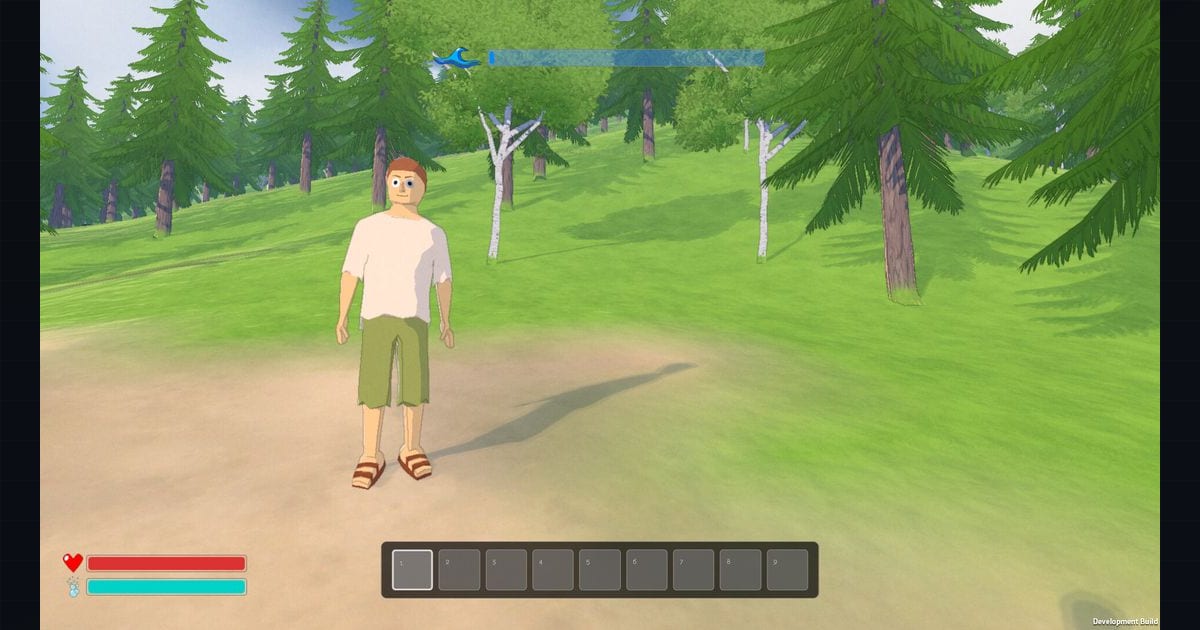
Escape the Flood! is a first-person survival crafting game built around one short, brutal session: about thirty minutes to escape a procedurally generated island before the ocean swallows it. Developer duo Platuro and Orys, published by Frosthain, are bringing the game to Steam Early Access in November 2026 on PC, with macOS (Apple Silicon only) and Linux versions planned alongside the Windows build.
What changed in the build
The Steam store page went live with an Early Access launch window of November 2026, and the developers used the page to spell out exactly why the game is arriving unfinished. According to their “Why Early Access?” statement, the entire loop is a single half-hour race, and the only honest way to tune it is to watch many players run it. They list specific questions Early Access will answer: how fast the water should climb, how much wood an island should hand you, and how long a four-player group stays friendly when there is only one boat between them.
The intended Early Access window is roughly twelve months, with the studio noting they would rather take longer than cut the work short. They have also signaled a price increase at full release and promised to announce any change “well before it happens” on the store page and in news posts.
How the race works
Escape the Flood! is built around one tight loop that resets every round. Each match starts with a fresh procedurally generated island, with no two layouts to memorize. The water starts at your ankles and never stops climbing; the beach is the first to go, and the terrain disappears one stretch at a time. You have roughly thirty minutes to take what the island gives you, build something that floats, and be on it when there is no ground left.
Core survival loop
The Steam description breaks the moment-to-moment play into a familiar survival kit with a hard deadline bolted on:
- Chop, mine, haul, craft — gather wood, stone, fiber, and rigging, then build the boat piece by piece. Nothing you need is in one place, and the tideline eats ground behind you while you fetch it.
- Oxygen management — there is no shallow end left; staying underwater for too long will end the run.
- Death and revival — players bleed out after ninety seconds if not revived by a teammate. If you stay dead longer than that, you become a ghost that can only be revived at a shrine — provided the water has not already swallowed it.
- Captain system — the first player aboard holds the wheel. You decide when to push off, and any teammates still on the rock are out of luck.
Combat
The Steam page is blunt about PvP: “Axe, pickaxe, spear, fists. All of them work on other players too.” Friendly fire is on by design, and proximity voice chat means you only hear whoever is close — everything else is out of earshot. Combined with the captain mechanic, the result is a session where cooperation and betrayal are both viable paths to survival.
Platforms
The Steam page lists three supported configurations:
- Windows — minimum GTX 1050 / RX 560 with 8 GB RAM, recommended GTX 1660 / RX 5600 XT with 16 GB RAM on Windows 11.
- macOS — Apple Silicon only. Minimum M1 with 8 GB RAM on macOS 12 Monterey; recommended M2 or newer with 16 GB RAM on macOS 14 Sonoma or newer. Intel Macs are not supported.
- Linux — Vulkan-capable GPUGPU. Graphics Processing Unit — the chip that renders the game's visuals; the main driver of framerate and image quality. with 4 GB VRAMVRAM. Video RAM — memory on the graphics card used for textures and frames; more of it lets you run higher settings. on Ubuntu 22.04 LTS / SteamOS 3.5 or newer.
Storage is light at 6 GB across all three, and supported interface languages are English, Simplified Chinese, Japanese, Korean, and Russian.
What the early session feels like
Reading the Steam page’s bullet list end-to-end gives a clear picture of what a single run looks like in practice. You start at the beach with empty hands and the ocean at your ankles. Players must decide whether to prioritize gathering resources inland or along the shoreline, as resources are scattered and the tideline consumes ground behind them. The Steam description is specific that “nothing you need is in one place,” so any plan has to assume multiple trips into shrinking territory.
As the water climbs, exploration gets vertical. The terrain disappears from the edges inward, which means resources and safe ground retreat toward higher elevation. Underwater sections become tempting shortcuts, but the oxygen system punishes that — there is no shallow end left, and drowning is a real failure state. If you go down, your team has ninety seconds to revive you; after that you become a ghost who can only be brought back at a shrine, and shrines are themselves exposed to the rising water.
The captain system is the social hinge of the late game. The first player aboard holds the wheel and decides when the boat pushes off. Teammates still on the rock are out of luck, and proximity voice chat means you only hear the people physically near you — so a stranded ally screaming into a dead mic cannot coordinate a rescue. Friendly fire adds the final layer: axe, pickaxe, spear, and fists all work on other players, so the same tools you use against the ocean can be turned on the people you are trying to escape with.
What’s in and what’s still thin
The “current state” section on the Steam page is unusually candid. In Early Access on day one, players will get:
- Procedurally generated islands with fresh terrain and resource spawns each round.
- The full core loop: gathering, crafting, and building the complete boat from hull to rigging.
- Rising water, oxygen, drowning, the ninety-second bleed-out, ghost state, and shrine revives.
- Solo play and online co-op for up to four players, including proximity voice chat and the captain system.
What is “still thin” is the variety layer: more island types, more items, longer-term progression, and ongoing balance and polish. The developers state their post-launch goal is “more of everything the island can throw at you” — additional terrain and biome variety, more craftable gear and boat parts, and a wider spread of situations across a run — but they explicitly prefer describing the direction over committing to a fixed list, because Early Access feedback will reshape it.
Developer notes and Early Access commitments
The Steam Early Access questionnaire is unusually detailed for a survival indie, and the answers give a strong sense of how Platuro and Orys plan to work with the community during the roughly twelve-month Early Access window. The team plans to keep the Steam forums and a Discord as the primary feedback channels, post patch notes for every update including the parts that did not work out, and “explain the reasoning when we change something people care about.” They acknowledge being a small team and unable to act on everything, but they prefer to hear loud feedback early rather than find out about a broken mechanic at 1.0.
The full release goals are explicit in the same questionnaire: “more of everything the island can throw at you.” That translates to additional terrain and biome variety, more craftable gear and boat parts, a wider spread of situations across a run, deeper progression and customization options, and ongoing balance, performance, and polish work in both solo and co-op. The studio is also committing to a price increase at full release and promising to announce any change well in advance on the store page and in news posts.
A few mechanics are worth flagging for players planning a November 2026 launch buy. The studio has stated that solo play and online co-op for up to four players both work in the current build, including proximity voice chat and the captain system. Friendly fire is on by design. The Windows, macOS, and Linux builds all target the same release date, with Apple Silicon being the only supported Mac architecture and Vulkan support required on Linux.
What it means for players
For survival crafting fans, Escape the Flood! is betting that a hard timer plus proceduralprocedural. Generated by rules or algorithms rather than hand-placed — e.g. terrain or quests that the game builds itself. islands plus four-player betrayal creates the same kind of one-more-round pull that extraction shooters and round-based roguelikes have built their audiences on. The thirty-minute window is short enough to fit in a single sitting and long enough that one bad decision ends you.
There are trade-offs. Friendly fire, proximity voice chat, and the captain mechanic make co-op sessions genuinely tense. The price is also expected to rise when the game leaves Early Access, so the November launch will be the cheapest entry point.