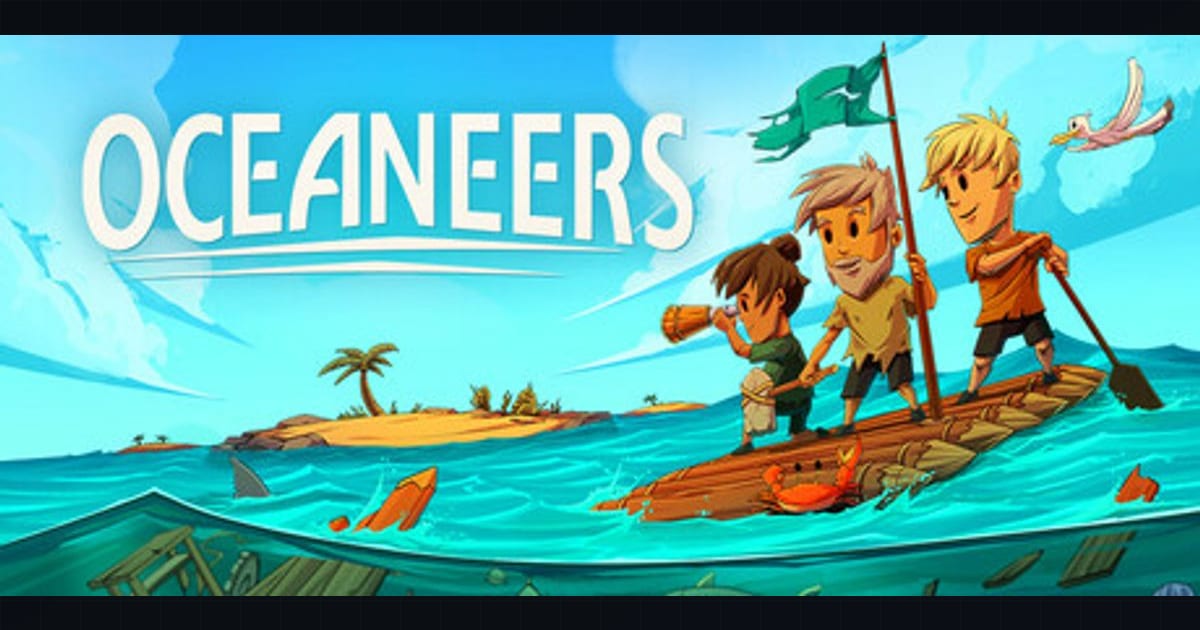
Oceaneers Primer: Building Rafts and Colonies in a Flooded World
In the ever-expanding ocean of survival games, Oceaneers distinguishes itself with a unique premise: instead of scavenging on static land, you manage a colony of survivors tasked with resurfacing sinking islands and building rafts to haul them back to your settlement. Set in a world where rising waters have transformed the planet into an archipelago of unstable landmasses, Oceaneers blends colony management, raft construction, and exploration into a cohesive loop that emphasizes preparation, resourcefulness, and adaptability. The game’s core loop revolves around three interconnected activities: sustaining your colony, designing and deploying rafts to retrieve valuable islands, and researching the enigmatic Float-Tech that powers the world’s remaining habitable land. This primer introduces the fundamental systems that define the Oceaneers experience, providing a foundation for both new and experienced players to thrive in this aquatic survival challenge.
Colony Management: The Heart of Your Survival
At its core, Oceaneers is a colony simulation game. Your primary responsibility is to keep a group of survivors alive, healthy, and productive. Unlike traditional survival games where you control a single avatar, Oceaneers puts you in charge of multiple characters, each with unique skills, traits, and needs. Effective colony management requires balancing several interconnected systems:
Survivor Needs
Each survivor has multiple core needs including hunger, thirst, and health. Meeting these requires building farms for food, water collectors for hydration, beds for rest, and medical bays for treatment. As your colony expands, scaling these systems creates a satisfying progression loop where success enables further growth.
Work and Automation
Oceaneers features a task management system where you assign survivors to jobs like gathering, building, producing, guarding, or operating vessels. Automation systems (such as automatic crop replanting) handle repetitive tasks, freeing survivors for complex work and creating technological progression.
Colony Growth and Morale
As your colony expands, managing resources, logistics, and morale becomes more challenging. Building social spaces, balancing workloads, and providing varied diets help maintain high morale and efficiency.
Raft Construction and Island Hauling: The Core Loop
While colony management sustains your survivors, the true purpose of Oceaneers lies in expanding your territory by hauling floating islands back to your settlement. This process involves designing rafts, sending survivors on expeditions, and utilizing the unique Float-Tech that powers the islands.
Raft Design and Components
Rafts are customizable vessels for specific purposes. The raft-building system lets you select hull components, add propulsion systems, equip utilities like cranes and storage, and customize your vessel’s appearance. Each choice affects performance—for example, speed-focused rafts sacrifice cargo capacity, while hauling rafts prioritize strong cranes and wide decks. Experimenting with configurations is key to optimizing your expedition strategy.
Expedition Workflow
Sending a raft on an expedition involves: assigning skilled crew, loading supplies, setting a destination, launching and monitoring the journey, then returning to salvage any hauled islands, resources, and surviving crew. Expeditions carry risks from storms, sea creatures, and debris, which can be mitigated by reinforcing hulls, stockpiling repair materials, and assigning skilled pilots.
Island Hauling and Buoyancy
The most distinctive aspect of Oceaneers is the ability to haul entire islands back to your colony. Floating islands are kept afloat by Float-Tech devices, which you can scan, collect, and reinstall to adjust an island’s buoyancy. To haul an island:
- Locate a Suitable Island: Use scouting rafts or sonar to identify islands with valuable resources or strategic placement.
- Weaken Natural Buoyancy: Deploy devices that counteract the island’s natural Float-Tech, allowing it to sink slightly for attachment.
- Attach Cranes and Cables: Secure heavy-duty cranes to your raft and connect them to the island via reinforced cables.
- Increase Raft Buoyancy: Boost your raft’s own floatation through additional Float-Tech or buoyant materials to counteract the island’s weight.
- Transport and Resurface: Slowly tow the island back to your colony, then reinstall Float-Tech devices to return it to a floating state near your settlement.
Successfully hauled islands can be integrated into your colony as new land for building, farming, or resource extraction. The process requires careful balance—if your raft lacks sufficient buoyancy or power, the expedition may fail, resulting in lost cargo or damaged equipment.
Float-Tech and Research: Advancing Your Colony
Beyond immediate survival, Oceaneers features a deep research system centered around recovering and understanding Float-Tech—mysterious technology from an old-world corporation that enables islands to float and powers various advanced systems. Progressing through the research tree unlocks new buildings, upgrades, and capabilities that transform your colony from a struggling settlement into a technologically advanced society.
Research Tree Structure
The research system is divided into several branches, each focusing on different aspects of survival and technology:
- Basic Survival: Improves fundamental needs like food preservation, water purification, and basic shelter.
- Production: Enhances crafting efficiency, introduces automation, and unlocks advanced workstations.
- Exploration: Improves raft performance, extends expedition range, and unlocks scanning tools for locating islands and resources.
- Defense: Strengthens colony defenses with better walls, turrets, and survivor combat training.
- Float-Tech: The core branch, where you study recovered devices to improve island hauling, buoyancy control, and advanced propulsion systems.
Research is conducted by assigning survivors to work at laboratories or research stations. Each project requires specific resources and time to complete, encouraging players to prioritize based on their colony’s immediate needs and long-term goals.
Resource Acquisition and Production
Advancing through the research tree demands a steady flow of raw materials, which in turn requires expanding your resource acquisition capabilities. Early game focuses on scavenging debris from sunken structures and harvesting basic crops. As you unlock new technologies, you can:
- Establish Farms: Grow diverse crops to ensure food variety and nutritional balance.
- Set Up Mines: Extract ores and minerals from islands for metalworking and advanced components.
- Harvest Unique Resources: Collect rare materials like bioluminescent algae or crystalline compounds from specific biomes.
- Implement Automation: Use conveyor belts, sorters, and automated crafters to streamline production lines.
The interplay between research, resource gathering, and production creates a satisfying feedback loop: better research leads to more efficient production, which provides the resources needed for further research.
Exploration and Discovery
The world of Oceaneers is vast and varied, encouraging players to venture beyond their immediate surroundings to uncover secrets and valuable resources. Exploration is facilitated through several systems:
Ocean Biomes
The flooded world features distinct oceanic regions, each with unique characteristics. The game includes multiple ocean biomes ranging from warm tropical waters with abundant marine life to cooler regions with strong currents and mineral deposits. Some areas feature dynamic weather systems that present both risks and opportunities for resource gathering.
Island Biomes
Floating islands themselves vary in composition and resources. Different island types provide access to various materials—some feature dense vegetation for wood and food, others contain rich mineral deposits for mining and construction, while specialized biomes offer unique resources for advanced crafting.
Bunkers and Narrative Content
Scattered across islands are bunkers left behind by the old-world corporation that created Float-Tech. These underground structures contain:
- Story Fragments: Pieces of a larger narrative explaining the world’s flood and the fate of the corporation.
- Unique Resources: Rare materials not found elsewhere, essential for advanced technologies.
- Blueprints: Pre-designed plans for advanced buildings or raft components.
- Technology Artifacts: Functional devices that can be reverse-engineered or integrated into your colony.
Exploring bunkers often requires overcoming environmental hazards, solving simple puzzles, or defending against wildlife guardians, adding an element of adventure to the survival experience.
Challenges and Strategic Depth
Oceaneers presents several layers of challenge that reward thoughtful planning and adaptability:
Resource Scarcity
Supplies are intentionally limited, forcing players to make meaningful choices about allocation. Do you invest scarce metal in building a defensive turret or upgrading your raft’s crane? Should you use precious food to feed survivors now or save it for breeding animals that provide long-term sustenance? These decisions create a constant tension between short-term survival and long-term growth.
Environmental Hazards
The flooded world is dynamic and unpredictable. Storms can damage exposed structures, rogue waves can swamp rafts, and shifting currents can alter island paths. Players must prepare for these events by reinforcing critical infrastructure, maintaining emergency supplies, and designing flexible systems that can withstand disruption.
Progression Pacing
Oceaneers rewards deliberate advancement rather than rushing through content. Early game focuses on establishing basic survival—securing food, water, and shelter for a small group of survivors. Mid-game introduces colony expansion, raft optimization, and initial Float-Tech research. Late game involves large-scale island hauling, advanced automation, and uncovering the full narrative. This pacing ensures that each technological leap feels earned and impactful.
Multi-Survivor Management
Controlling multiple survivors adds complexity absent in single-character survival games. You must balance individual needs, assign appropriate roles, and manage interpersonal dynamics. Successfully coordinating a large team of specialists—such as having dedicated farmers, engineers, and explorers—creates a sense of accomplishment that single-character games often lack.
Conclusion
Oceaneers offers a fresh take on the survival genre by shifting the focus from individual perseverance to collective colony management in a uniquely aquatic environment. Its core loop of maintaining survivors, constructing rafts to haul islands, and researching Float-Tech creates a deeply interconnected experience where each system reinforces the others. The game excels at making players feel like true stewards of a growing settlement, where every decision—from assigning a survivor to tend crops to designing a raft for a daring expedition—has tangible consequences on your colony’s prosperity and resilience.
For players seeking a survival game that emphasizes planning, resource management, and cooperative effort over reflexes and combat, Oceaneers delivers a compelling and deeply engaging experience. Its blend of colony simulation, raft mechanics, and exploratory discovery ensures that no two playthroughs feel identical, encouraging experimentation and long-term investment in building a thriving settlement atop the waves.