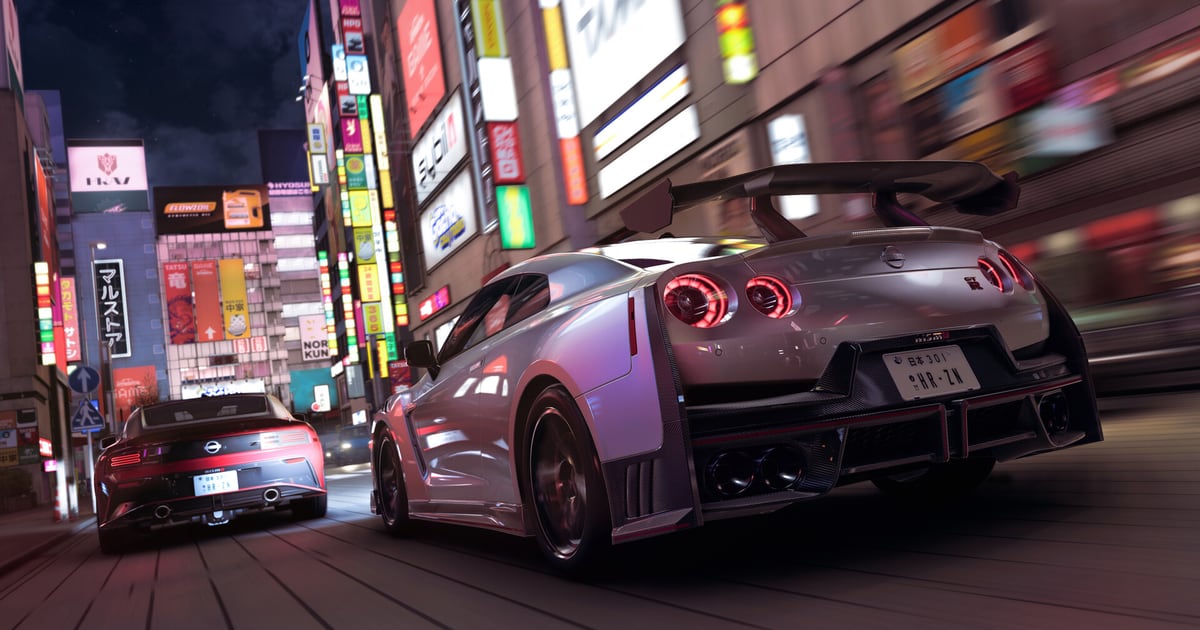
Forza Horizon 6 is the first Horizon game in years to make you start at the bottom. Horizon 5 cast you as a champion in Mexico; Horizon 6 lands you in Japan as a tourist with no rank at all, and makes the first half of the campaign about earning the right to enter races rather than about winning them. The wristband ladder is an access list, not a difficulty curve: each band raises the class ceiling on Festival events and those events name the cars you may bring.
This is mneurix.quest’s first Forza Horizon 6 article, so it is a reference piece rather than a second angle.
What this covers: the wristband ladder read as a route — which events unlock the cars that unlock later events, where buying stops paying and upgrading starts, and how the four-week playlist cadence sets your calendar. Why it matters: Horizon 6 gates cars by wristband and car theme, not by credits. Buying for speed between the Yellow and Purple bands leaves you with a garage the Festival will not accept, and nothing in the game says so in advance. Who should care: anyone between the prologue and the Gold Wristband, and returning players working out which of their old cars still have a use in Horizon Meets.
What this guide assumes
Everything below describes the live retail build on Xbox Series X|S and PC/Steam carrying the 5 October 2026 update, shipped as Series 6, “Horizon Meets.” No source I read references a beta or test branch, so the live build is the only version to reconcile against. The current playlist week is Spring, 29 October to 5 November 2026, the series’ fourth and final week.
Three details worth stating. Steam lists the release as 18 May 2026; Playground’s pre-launch blogs and its 19 May 2026 launch post both say 19 May, and the gap is unexplained in the sources. The base game is $69.99 on Steam as fetched on 2026-10-29. PlayStation is not yet in scope: PS5 arrives 26 January 2027, developed by Panic Button.
The ladder: seven wristbands, three named gates
Playground states the shape in one line: obtain all seven Festival Wristbands and you become a Horizon Legend. Only three of the seven are named in Playground’s published material.
| Gate | Wristband | What changes | Where it is stated |
|---|---|---|---|
| Horizon Qualifiers → Horizon Invitational | none, then Yellow | You join the Festival; the Festival Playlist opens; the C-class-only restriction lifts | First Drive starting guide |
| Mid-ladder | Purple | Hypercars become legal in Festival races — “quite late into the game” | Campaign blog |
| Final gate | Gold (Golden) | Horizon Legend status; Legend Island and its Goliath run, the Colossus | Campaign blog, First Drive |
The colours in between are not published in any source I could fetch, so a full seven-colour order quoted elsewhere is not from Playground. What is documented is the mechanic: Festival races are curated, entered with a specific set of cars across Road, Dirt and Cross Country, and each wristband opens more. Progress comes from Festival Events plus side activities such as PR Stunts and Skills.
Stage one: prologue to Yellow Wristband
The opening is fixed: a 2024 Nissan GT-R Nismo through Hokubu, a Polaris RZR Pro 4 Truck on snow, a 1995 Porsche 911 GT2 on the Touge, and the 2025 GR GT Prototype into the Festival.
Then Mei hands you the Collection Journal and you choose one of three starting cars: a 1989 Nissan Silvia K’s, a 1994 Toyota Celica GT-Four ST205, or a 1970 GMC Jimmy. All three are added to your garage regardless, so the choice is cosmetic. Your first race runs in a borrowed 1998 Nissan Silvia K’s Aero and unlocks every multiplayer mode. The World Map then opens with six objectives, takeable in any order: a Speed Trap at River Split, a Trail Race at Airfield Trail, the Shirakawa circuit, a Speed Zone at Highway View, Cross Country at Wind Farm, and the Hokubu Time Attack.
Three of those six are not wheel-to-wheel races; the goal is Horizon Festival Points, tracked by a meter in the upper right. No threshold is published, only that filling enough of it passes you into the Horizon Invitational, run in a 2020 BMW M2 Competition. Clear it and you hold your first wristband plus three cars from the organisers: a 2022 Toyota GR86, a 2001 Mitsubishi Lancer Evolution VI GSR TM Edition and a 2024 Ram 1500 TRX. That is six cars before you have spent a credit. Playground’s Series 1 blog puts the first wristband at “the first few hours of gameplay.”
Why buying cars before Yellow is a waste
The most useful sentence in Playground’s starting guide is easy to miss: only C-class cars are available for use at events until you join the Festival and get your Yellow Wristband. Counting the Forza.net car list on 2026-10-29, the 658 revealed models break down like this:
| Stock class | Models listed | PI band as printed in the car list |
|---|---|---|
| D | 93 | 100–400 |
| C | 104 | 401–500 |
| B | 131 | 503–600 |
| A | 117 | 601–700 |
| S1 | 123 | 701–800 |
| S2 | 58 | 801–900 |
| R | 32 | 906–998 |
Two things follow. Between Yellow and Purple your Festival racing runs from D to roughly S1, and you need not buy those cars at full price: Aftermarket Cars are “often offered at a discount” and, per the starting guide, are matched to your campaign progress, so the stock upgrades itself as you climb. And a hypercar bought mid-ladder is a Touge car, not a Festival car — 34 of the 658 models are typed as Hypercars, and none are legal in Festival races until Purple.
The middle ladder: themes, not horsepower
What trips people up mid-campaign is that Festival events restrict by car theme, not just class. The live Spring board reads: Retro Supercars at S1, Retro Rally at C, Japan at B, and Mazda at B across three PR stunts. The ladder wants breadth at a fixed class, not one fast car. Eight C-class cars in eight themes beat one S2 monster and cost less.
The wristband events break up the racing. Each band requires completing a Wristband Event, and those include Showcase Events — one is “Chaser Zero”, a racing mech — plus Horizon Rush obstacle courses at Tokyo City Docks, the Sotoyama Ski Resort and the Irokawa Space Center. Rush runs on splits and star ratings, and Playground states that with wristbands returning you must complete each Horizon Rush event to progress.
The release valve for the restricted middle game is Discover Japan, a parallel track running on Stamps. Touge Battles and night Street Races accept “the cars you might not be able to use in Festival Events just yet” — Playground’s phrase, and an acknowledgement that the two tracks exist for different garages.
Purple Wristband: the hypercar gate
Hypercars cannot be used in Festival races until at least the Purple Wristband, which Playground describes as “quite late into the game.” If what you want is to drive a hypercar, buy it whenever you like — Horizon Play, Touge Battles, Street Races, Drag Meets and Time Attack Circuits take unrestricted cars. If what you want is to finish the campaign faster, a hypercar before Purple buys nothing on the Festival side.
Gold Wristband and Legend Island
The seventh wristband is the Gold, and it converts you into a Horizon Legend. Legend status opens Legend Island, holding the Legend Island Circuit and the Colossus — the longest Goliath event the series has had, looping the entire map on the freeway, and the home of R-class racing.
Legend status also unlocks The Trial, the hardest weekly championship. Playground withheld it from Series 1 so nobody felt pressure to rush the final wristband, and said it would be available for Horizon Legends from Series 2 — so a player who has not reached Legend cannot run it.
When to stop buying and start tuning
The pivot point is the Yellow Wristband, and the argument is arithmetic. Here is where the 658 revealed models can be obtained, using the “Collection” column of the official car list:
| Acquisition route listed | Models |
|---|---|
| Autoshow, sometimes also Wheelspin or Journal | 455 |
| Autoshow, paid DLC only | 47 |
| No Autoshow route — Seasonal, Wheelspin and/or Journal only | 127 |
| Collection Journal only, no Autoshow | 16 |
| Treasure Cars | 10 |
| Aftermarket only | 3 |
The third row is the important one. 127 of the 658 revealed models have no Autoshow purchase route at all — the Playlist, Wheelspins or the Collection Journal are the only ways in, and a Seasonal-exclusive car is gone when its week closes. Buying cannot fix a thin garage; only playing the calendar does.
Hence more upgrades and fewer cars from Yellow onward. A tune converts a car you already own into an entry in another class or theme, which is what championship requirements ask for. And the playlist hands you the labour: Car Meets let you download tunes and liveries and buy a copy of a car you see there, build included. Three rules follow — my judgement on the sourced gates, not claims from Playground:
- Prologue to Yellow: buy nothing. Events are C-class only and six cars arrive free.
- Yellow to Purple: buy only to fill a theme you have no entry for, checking Aftermarket stock first.
- Purple to Gold onward: this is when buying pays, because the Festival ceiling rises into S1/S2. Breadth still beats one fast car.
And do not buy a car the playlist is about to hand you. Season rewards land at 20 and 40 points, championship wins pay specific models, and the Car Pass delivers 30 cars one per week at no in-game cost — check the Thursday drop first.
The playlist is your calendar, not your campaign
The Festival Playlist runs on real time and decides what you should own next week. A Series lasts four weeks and splits into four one-week Seasons — Summer, Autumn, Winter, Spring — each with its own reward track and board. Series 6’s update landed on a Monday and its Playlist opened on the following Thursday at 14:30 UTC. Series 6 is the sixth block since launch.
The thresholds have escalated series over series, which matters if you are working from an older guide:
| Series 1 (Welcome To Japan) | Series 6 (Horizon Meets) | |
|---|---|---|
| First series reward car | 60 PTS | 80 PTS |
| Second series reward car | 120 PTS | 160 PTS |
| First season reward car | 15 PTS | 20 PTS |
| Second season reward car | 30 PTS | 40 PTS |
Series 1’s 60-point car was the 2008 Mazda Furai; Series 6’s 80-point car is the 2025 BMW M4 CS, with the 2015 Koenigsegg One:1 at 160. If a guide told you 60 points would do it, that number is superseded. Above that sits the Series History Reward, paid on lifetime playlist points: currently the 1973 Lamborghini Espada 400 GT at 1,100 PTS — not reachable in one series, which makes the playlist a standing commitment rather than a sprint.
What one week actually pays
The credit economy of a playlist week is stated in the reward column of the official hub.
| Objective type | Count in a week | Credits each | Weekly total |
|---|---|---|---|
| Weekly Challenge | 1 | 25,000 | 25,000 |
| Daily Challenge | 7 | 5,000 | 35,000 |
| Treasure Hunt | 1 | 100,000 | 100,000 |
That is 160,000 credits a week from three objective types alone, before any championship finish, PR Stunt clear or Wheelspin. Clear the weekly, the dailies and the treasure hunt and you fund upgrades without touching a grind loop — the same discipline that makes Euro Truck Simulator 2’s profit-per-kilometre maths worth doing before you buy a truck.
This week’s board: Horizon Meets, Spring
The current season runs 29 October to 5 November 2026, and three of the non-daily objectives want a Mazda at B class, across three different event types.
| Objective | Requirement | Reward |
|---|---|---|
| The Trial — Countryside Views | Japan, B class, Road | 2013 Audi R8 Coupe V10 plus 5.2 FSI quattro |
| Championship — Dockside Drive | Retro Supercars, S1, Street | 1992 Lancia Delta HF Integrale EVO |
| Championship — Good Old Days | Retro Rally, C, Dirt | 2005 Porsche Cayman GT3 WTAC |
| Weekly Challenge — A Retro Adventure | 1980 Renault 5 Turbo | 25,000 credits |
| Drift Attack — Shimanoyama | Mazda, B class, 80,000 points | Wheelspin |
| Speed Trap — Konbini Dash | Mazda, B class, 92.0 mph | Wheelspin |
| Drift Zone — Kodachi Run | Mazda, B class, 74,100 points | Wheelspin |
Note the Trial at the top: it requires Legend status, so a player still climbing should treat this week’s 160-point target as out of reach and aim for the 80-point car instead. And one Mazda tuned to B class clears three objectives — the whole thesis in a row. You did not need a faster car, you needed the right car at the right class, and the calendar told you which one a week ahead.
What is dated next
- 21 January 2027 — the first Premium Expansion ships on all platforms, included with Premium Edition, Premium Upgrade and the Expansions Bundle. PS5 Premium early access opens that day.
- 26 January 2027 — the PS5 launch (Standard and Deluxe, plus a disc release), alongside a free content update whose contents Playground has not detailed.
- Undated — the next series update, themed “City Life”, adds two permanent Tokyo race routes, three new-to-Horizon cars and an EventLab Prop Pack. Playground has given it no date, so treat any date you see elsewhere as unsourced.
Between now and then the cadence holds: a new series every four weeks, a new season every Thursday at 14:30 UTC, a Car Pass car every Thursday.