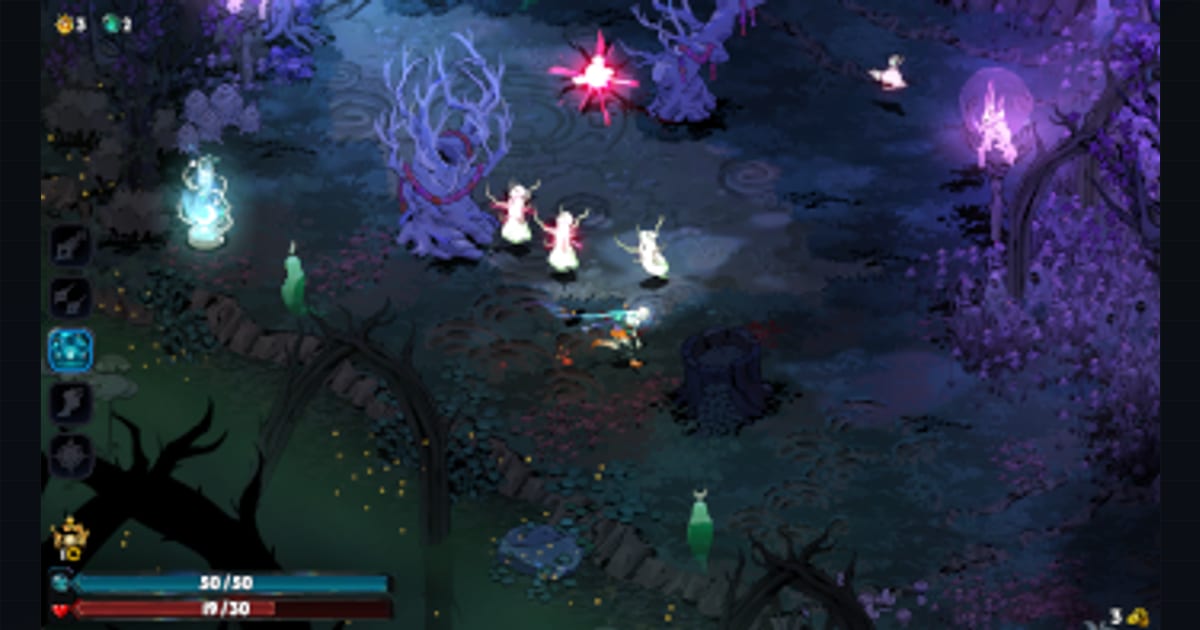
What changed in v1.0
The move from Early Access to version 1.0 brings a substantial collection of additions that Supergiant Games describes as the culmination of four and a half years of development. The studio’s blog post emphasizes that the update is not merely a patch but a full completion of the Early Access experience, delivering the true ending of the story, scores of new events for the fully voiced cast, new music, new Fated List prophecies, and new late‑game unlockables.
One of the most notable additions is the true ending itself. Players who reach the final confrontation with Chronos, the Titan of Time, now have access to an epilogue that resolves narrative threads left open in Early Access. The epilogue can be experienced without restarting the game, and it introduces new dialogue options, additional cutscenes, and a sense of closure for Melinoë’s journey.
Beyond the story, the update adds fifty new achievements. These achievements can be earned retroactively; loading a saved progress from Early Access will grant any achievement whose conditions have already been met. This approach rewards long‑time players without requiring a fresh start.
The update also introduces new keepsakes, including the Silken Sash for Arachne, which increases starting armor when equipped. Animal familiars have received tweaks that improve the chance of finding corresponding resources and reduce confusion when certain hexes activate. Players can now brew Ambrosia at the Crossroads Cauldron, a new consumable that grants temporary buffs.
Combat and balance see numerous adjustments. For example, the Moonstone Axe gains increased special speed, making it easier to dash out of its attack sequence, while the Argent Skull’s Omega Special now channels faster. The Vow of Rivals final rank now requires reaching the true ending, linking progression directly to story completion. Resource names have changed, with Prestige renamed to Kudos across the game, affecting costs for various upgrades and offerings.
The user interface received a refresh to reflect the end of Early Access. The main menu features updated artwork and animations, the options menu has a new look, and the Silver Pool screen shows refreshed visuals. In the Altar of Ashes, the selection highlight now clearly indicates the chosen Arcana card, and fully upgraded cards appear larger than before. Contextual hints in the Insights mode have been expanded, and gamepad navigation on the Path of Stars screen has been improved.
Visual and audio upgrades accompany the content additions. New artwork and animations depict the true ending, ambient effects have been added to character portraits that previously lacked them, and Melinoë’s appearance during Dark Side and other full‑invincible effects has been updated. The soundtrack, composed by Darren Korb, expands to just under four hours of music, with orchestral pieces recorded at Abbey Road Studios. Sound effects for various weapons, resources, and menu interactions have been refined, and ambient sounds now enrich many locations.
New regions and locations
While the core loop of Hades II remains rooted in the ever‑shifting Underworld, version 1.0 adds several new locations that expand the sense of exploration. The blog post and accompanying patch notes highlight new areas tied to the true ending, as well as fresh sections of Oceanus and the Summit.
In the true ending sequence, players can visit a series of previously inaccessible chambers that reveal additional narrative content after the defeat of Chronos. The new spaces feature unique visual themes distinct from earlier areas of the Underworld, with new artwork and animations tied to the ending’s events.
Oceanus receives additional rooms that expand the underwater exploration. These new zones introduce revised enemy placements and adjusted ambient attack frequencies, alongside the broader collision improvements applied across multiple regions. The update also adjusts shrine appearance rates, making Shrines of Hermes more likely to spawn on the Summit.
The Summit gains new platforms and pathways that were absent in Early Access. According to the patch notes, several Summit foes saw balance adjustments: Land-Dracon projectiles have reduced homing and range, Horror-type enemies have increased recovery times and reduced damage, and the Tail of Typhon’s bomb blast range has been reduced.
Overall, the new regions are designed to reward exploration without disrupting the core loop. Each area introduces distinct visual cues, new enemy variants, and additional opportunities to gather resources, complete prophecies, or unlock keepsakes. The level‑design team worked to ensure that the new spaces feel organic to the existing world, using the same proceduralprocedural. Generated by rules or algorithms rather than hand-placed — e.g. terrain or quests that the game builds itself. generation rules that govern the rest of the Underworld while adding hand‑crafted set pieces for narrative moments.
How the story concludes for the final boss
Supergiant Games frames the conclusion of Hades II’s narrative around the confrontation with Chronos, the Titan of Time. In Early Access, the battle with Chronos was present but lacked a definitive resolution; defeating him returned the player to the standard loop without clear narrative closure. Version 1.0 changes this by adding a true ending that unfolds after the Chronos encounter.
Upon defeating Chronos, the game does not immediately reset. Instead, a sequence of events triggers that transports Melinoë to a new set of chambers tied to the story’s conclusion. In these chambers, players witness conversations between Melinoë and various allies, including Hermes, Hecate, and her brother Zagreus from the original game, who communicates with her across time. The dialogue addresses the consequences of Chronos’s defeat and how the remaining family and allies adjust in its wake.
The epilogue expands on these moments, offering additional narrative beats and new contextual voice lines for Melinoë and other characters. The epilogue does not require a new run; it can be accessed without restarting the game after the Chronos victory, allowing players to experience the closure without losing progress.
Supergiant Games also integrated story progression into existing systems. The Fated List of Minor Prophecies received eight new entries that tie directly to events in the true ending, such as assisting Medea with a concoction or aiding Circe with an incantation. Completing these prophecies grants rewards that reinforce the narrative themes, such as increased resource yields or unique cosmetic items. The Vow of Rivals, a combat‑focused pledge, now includes a final rank that can only be claimed after experiencing the true ending, linking mastery of the game’s systems to story completion.
By weaving narrative closure into both new scripted events and existing progression systems, Supergiant ensures that the conclusion feels earned rather than tacked on. The true ending provides answers to questions raised throughout the Early Access period while leaving room for interpretation, a balance that aligns with the studio’s approach to storytelling in the original Hades.
What it means for the series
The launch of Hades II v1.0 signals that Supergiant Games has delivered a complete, polished experience that builds on the strengths of its predecessor while forging its own identity. The addition of the true ending and epilogue gives the game a sense of finality that was absent during Early Access, yet the studio emphasizes that the world remains open for future content. In the blog post, the development team notes that they will keep a close eye on the launch, deploy hotfixes if needed, and later reflect on what comes next—though no concrete plans for DLC or expansions have been announced.
For players, the version 1.0 update offers a substantial amount of new content without requiring a fresh start. Retroactive achievements, updated keepsake mechanics, and the ability to brew Ambrosia provide meaningful incentives to return to existing saves. The expanded regions and refined combat systems add depth to each run, encouraging experimentation with different weapon aspects, familiars, and boon combinations.
From a development perspective, the transition to version 1.0 demonstrates Supergiant’s commitment to iterative, community‑driven design. The studio repeatedly highlighted how feedback from Early Access shaped balance changes, visual upgrades, and quality‑of‑life improvements. This collaborative approach, combined with the team’s willingness to iterate on core systems, suggests that any future projects—whether a sequel, a spin‑off, or new content for Hades II—will benefit from a similarly open development cycle.
In summary, Hades II v1.0 delivers a robust package that closes the narrative arc, expands the world, and refines gameplay, all while maintaining the rogue‑like loop that defines the series. The update shows Supergiant’s ability to evolve a successful formula while staying true to the core elements that made the original Hades a critical and commercial success.