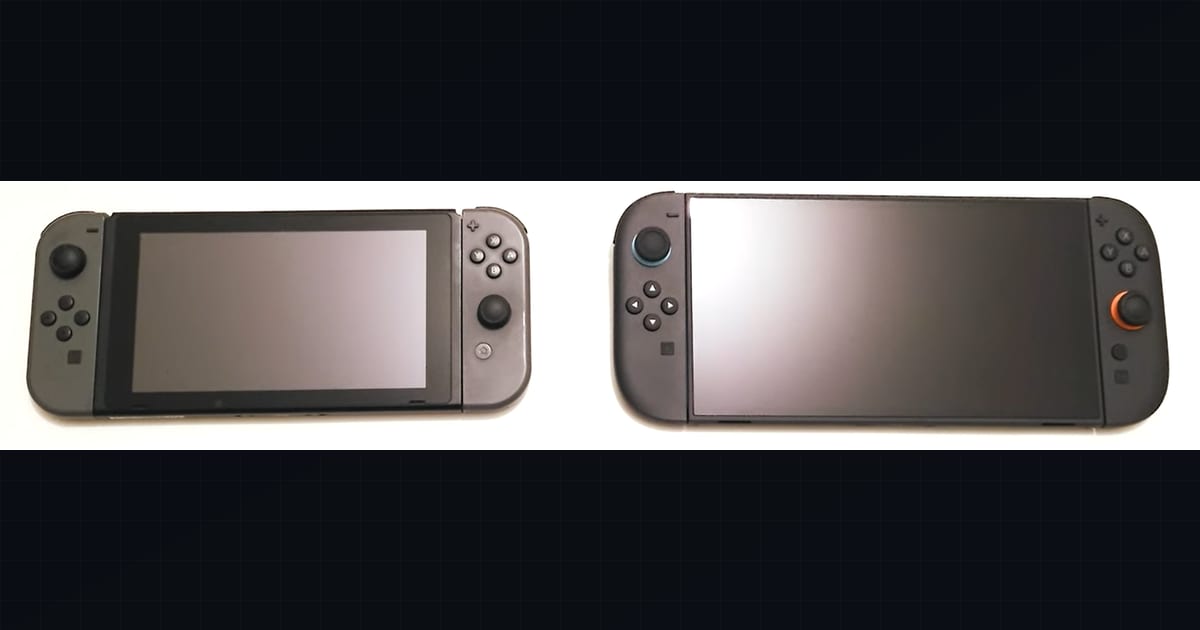
Nintendo shipped the Switch 2 on June 5, 2025, carrying forward one of the most successful console install bases in history rather than starting from zero. The launch split its weight across three pillars: a deliberately lean native library, near-universal backward compatibility with the original Switch catalog, and a first-month patch cycle that cleaned up the rough edges users hit on day one. This analysis covers what actually shipped, how the compatibility layer performs, and what the early firmware updates changed.
What it covers: What the Switch 2 actually launched with — native library, backward compatibility, and the first patch cycle. Why it matters: The BC layer, not the launch exclusives, is what made day-one ownership viable. Who should pick this: Buyers weighing the Switch 2 on library size, and Switch 1 owners checking what carries over.
Hardware At A Glance
Confirmed Specifications
Nintendo’s official disclosures, corroborated by teardowns and NVIDIA’s developer documentation, establish the core hardware picture:
| Component | Specification |
|---|---|
| SoC | Custom NVIDIA T239 (Ampere GPUGPU. Graphics Processing Unit — the chip that renders the game's visuals; the main driver of framerate and image quality., 8-core Arm CPU) |
| RAM | 12 GB LPDDR5X |
| Internal storage | 256 GB UFS 3.1 |
| Display | 7.9-inch LCD, 1080p, 120 Hz, HDR support |
| Docked output | Up to 4K60 (with DLSS upscaling) |
| Joy-Con 2 | Magnetic attachment, optical mouse sensor |
| Network | Wi-Fi 6, wired LAN via dock |
The CPU is an 8-core Arm cluster; the GPU uses NVIDIA’s Ampere architecture with dedicated tensor cores for DLSS and dedicated ray-tracing hardware. Nintendo has not published precise CUDA core counts, so exact throughput figures remain unconfirmed. The 12 GB RAM allocation is a 50% increase over the original Switch’s 4 GB, which matters more for backward compatibility headroom and multi-tasking than for raw game texture budgets. Storage moved from eMMC to UFS, materially improving load times across both native and legacy titles.
The Dock And 4K Output
The Switch 2 dock enables 4K output, but only a subset of native titles render at native 4K. Most 4K output comes through DLSS upscaling from sub-1440p internal resolutions. This is the same approach the Steam Deck OLED and other handheld-class hardware use — the display pipeline matters as much as the raw silicon. Nintendo’s first-party games generally target 60 FPSframerate. How many images (frames) the game shows per second; higher = smoother motion. 60 fps is a common target. in handheld mode and 60–120 FPS docked, with resolution scaling to fit the thermal and power envelope.
Launch Library: What Shipped On Day One
First-Party Titles
The native Switch 2 launch lineup was intentionally compact. Nintendo’s reasoning, stated in pre-launch investor briefings, was that the backward compatibility layer effectively made the existing 1,300+ Switch catalog part of the launch offering, reducing the pressure to front-load new software.
The headline first-party titles at launch:
- Mario Kart World — Pack-in game in North America and Europe (bundled with the $499.99 SKU; the base console retailed at $449.99). The first open-world Mario Kart, supporting 24-player online races.
- Nintendo Switch 2 Welcome Tour — A free tech-demo-style experience showcasing the hardware’s features, similar in spirit to Nintendo Land on Wii U.
- Donkey Kong Bananza — A 3D platformer that shipped on July 17, 2025, arriving roughly six weeks after launch as the console’s second marquee first-party exclusive rather than a day-one title.
The decision to bundle Mario Kart World mirrors the Wii Sports pack-in strategy from 2006: anchor the console with a social multiplayer title that demonstrates the hardware’s capabilities to a broad audience.
Third-Party And Cross-Gen Titles
The third-party launch window was notably stronger than the original Switch’s, thanks to the hardware’s ability to run current-generation ports:
- Cyberpunk 2077: Ultimate Edition
- Hogwarts Legacy
- Hitman World of Assassination
- Street Fighter 6
- Yakuza 0 Director’s Cut
- Split Fiction
- Bravely Default Flying Fairy HD Remaster
Several of these are full current-gen ports rather than the compromised versions that characterized Switch 1 third-party support. Cyberpunk 2077 in particular runs at a dynamic resolution targeting 1080p handheld and 1440p–4K docked, with DLSS active — a clear demonstration that the T239 can handle open-world current-gen engines that the original Switch never could.
Switch 2 Edition Upgrades
Nintendo applied a dual-track strategy to its own back catalog. Select first-party titles received “Switch 2 Edition” upgrades — paid updates that add higher resolution, faster load times, and sometimes new content:
- The Legend of Zelda: Breath of the Wild — Switch 2 Edition
- The Legend of Zelda: Tears of the Kingdom — Switch 2 Edition
- Pokémon Scarlet and Violet — Switch 2 Edition
- Kirby’s Return to Dream Land — Switch 2 Edition
- Super Mario Party Jamboree — Switch 2 Edition + Jamboree TV
Existing owners of the base games paid an upgrade fee rather than repurchasing at full price. Nintendo confirmed the Zelda upgrade packs at $9.99 each (and free for Nintendo Switch Online + Expansion Pack members); pricing for other Switch 2 Edition upgrades varies by title. The Zelda upgrades added a mobile map view via the Joy-Con 2 mouse sensor and improved draw distances. The Pokémon Scarlet/Violet upgrade is the most technically transformative — the original games ran poorly on Switch 1 hardware, and the Switch 2 Edition targets a stable 60 FPS with substantially reduced pop-in.
Backward Compatibility: How It Works
Compatibility Scope
Nintendo confirmed that “nearly all” original Switch games run on Switch 2. A small exclusion list exists, published on Nintendo’s compatibility site, comprising titles that depend on hardware features absent in the new console — including the Nintendo Labo Toy-Con 04: VR Kit (the Switch 2 cannot slot into the VR Goggles), several streaming apps, and games that require the original Joy-Con’s IR Motion Camera (such as 1-2-Switch and WarioWare: Move It!), which the Joy-Con 2 omit.
Three compatibility tiers apply:
- Standard compatibility — The game runs as-is, with no enhancements. Most of the catalog falls here.
- Enhanced performance — Some games automatically benefit from faster load times and more stable frame rates without any update, simply because the CPU and storage are faster.
- Switch 2 Edition — Paid upgrades with developer-optimized enhancements, as described above.
Digital Library And Cloud Saves
All digital purchases tied to a Nintendo Account carry over. Cloud saves transfer automatically for games that support them. The save data migration tool, built into the initial setup flow, moves both local save data and game installs from a Switch 1 console to the Switch 2 via local wireless transfer or a microSD card (the Switch 2 uses microSD Express cards, which are not backward compatible with the original Switch’s standard microSD cards — an important detail for users migrating physical media).
GameCube Games Via Nintendo Switch Online
Nintendo added GameCube titles to the Nintendo Switch Online + Expansion Pack service on Switch 2, marking the first time GameCube games appeared on a Nintendo subscription service. Launch titles in this catalog were The Legend of Zelda: The Wind Waker, F-Zero GX, and SoulCalibur II — the same three titles Nintendo announced at the Switch 2 Direct and made available on the hardware’s launch day. These run via internal emulation rather than native ports, and the emulation quality — input latency, audio accuracy, and visual fidelity — became a focal point of the early patch cycle.
First Patch Cycle: What The Updates Fixed
System Firmware Updates
The first month saw multiple system updates. Rather than invent specific version numbers, here is what the patches addressed based on documented community reports and Nintendo’s own update notes:
Joy-Con 2 connectivity — Early users reported intermittent Joy-Con 2 desync and pairing issues, particularly when the console was docked. A system update within the first two weeks improved the Bluetooth pairing stability and added a manual re-pair shortcut to the controller settings menu.
Display calibration and HDR behavior — The launch firmware applied HDR metadata inconsistently across games, with some titles appearing washed out when HDR was enabled. A patch refined the HDR tone-mapping pipeline and added a per-game HDR toggle in the system settings.
Sleep mode power drain — The console exhibited higher-than-expected battery drain in sleep mode due to background network activity for download management. An update added a configurable sleep-mode network behavior, reducing idle drain, though Nintendo did not publish a specific percentage figure for the improvement.
microSD Express card compatibility — Certain third-party microSD Express cards had read errors at launch. Nintendo addressed this with a storage driver update that broadened card compatibility, though performance still varies by card manufacturer.
Game-Specific Patches
Several launch-window titles received patches within the first cycle:
- Mario Kart World — Online matchmaking stability fixes and a track-loading optimization that reduced the between-race transition time.
- Cyberpunk 2077 — CD Projekt Red shipped a Switch 2-specific patch addressing crowd density pop-in in Night City’s densest districts and improving DLSS image stability in fast motion.
- Zelda: Breath of the Wild Switch 2 Edition — A patch fixed a crash that occurred in specific Korok seed locations and improved the mobile map overlay’s responsiveness when used with the Joy-Con 2 mouse mode.
- GameCube emulation titles — The Wind Waker received a patch targeting audio crackling during sea transitions and a frame-pacing issue in certain dungeon rooms. F-Zero GX had an input-latency reduction patch. These emulation fixes indicate Nintendo is actively iterating on the GameCube emulator rather than treating it as a static solution.
What Remained Unaddressed
At the time of writing, several community-reported issues remained open: occasional frame drops in Pokémon Scarlet/Violet’s Switch 2 Edition during specific area transitions, and inconsistent behavior when the console hot-switches between handheld and docked mode mid-game for certain third-party titles. Nintendo’s patch cadence in the first month — roughly bi-weekly system updates plus game-specific patches as needed — suggests these will land in subsequent cycles.
Assessment
The Switch 2 launch succeeded by not betting everything on new software. The backward compatibility layer, covering the overwhelming majority of the Switch catalog plus a GameCube emulation tier, gave the console an effectively enormous library from day one — even if the native exclusive count was small. The hardware’s ability to run genuine current-gen ports (Cyberpunk 2077, Street Fighter 6) at playable framerates closes the gap that made the original Switch a second-class citizen for third-party multiplatform releases. The first patch cycle was unspectacular but functional: connectivity, display, and storage edge cases got addressed within weeks, and the GameCube emulator is clearly under active development rather than abandoned at launch. The open question for the back half of 2026 is whether Nintendo’s first-party release cadence can match the original Switch’s year-two momentum.
Sources & further reading
- Official Nintendo Switch 2 site: https://www.nintendo.com/us/gaming-systems/switch-2/
- Nintendo Switch 2 support and system update notes: https://en-americas-support.nintendo.com/
- Nintendo Investor Relations briefing on Switch 2 strategy: https://www.nintendo.co.jp/ir/en/
- NVIDIA developer documentation: https://developer.nvidia.com/
- Digital Foundry Switch 2 hardware analysis: https://www.eurogamer.net/digitalfoundry
- Nintendo Switch 2 backward compatibility support page (confirmed): https://www.nintendo.com/us/gaming-systems/switch-2/transfer-guide/compatible-games/
Next read
- For the performance side of the same hardware, see Nintendo Switch 2: Docked vs Handheld and the DLSS Question.
- For the upscaler under the hood, see Switch 2 DLSS Primer: T239 Upscaling in Handheld Mode.
- For a launch-title deep dive, see Elden Ring Tarnished Edition on Switch 2: What’s Included.