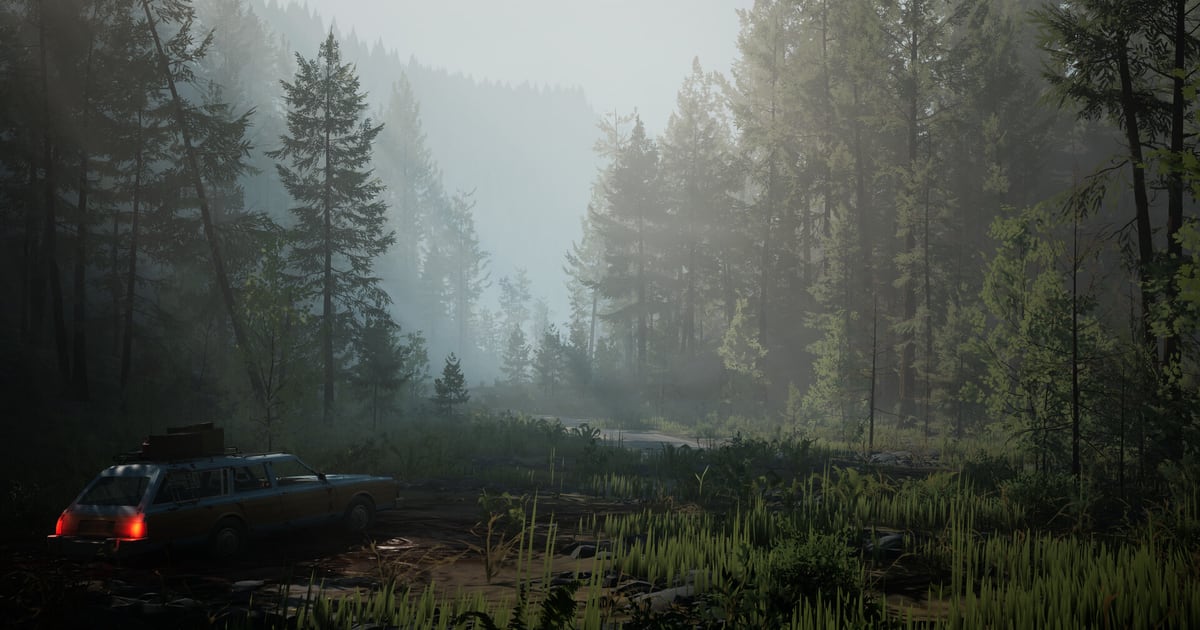
In the Olympic Exclusion Zone, your 1980s wood-paneled station wagon is your only sanctuary against supernatural instability, acid rain, and anomaly storms. However, the vehicle develops Quirks—bizarre, cascading cause-and-effect mechanical glitches that afflict steering, electronics, doors, and engine performance—over time while exploring the Zone, and faster whenever the car takes damage or interacts with Anomalies.
What this covers: The Tinker Station terminal, Cause-and-Effect syntax guessing, Quirk severity tiers, and garage repair mechanics. Why it matters: An undiagnosed quirk like “Wipers Turn On → Driver Door Flings Open” can throw you directly into an anomaly during an emergency gateway storm run. Who should pick this: Drivers returning to Oppy’s Auto Shop with cars that honk uncontrollably, steer sideways, or drain batteries spontaneously.
The Quirk Syntax Formula
Every anomaly quirk inside your station wagon follows a strict four-part conditional logic sentence programmed into the garage’s Tinker Station computer:
[Car Part / Action] + [Condition / State] → [Affected Part] + [Resulting Malfunction]
| Diagnostic Component | Example Triggers | Example Consequences | Severity Assessment |
|---|---|---|---|
| Component 1 (Input) | Steering Wheel, Headlights, Shifter, Hood | Left Wiper, Radio, Horn, Gas Pedal | Identifies the physical trigger |
| Component 2 (Action) | Turns Left, Toggled On, Shifts into Drive | Jumps, Accelerates, Opens, Drains | Specifies the precise condition |
| Component 3 (Target) | Driver Door, Battery, Dome Light, Trunk | Engine, Fuel Gauge, Speedometer | Pinpoints the afflicted mechanism |
| Component 4 (Outcome) | Flings Open, Drains Fast, Dims, Backfires | Loses Power, Pops Open, Steers Hard | Details the hazardous consequence |
Four Columns, One Sentence
The Tinker Station presents the diagnosis as four lists the game never explains. Knowing which is which turns the puzzle from guesswork into elimination:
| Column Color | What It Holds | Example Entries |
|---|---|---|
| Red | The triggering car part | Steering Wheel, Headlights, Shifter, Hood |
| Green | The triggering action | Turns Left, Toggled On, Shifts into Drive |
| Orange | The triggered car part | Driver Door, Radio, Horn, Gas Pedal |
| Blue | The triggered behavior | Flings Open, Drains Fast, Toggles, Pops Open |
Read left to right, the four columns complete a single sentence: “When 1 does 2, 3 does 4.” Because the first two columns hold every possible cause, isolating the trigger is the whole game.
The Guess Economy: Eight Tries, Two Upgrades
You get eight guesses per run. Each submission returns either BAD GUESS – x/4 CORRECT or CORRECT DIAGNOSIS – GUESS REFUNDED; a correct diagnosis costs nothing, so a methodical player rarely runs dry. The count resets the next time you open a Gateway and return to the Auto Shop, so running out is a delay rather than a dead end.
Two Fabrication Station upgrades change the math:
| Tinker Station Upgrade | Effect | Guess Bonus | Key Materials |
|---|---|---|---|
| Investigator Module | Reports which columns of a guess are correct, and adds an Anchor Energy scan that flags suspect parts | +1 per run | Circuit Board, Copper Wire, Scrap Metal, Glass Shards, Stable Energy |
| Analysis Module | Spends Anchor Energy to pinpoint one factor of a diagnosis outright | +1 per run | Plasma, Circuit Board, Copper Wire, Scrap Metal, Unstable Energy |
Anchor Energy pricing scales: the first pinpoint costs 0.5 kLIM, then +0.5 kLIM per use, reaching roughly 5 kLIM to fully diagnose a quirk. If several quirks are active at once, correctness also depends on the pairing — guessing the right cause against the wrong effect still reports a bad guess.
How to Logically Deduce Hidden Quirks
Guessing blindly on the Tinker Station burns through your eight diagnostic guesses per run—and while a correct diagnosis refunds the guess, it is the Analysis Module upgrade that spends Anchor Energy, pinpointing parts of a diagnosis. Use this systematic troubleshooting process before touching the terminal:
- Test Cockpit Switches Sequentially: While parked safely in the garage, turn your headlights on and off. Check if the dashboard flashes, the radio station changes, or the trunk clicks open.
- Monitor the Battery HUD: If your battery suddenly drains while parked, toggle individual accessories. Common culprits include quirks where turning on dome lights continuously shorts the alternator.
- Inspect the Shifter Loop: If stepping on the gas pedal causes the hood to pop open, or shifting into Reverse honks the horn, you have an immediate mechanical link to log into the terminal.
Repairing Quirks with the Electrician’s Kit and Mechanic’s Kit
Once the Tinker Station confirms a correct sentence match with four green checkmarks, the quirk is officially diagnosed, flagged by the Status Monitor “Quirks” light, and listed on the Tinker Station’s Fixes screen.
- Electrical Malfunctions: Quirks affecting wipers, lights, radios, and battery drains require an Electrician’s Kit, consumed through the Tinker Station’s Fixes screen.
- Mechanical & Body Glitches: Quirks involving door latches, trunk pop-ups, steering alignment, and tire wobbles require a Mechanic’s Kit, consumed through that same Fixes screen.
Always clear critical vehicle quirks before embarking on deep Zone expeditions into the Mid-Zone and Deep Zone biomes.
The Test Track and Quirks That Lie
Not every quirk announces itself. Dramatic ones — the hood popping open, the headlights cutting out — are obvious, but others touch parts you never watch, and a few deliberately corrupt the fuel and battery gauge readings so the numbers lie while you drive. That is why the recommended routine ends with a check of actual fuel and battery levels rather than the dashboard.
The full sweep, in order: open the Fixes screen to count how many quirks are active (one action can trigger several), park in the garage with the car on, then change exactly one thing at a time — wipers, headlights, radio, steering left and right, accelerate and brake, park to drive. If nothing trips inside, drive the test track behind the garage; together the garage sweep and the track cover most triggers.
Two quirks can also resolve themselves: a diagnosed quirk may vanish on its own after a while, and you can deliberately decline the fix and keep it. There is no standing penalty for carrying a harmless quirk, beyond the occasional sarcastic radio comment from Oppy.
Reading the Status Monitor
The Status Monitor carries a dedicated Quirks bar that lights up yellow when a new or malicious quirk appears. The catch is that it does not always change color even when a quirk is present, so the light is a prompt to investigate rather than a clean bill of health. Treat a lit bar — or a suspicious gauge reading — as a signal to visit the Tinker Station and open the Fixes screen for an exact count.
Difficulty Modifiers and Worked Examples
The mini-game is fully tunable. Under Gameplay > Modifiers > Car Quirks, quirk frequency can be raised or lowered, while two difficulty toggles soften diagnosis outright: Free Quirk Guesses grants infinite guesses and Free Quirk Hints removes the Anchor Energy cost from the Analysis Module.
Real quirks read exactly like the sentence structure above. Documented examples include:
- “When the shifter shifts to park, the front left door opens.”
- “When the headlights turn on, the radio toggles.”
- The hood popping open whenever the wagon is reversed, and the radio changing stations mid-turn.