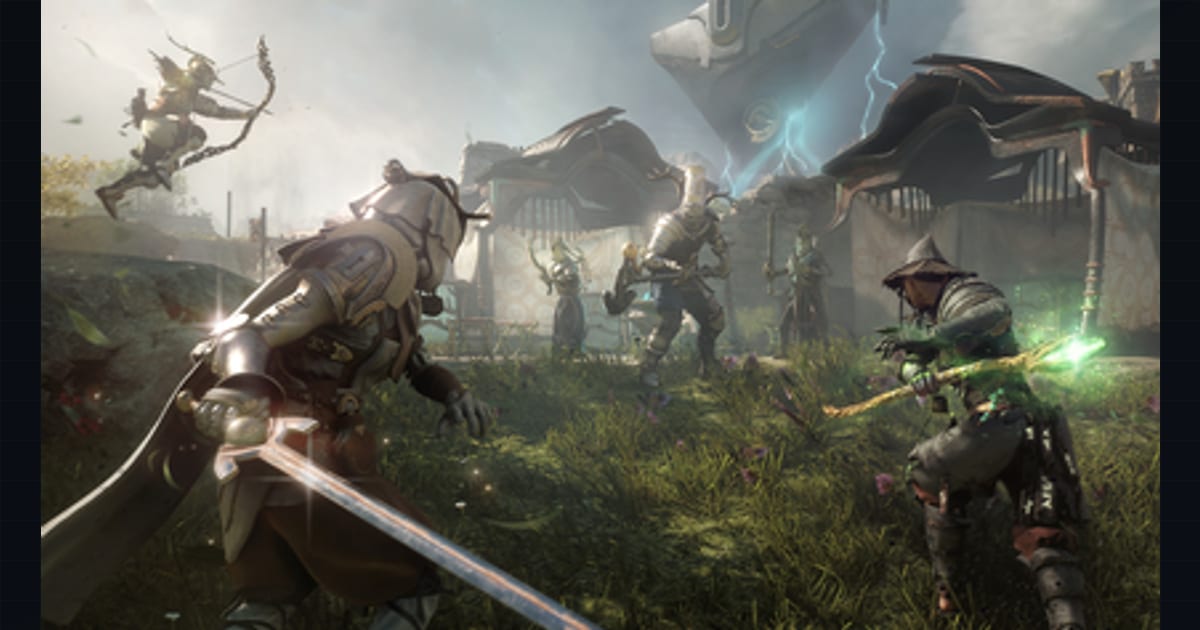
Digital Extremes (creators of Warframe) has published technical updates detailing the melee combat and ancestral Pact magic systems featured in the Soulframe Preludes testing phase. Built on the Evolution Engine, Soulframe emphasizes deliberate fantasy combat over high-speed ranged gunplay.
What changed: Preludes update details Pact magic, tactical melee, and proceduralprocedural. Generated by rules or algorithms rather than hand-placed — e.g. terrain or quests that the game builds itself. Silvern Catacombs. Why it matters: A deliberate inversion of Warframe’s speed-first design, tuned by alpha telemetry. Who should care: Warframe veterans, deliberate-combat MMOMMO. Massively Multiplayer Online — a game that hosts very large numbers of players together in one shared, persistent world. players, and buildcraft fans.
Core System Architecture
- Pact & Soul Customization: Players bind with Ancestral Souls to unlock specialized combat arts, passive stats, and magic abilities rather than selecting static character classes.
- Heavy Tactical Melee: Parrying, block timing, posture breaking, and poise govern melee swordplay. Heavy armor impedes movement speed while granting status resistance.
- Procedural Silvern Catacombs: Underground dungeon spaces feature shifting room layouts, puzzle locks, and boss arenas generated dynamically per expedition run.
Community Alpha Testing
The Preludes testing phase expands invitations regularly, gathering telemetry on:
- Server load
- Matchmaking latency
- Weapon weight balancing
Why It Matters: A Deliberate Pivot Away From Warframe’s Velocity
Digital Extremes built Warframe on a core loop of frictionless mobility — bullet jumps, wall-runs, and aim-glides that let a Tenno cross a tileset faster than most enemies can track. Soulframe is, by every system documented in the Preludes update, a structural inversion of that philosophy. Parrying, posture breaking, and poise gating force the player to commit to exchanges rather than outrun them; heavy armor trading movement speed for status resistance is a deliberate, calculable trade-off rather than a free upgrade. For the MMO genre this matters because it signals a studio with proven live-service infrastructure refusing to clone its own cash cow. The risk is real — Warframe’s speed is a known retention driver — but the upside is a combat identity distinct enough to coexist rather than cannibalize.
The Ancestral Soul / Pact system is the second load-bearing inversion. Where Warframe gated progression behind discrete Warframe chassis with fixed ability kits, Soulframe treats the bound Soul as a modular stat and arts graft onto a shared body. That is a fundamentally different content economy: instead of farming a new frame for each playstyle, players accumulate Souls as build-defining components. Done well, it collapses the barrier between “collectible depth” and “buildcraft depth,” which is the same tension that Path of Exile’s gem and ascendancy layers resolve profitably. Done poorly, it risks homogenization — a single optimal Soul stack that crowds out flavor choices. The alpha telemetry explicitly tracking weapon weight balancing suggests Digital Extremes is aware of this failure mode and is tuning against it before the live economy locks in.
The Take: Procedural Dungeons Are the Real Bet
The Silvern Catacombs — shifting room layouts, puzzle locks, and dynamically generated boss arenas per expedition — are the load-bearing feature that the headline combat systems orbit. Tactical melee only stays interesting if the encounter geometry keeps demanding new micro-decisions; a static dungeon trivializes parry-and-posture play into memorized rotations. Procedural generation solves that by forcing the player to re-read the room every run, which is exactly the condition under which deliberate combat outperances twitch gunplay. The Evolution Engine has shipped procedural tilesets in Warframe for a decade, so the technical risk is lower than it would be for a studio without that track record, but the Soulframe requirement is harder: the puzzles and boss arenas must remain legible and fair across generation rolls, not merely varied. That is the line between Hades-style readable procedural design and Dragon’s Dogma 2-style incoherent one.
This also reframes what “expedition run” means for an MMO. If the Catacombs are instanced and per-run procedural, Soulframe is leaning closer to a session-based action-roguelite with an MMO social shell than to an open-world persistent one. That is a smart hedge: it lets Digital Extremes ship replayable content at a pace the live-service model demands without hand-authoring every dungeon, and it sidesteps the open-world content drought problem that has repeatedly stalled competing MMOs. The cost is a weaker sense of shared, persistent place — a trade-off the Preludes telemetry on matchmaking latency will help quantify.
What It Signals for the Engine and the Genre
The recommended spec — a Ryzen 7 5800X and RTX 3070 — is modest for a 2026 MMO, which tells us two things about the Evolution Engine’s trajectory. First, Digital Extremes is optimizing for a broad installed base rather than chasing a visual benchmark it cannot sustain across a live-service content cadence; a studio shipping updates every few weeks cannot afford a pipeline bottlenecked by high-fidelity assets. Second, the procedural dungeon requirement is itself a constraint on asset density: generation rolls need to compose from a reusable kit, which naturally caps per-tile geometric complexity. The minimum spec (GTX 1070, i5-8400) opening the door to a six-year-old GPUGPU. Graphics Processing Unit — the chip that renders the game's visuals; the main driver of framerate and image quality. cohort reinforces that the addressable market is being prioritized over spectacle — a sensible call for a new IP still in alpha.
For the wider fantasy-MMO field, Soulframe’s architecture signals that the genre’s center of gravity is drifting from the persistent-open-world model toward a hybrid of instanced procedural runs plus social hub. If Digital Extremes can ship readable, fair, replayable Catacombs at MMO update cadence, it sets a reference implementation that competitors will be measured against. If the procedural logic degenerates into unfair or repetitive rolls, it becomes the cautionary tale instead. The Preludes alpha is, in effect, the experiment that decides which.
Context: Alpha Telemetry as Design Steering
The detail that Preludes is “gathering telemetry on server load, matchmaking latency, and weapon weight balancing” is more than housekeeping — it reveals the steering mechanism. Weapon weight is a feel parameter, not a balance number; collecting it as telemetry means Digital Extremes is correlating input-to-impact timing data against retention, not just win rates. That is the same instrumentation discipline that let Warframe recover from its early launch failures, and its presence here suggests the team is treating Soulframe as a system to be tuned in production rather than designed in isolation. For players, that means the combat feel at alpha is unlikely to be the combat feel at launch — and that the feedback channels opened now will shape which Souls survive into the live economy. Worth watching closely, because the Pact system’s long-term diversity will be decided in exactly this window.
The near-term milestones are the ones the alpha is instrumented for: expanding Preludes invite waves, weapon-weight telemetry, and the first signal of which Souls survive tuning into the live economy. If the Catacombs’ procedural rolls stay readable at MMO update cadence, the instanced-expedition model becomes the reference competitors are measured against; if not, the cautionary-tale version of this article writes itself.
Next read
- For picking your first combat chassis, see how to choose your starting frame.
- For the early-access kit structure, see the Soulframe frame & class primer.
- Every Soulframe breakdown lives on the coverage hub.