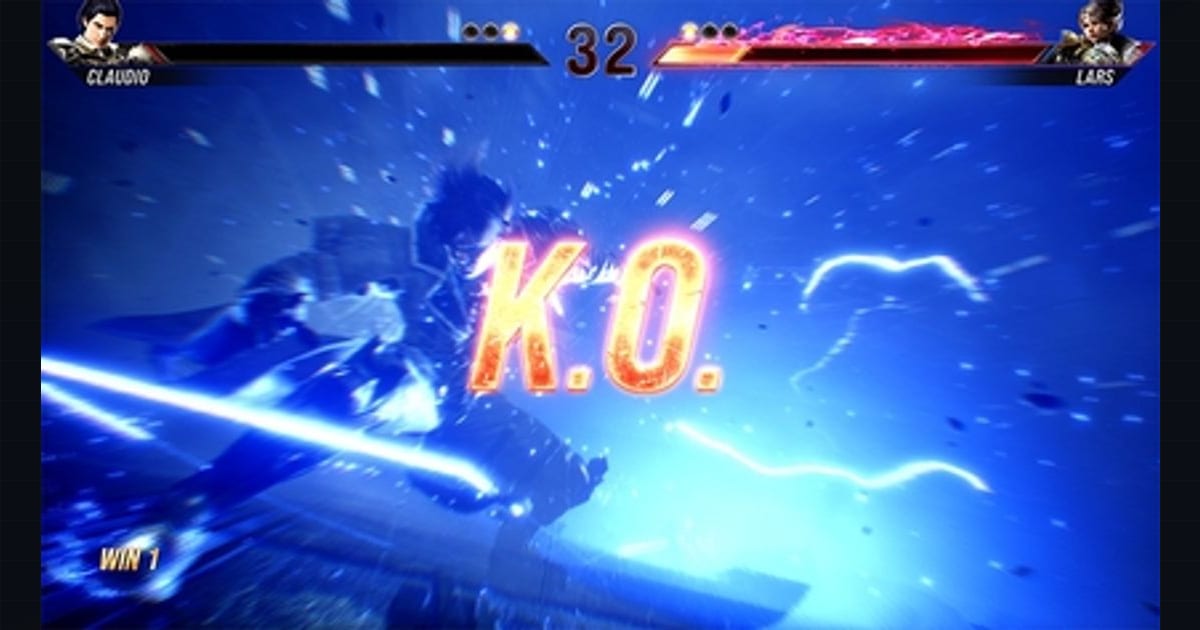
Bandai Namco released Tekken 8 Season 3 and version 3.00 with a clear message: the season is not about rebuilding the game, but about refining the areas where outcomes have become too extreme. The “Refined Balance” and “Back to Basics” principles guide the updates, while a new feedback portal, rank reset, and matchmaking revisions try to make competition fairer.
What changed at a glance
The Ver.3.00 update is the starting point for Season 3. It removes wall splat after a Heat Smash hit, changes how character-specific power-up states interact with Heat, and adjusts air-combo behavior. It also resets ranks based on Season 2 highs, makes rank-point gains and losses more transparent, and improves matchmaking logic. Alongside those gameplay changes, Bandai Namco opened the TEKKEN Dev Feedback Portal, a centralized site and Discord server for battle-balance reports.
Refined Balance and Back to Basics
Bandai Namco used two phrases to describe Season 3 balance policy: “Refined Balance” and “Back to Basics.” The studio clarified that these are not final goals or a return to older Tekken systems. Instead, they are principles for evaluating the current game.
“Refined Balance” means incremental, measured adjustments rather than sweeping changes in a single patch. “Back to Basics” asks whether offense and defense exchange appropriately, whether defensive decisions are accurately reflected in outcomes, and whether individual errors create disproportionately large consequences. The goal is to keep Tekken 8’s core mechanics intact while trimming extreme cases.
Because of that philosophy, Season 3 does not promise dramatic defensive buffs or massive offensive nerfs. The team plans to release ongoing updates throughout the season rather than one large overhaul.
How Heat fits into Tekken 8
Heat is a limited-time resource that each character can activate once per round. It opens up Heat Engagers, Heat Dash extensions, and Heat Smash attacks. Those tools have defined Tekken 8’s offense since launch, giving players a way to force exchanges and extend combos. Season 3 keeps Heat as a core mechanic but removes some of the most punishing outcomes attached to it.
Heat Smash is one of the most notable Heat tools. It is a high-damage, armored launcher that consumes the Heat resource. Up to Season 2, a Heat Smash hit could also splat an opponent against a wall, creating a follow-up combo opportunity that was difficult to escape. Season 3 removes that wall splat, lowering the overall reward while keeping the move’s threat intact.
Heat Smash and wall splat
One of the most visible system-level changes is the removal of wall splat after a Heat Smash hit. In earlier seasons, Heat Smash could carry an opponent to the wall and create highly rewarding post-wall situations. Bandai Namco said this gave disproportionately high reward and limited the defending side’s viable responses. In Season 3, Heat Smash no longer triggers wall splat on hit.
This change reduces the reward of landing Heat Smash without removing the move entirely. Players still have a Heat resource and the threat of a Smash, but the resulting position is less likely to lead to an automatic wall combo or extreme pressure sequence. The defender now has more room to recover, while the attacker must earn the next hit through neutral play rather than a guaranteed wall sequence.
Character-specific power-up states and Heat
Season 3 also revises how character-specific power-up states interact with the Heat system. Up to Season 2, activating Heat could grant a character-specific power-up—for example, Claudio’s Starburst—and that power-up stayed active even after Heat ended. That allowed players to extend strong pressure beyond the intended Heat window.
In Season 3, character-specific power-up states now end when Heat ends. The change tightens the timing window and removes situations where a player could carry a powered-up state for an extended duration after the Heat resource was spent. Characters that relied on that extension will need to find new timing windows for their enhanced tools.
Air combo and damage scaling
Ver.3.00 also adjusted air combos. Previously, landing a Heat Engager as a grounded hit and following with a Heat Dash could produce unusually long air combos. The airborne distance reduction under those conditions has been removed, and the behavior now matches standard air combos. Damage scaling for those combos changed from 60% to 70%, balancing combo length against reward.
Rank reset and ranked changes
At the start of Season 3, each character’s rank is recalculated based on the player’s highest rank achieved during Season 2. Main characters are reset by up to four ranks, with Brawler (6th Dan) as the minimum. Sub-character ranks are determined individually. Players receive title plates showing their highest Season 2 rank and a Season 2 commemorative plate.
The rank-point system itself is more transparent. The post-match screen now shows a clearer breakdown of gains and losses instead of only the total value. Promotion bonuses, win-streak bonuses, revenge bonuses for rematch wins, and demotion criteria have all been adjusted. Demotion now requires two consecutive losses after falling below the threshold, rather than triggering immediately.
Matchmaking will now use the rank of the character currently being used, removing the previous system that matched based on a player’s highest-ranked character. The default rank restriction changes to ±2, and the search filter defaults to “Confirm” rather than “Rank Restriction.” Bandai Namco said these changes are meant to reduce matches between players of very different skill levels while keeping queue times reasonable.
The TEKKEN Dev Feedback Portal
Ahead of Ver.3.00, Bandai Namco launched the TEKKEN Dev Feedback Portal (Beta). The portal includes a dedicated website and an official Discord server separate from the main TEKKEN Discord. Players can submit battle issues and system defects through a web form, attaching text, images, and video. Submissions are moderated and then shared inside the Discord server, where users can react and comment in threads.
The portal also has channels for character-specific balance discussion. Bandai Namco said it wants feedback directed through this channel so the team can reliably receive, organize, and assess submissions. Because the portal is in beta, the studio expects operational improvements and feature additions over time.
In the first week after launch, the studio received over 700 submissions through the portal. Reports with strong community reaction inside the Discord are prioritized, while the team continues daily review of the full queue.
The portal matters because Tekken 8 has a large, globally distributed player base with many different expectations. A single regional forum or social-media thread cannot capture the full range of matchups and connection experiences. By centralizing reports and attaching video evidence, the development team can reproduce issues more reliably and avoid fixing problems that only appear in one environment.
Ongoing updates
Balance changes will not end with Ver.3.00. Bandai Namco said large, abrupt changes risk distorting the battle environment, so adjustments will be released gradually across the season. New characters will also be introduced alongside continued tuning. Kunimitsu launched in late spring, Bob joined in August, Roger Jr. is slated for fall, and Yujiro Hanma rounds out the Season 3 Pass in early 2027.
In the weeks after launch, the studio began addressing critical bugs and unintended behaviors in emergency patches. The plan is to continue prioritizing issues with strong community response and broad impact.
What this means for players
For competitive players, Season 3 is an invitation to relearn spacing around walls, Heat timing, and matchups where power-up states previously lasted longer than Heat itself. For casual players, the rank reset and clearer rank-point display should make progress feel more predictable. The feedback portal gives the community a more structured way to influence balance, though Bandai Namco has said individual responses from the development team are not guaranteed.
The overall direction is cautious. Bandai Namco wants to fix extreme cases without rewriting the game, and it wants player data to guide the next round of tweaks. That means Season 3 will likely feel like a series of small adjustments rather than one dramatic overhaul. Players who prefer stability should appreciate the measured pace, while those hoping for large systemic changes may need to wait for future seasons.