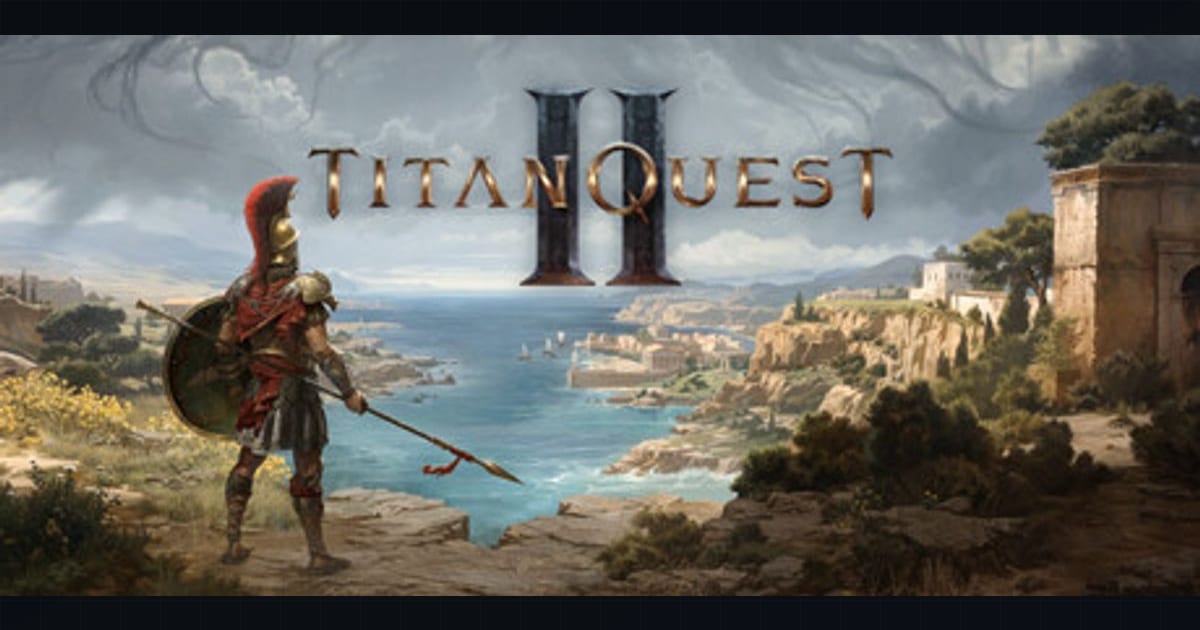
Picking two masteries in Titan Quest II is the single biggest build decision you will make, and the game gives you almost no warning before asking for it. This guide breaks down how the dual-mastery system works in Early Access, which combinations actually compound, and how to keep your resistances and defenses from collapsing as enemy damage ramps up.
What changed
Titan Quest II entered Steam Early Access on August 1, 2025, developed by Grimlore Games and published by THQ Nordic. Like the original Titan Quest, the sequel builds its class system around combining two masteries into a named hybrid class. The developers laid out the philosophy in an official Steam news post: you are meant to build around the strengths and weaknesses of both masteries, mixing skill modifiers, attributes, and items to create a hybrid that fits your playstyle.
The Early Access version launched with four masteries, all returning from the first game:
- Warfare — weapon-focused combat in melee or at range, specializing in Strike damage, Bleed, and the damage type of your equipped weapon. It also boosts Armor and Dodge.
- Earth — Strike and Fire damage, the Burn damage-over-time effect, and bonuses to Armor and Energy Barrier. It also supports skills that use Overload.
- Storm — Cold and Lightning damage at range, with the Shock, Chill, and Freeze status effects, plus improved Energy Barrier and projectile effectiveness.
- Rogue — Pierce and Poison damage, Shadow Daggers, and evasion tools that can prevent damage outright.
Grimlore has said more masteries are planned as Early Access updates arrive, and post-launch updates have already begun expanding the roster — a fifth mastery, Forge, has joined the four that launched, adding combinations like Devastator (Earth/Forge), Stormwright (Storm/Forge), Saboteur (Rogue/Forge), and Bastion (Warfare/Forge). The studio’s stated cadence is small fixes roughly monthly and major content updates about every three months, with Early Access expected to last around a year depending on community feedback.
How it works
You pick your first mastery early in the campaign, during the quest The Hunt Begins. The second mastery choice comes later, during The Queen of the Mountain. From that point on, your class is the combination of the two, and each pairing has a name that hints at its identity. Warfare plus Earth makes a Battlemage. Earth plus Storm makes an Elementalist. Storm plus Warfare makes a Tempest. Rogue plus Warfare makes a Reaver, Rogue plus Storm makes a Stormblade, and Rogue plus Earth makes an Ashstalker. Doubling up on a single mastery is also possible, producing focused classes like the Pyromancer (Earth/Earth) or Stormcaller (Storm/Storm).
Skills unlock through Divinity, a resource you invest into a mastery tree to reach higher tiers. Defeating the Gryphon during The Queen of the Mountain grants a chunk of Divinity, enough to push one mastery into its second tier. Several structural choices make experimentation far safer than in the original game:
- Respec anywhere. You can reallocate skill points freely, so a bad early pick is a minor inconvenience, not a ruined character.
- Separate point pools. Active and passive skills draw from independent pools, so investing in one never starves the other.
- Swappable modifiers. Every active skill accepts modifiers that change how it behaves — damage type, area of effect, duration, cooldown, and more. Modifiers can be changed at any time.
- Ten-slot bar. You can only slot up to ten active skills at once, which forces real choices about what earns a place on your bar.
Attributes have been reworked as well. Combining Might and Knowledge grants Resolve, which boosts both fire and cold damage — an explicit nod toward hybrid caster-warrior builds. The system actively supports unusual combinations, including spellcasters in heavy armor.
Which pairings compound
Not every combination is equal. The pairings that perform best in Early Access tend to share at least one of three things: a common damage type, a status effect loop, or a clear division of labor between offense and defense.
Shared damage types multiply your gear value. Storm and Earth both lean on Strike-adjacent elemental casting, and the Resolve attribute line boosts fire and cold together, which makes Elementalist (Earth/Storm) one of the cleanest caster hybrids. Every point of generic elemental or spell damage you find on gear feeds both halves of the build. Pure pairings like Pyromancer (Earth/Earth) go further in the same direction, concentrating everything into one damage profile.
Status effect loops reward overlap. Storm brings Chill, Freeze, and Shock. Earth brings Burn. Rogue brings Poison and Shadow Daggers. Pairings that let you stack multiple damage-over-time or control effects on the same target — Ashstalker (Earth/Rogue) with Burn plus Poison, or Stormblade (Storm/Rogue) with Chill plus Poison — can keep several ticking effects running while you stay mobile. Freeze from Storm is also a defensive tool, buying time for slower skills to land.
Warfare pairs with everything because it is the weapon mastery. Warfare scales with your equipped weapon’s damage type, so it slots into any element. Battlemage (Warfare/Earth) is the classic spellsword: Earth supplies Armor and Energy Barrier while Warfare supplies the weapon scaling. Tempest (Storm/Warfare) works well with bows, since Storm explicitly boosts projectile effectiveness. Reaver (Warfare/Rogue) stacks Bleed, Pierce, and Poison for a melee build that front-loads burst and then lets damage-over-time finish targets.
The trap pairings are the ones with no shared axis. A build that splits evenly between two masteries with no common damage type, no shared status plan, and no defensive overlap often ends up with ten mediocre skills instead of five good ones. Because you only have ten active slots, pick a primary damage plan from one mastery and use the second for support — defense, mobility, or a status effect that amplifies the primary plan.
The defensive wall: resistances and barriers
Offense is the fun half of a hybrid class. The half that kills characters is defense. Each mastery telegraphs its defensive identity: Earth raises Armor and Energy Barrier, Storm improves Energy Barrier, Warfare boosts Armor and Dodge, and Rogue leans on evasion. When you combine two masteries, you should be able to name your main defensive layer. If you cannot, that is the hole in the build.
Enemies in Titan Quest II deal typed elemental damage, and that damage climbs as you move through the campaign. Community consensus from Early Access play is that resistance investment stops being optional in the mid-to-late game: characters that ignore their weakest resistance start taking disproportionate hits from enemies aligned to that element. Exact resistance values and caps are not published in the official materials, so treat any specific number you see quoted with caution — the safe, verifiable advice is structural:
- Identify your mastery pair’s natural defensive layer (Armor, Energy Barrier, Dodge, or evasion) and invest in it first.
- Patch your weakest resistance with gear rather than spreading small amounts everywhere. Meaningful loot is a stated design pillar — every item is meant to serve a function — so use that to cover gaps.
- Use skill modifiers defensively. Several modifiers trade raw damage for area, duration, or utility, and a modifier that keeps enemies Frozen or Burned from farther away is effectively a defensive pick.
- Remember Rituals. The game includes a Ritual system that lets you control difficulty. If a zone is punishing your resistances, there is no shame in turning the dial down while you regear.
Build path
A reliable Early Access progression looks like this:
- First mastery (The Hunt Begins): pick the mastery that matches the weapon or element you enjoy. Push one active skill and its modifier as your main clear tool rather than spreading points.
- Second mastery (The Queen of the Mountain): choose the partner that covers your first mastery’s weakness — defense for a glassy caster, a damage type that shares your attributes, or a status effect that compounds your main one. Spend the Gryphon’s Divinity to reach tier two in your primary mastery first.
- Mid-campaign: lock in your ten-slot bar. Every skill on it should either deal your primary damage type, apply your chosen status effect, or keep you alive. Respec anything that does not.
- Late Early Access content: audit resistances before pushing into new zones, adjust Rituals to taste, and use the free respec to pivot modifiers when a boss punishes your current setup.
Because respeccing is free-form and modifiers swap at will, the cost of experimentation is low. The current Early Access build contains roughly 15 hours of content per the developers, which is enough to test two or three mastery pairs before committing to a favorite for the full release.