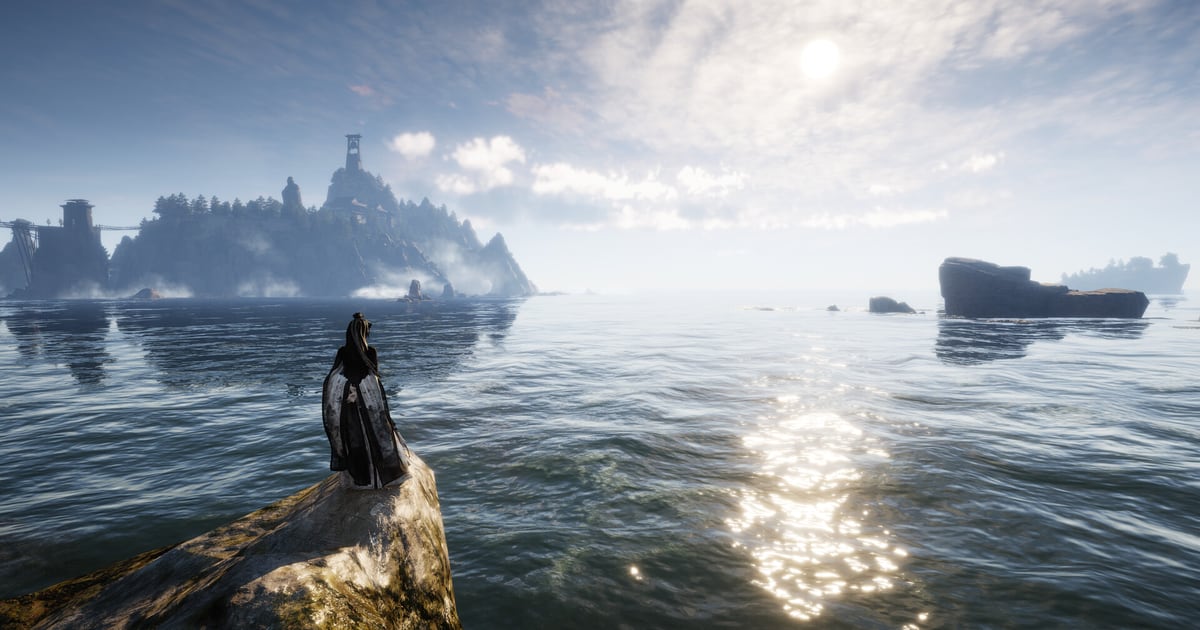
Everstone Studio has opened Qingzhou in Where Winds Meet with version 2.3, a live update the Eastwind Pavilion pushed on October 15, 2026. The region is the next map the free-to-play wuxia role-playing game has added since Hidden Mountain, and the patch pairs it with a new martial-art Path, three world bosses, a recruitable-companion system and a batch of storage and quality-of-life changes.
What changed: Where Winds Meet’s 2.3 update, live October 15, 2026, opens the Qingzhou region with a new Silkbind-Wings path, three folk-master world bosses and the Local companion system. Why it matters: Qingzhou ties exploration, combat and NPCs together — which Locals you bring changes how puzzles and encounters resolve, and Silkbind-Wings is built around rhythm-timed inputs rather than raw damage. Who should care: Returning Wanderers deciding whether to reinstall for 2.3, and wuxia RPGRPG. Role-Playing Game — a game built around character progression, story, and player choices. players weighing a free-to-play open world that is still shipping regions a year after launch.
At a glance
| Added in 2.3 | What it is | Where it lives |
|---|---|---|
| Qingzhou region | New open-world area inspired by China’s Shandong province | East of Hidden Mountain |
| Silkbind-Wings | New Path built on the Waist Drum and Willowbend Fan arts | Player progression |
| Three world bosses | Old Raftsman, Tidewatcher, Shuttlecock Champion | Across Qingzhou |
| Local system | Recruitable NPCs, each with a distinct talent | Villages and towns |
| Inkbound Order | Academy factionfaction. An in-game group or nation players can align with or fight against, with its own goals and reputation system. with a dual-sect enrolment option | Mount Penglai and Qingzhou towns |
| Warehouse and Mount Sack | Storage systems, unlocked from Level 20 | All regions |
From Mount Tai down to the coast
Qingzhou draws its primary geographical inspiration from Shandong province, and Everstone describes the open-world route as guiding Wanderers from towering peaks down to the sea. The journey starts at Mount Tai, which the studio calls the foremost of China’s Five Great Mountains and the Eastern Peak. In-game it is a climb of stone steps under pine canopies, past landmarks the dev letter names as the South Gate to Heaven and ancient rock inscriptions; from the summit, villages, farmlands, rivers and the distant shoreline resolve into one vista.
Descending brings the player into mortal life. Wellspring Town is built around spring water and brocade carp, with kites overhead, while Crownleek Terrace turns its leek fields into marketplaces and hosts an annual Crownleek Contest — the giant leek is treated as a regional emblem rather than a joke. Further toward the coast, the Yellow River estuary stages avian murmurations: the dev letter describes huge flocks shifting across the wetlands that at times take the shape of a soaring whale, with players able to fly alongside them. East of that stands Mount Penglai, which the studio frames around Shandong’s Confucian heritage, ancient academies, colossal sage statues and the region’s foremost Pavilion of Tomes.
Exploration is not only scenery. Everstone made “scaling heights for grand views” a core pillar of the region, so natural summits double as vantage points for spotting settlements, trails and hidden destinations. Beneath the base of Mount Tai, players can enter a Han Dynasty tomb with allies, working past traps, vermin and mechanical puzzles. The studio also flags coastline encounters that start from nothing more than a local’s whisper.
The Local system changes how a problem gets solved
The headline system in Qingzhou is the Local. Everstone calls it “our deepest integration yet between NPCs and open-world exploration,” and the design goal is mechanical rather than conversational: the dev letter says the studio deliberately avoided telling players through NPC dialogue that the locals are friendly, and instead built that hospitality into a gameplay system.
Locals are met in villages, each gifted with a unique talent, and can be invited along on the journey. A knowledgeable Local leads the way through unfamiliar paths, helps decipher puzzles and lends a hand in trouble. What the studio stresses is divergence: different Locals solve the same obstacle in different ways. A silver-tongued Local works social encounters, using the Gift of Gab or stepping into Pitch-pot matches to bypass tricky detours. A sharp-eyed Local spots overlooked points of interest and guides the player through hidden caverns and mechanisms. An athletic Local takes the direct route — carrying the player quickly across distance, diving for fresh catch, or forcing open heavy doors with raw muscle instead of a key.
That is a meaningful change for a game whose open world already runs on exploration. It means a puzzle can have several honest solutions depending on who is travelling with you, and the dev letter says plainly that who you meet and who journeys beside you “will genuinely shape the path you take.”
Three folk-master world bosses
The 2.3 bosses are built from folk performance rather than generic monster design, and each carries its own signature mechanics. Everstone groups them as eccentric masters in the Qingzhou wilderness, unassuming at a glance but formidable fighters.
| Boss | Signature look and art | What the fight does |
|---|---|---|
| Old Raftsman | Bamboo staff, straw hat, coir raincoat | A raft duel on surging rapids; the camera shifts into a side-scrolling action perspective, and he can switch into a drunken staff style mid-fight |
| Tidewatcher | Tall hat, tasselled spear, shoulder puppet, wooden stilts | Swift stilt footwork and spear thrusts; his second phase adds surging waves that the player clears with Lightness Skills |
| Shuttlecock Champion | No weapons | Entry is gated by intercepting a crimson-feathered shuttlecock; from there she leans on close-quarters striking, kick combinations and takedowns |
The Raftsman’s staff technique is described as drawing from the river itself — feints that ripple like currents and strikes that land heavy. The Tidewatcher’s spins and dance-like footwork are pitched as harder to read than an ordinary humanoid boss. The Shuttlecock Champion takes a lighthearted traditional pastime and strips the lightness out of it: fast, tight pressure that begins the moment she closes in.
Silkbind-Wings: a Path that runs on rhythm
Where Winds Meet’s new martial art is Path [Silkbind-Wings], and the dev letter positions it against brute force. Its Waist Drum art draws on Han and Tang dynasty sleeve dances: as the character twirls and sweeps, long silk ribbons unfurl to whip, bind and control enemies mid-motion, so each strike reads as part of a dance.
The mechanic underneath is timing. Certain Waist Drum moves tie drumbeat timing to forgiving input windows, requiring players to strike the waist drum in tempo with the music, and the studio designed three distinct rhythms — one focused on offense, one on crowd control and one on team support. The paired fan art, Willowbend Fan, trades the ribbon’s control for reach and spacing: it channels the wind, manages enemy distance and chains into follow-up attacks. Together the two arts are meant to combine the elegance of music and dance with the precision of martial combat.
The Inkbound Order: studying in the jianghu
Qingzhou also adds a scholarly faction. The Inkbound Order’s academies are scattered across the region: the main island holds the central campus and the Pavilion of Tomes, Wellspring Town has the Primary Academy, Crownleek Village runs an ecological agriculture branch, and even the athletic grounds get their own department.
Admission starts with an exam. Players first obtain an entry permit from Master Goose, then sit the Primary exam; once enrolled they attend lectures, take on sect tasks and unlock classrooms, dorms and a dining hall. Crucially for anyone already pledged elsewhere, the order introduces the game’s first Dual-Sect feature — Wanderers can keep their current sect and study as a Visiting Disciple, effectively picking up a second major.
Combat follows campus rules. Inkbound Order disciples believe every fight must have just cause, so a duel requires the player to state their reasons first; winning lets them leave a piece of calligraphy on the opponent’s face. The order’s other system is the Gift of Gab, structured debates in which rhetorical arguments become cards and written characters fly at an opponent as each side plays and counters at the right moment. It is the same mechanic the silver-tongued Local uses to bypass social obstacles, which is what makes the Local system and the faction read as one design rather than two.
After Qingzhou: Mount Tai Blizzard
The region ship is not the end of the update’s content. By the end of the month, the story chapter [Mount Tai Blizzard] arrives, which the dev letter describes as a closed-circle mystery experience: an old tragedy where none survived, rumours of the realm’s greatest villain and whispers of an avenger returning from the underworld, all resurfacing once heavy snow seals the mountain. The studio frames the chapter around piecing the truth together from scattered clues rather than a straight fight.
The rest of the 2.3 patch notes
The October 15 patch notes cover far more than Qingzhou, and several items are system-wide. The Warehouse unlocks at Level 20 and takes inventory items from the “Common”, “Gear” and “Quick Use” tabs; the first tab is automatic, additional tabs cost Echo Jade, extra item slots cost Coin, and the cap is three tabs at up to 30 slots each, with bulk deposit and withdrawal. The Mount Sack turns a mount into portable storage using the same rules: tiers of Mount Prowess grant slots, and once Mount Prowess reaches 6,000 the player gains 6 extra slots for every 1,000 Prowess earned, with a Legendary Mount adding 12 more. The sack defaults to Warehouse Tab 1 and can be reassigned.
Elsewhere, the PC Official Launcher rolls out Modular Download on October 15, so the game can be launched once base assets are downloaded while remaining packs continue in the background, with a Cleanup on Demand option to free disk space. Wooden Stake Training gains a Multiplayer mode and a real-time team damage panel. Hero’s Realm and Sword Trial add AFK detection and penalties for matchmaking teams. A Smart Graphics setting, currently limited to 1v1 Arena, adjusts graphics dynamically by activity. On mobile, lighting and shadow rendering is upgraded in Qinghe and Kaifeng. Arena matchmaking also lets players re-queue without leaving the scene, and Arena Talent EXP gains are boosted, with a substantial boost for anyone sitting 10 or more levels behind the current Arena Level Cap.
For anyone planning around the update, the Eastwind Pavilion’s live maintenance ran October 15, 2026, from 05:00 to 12:00 (UTC+8), during which players could stay logged in while some features and modes were temporarily unavailable. Where Winds Meet is available now on PC, PlayStation 5, Xbox Series X|S, Android and iOS. For a full read on how the game’s weapon arts and build systems work, see our earlier Where Winds Meet systems breakdown.