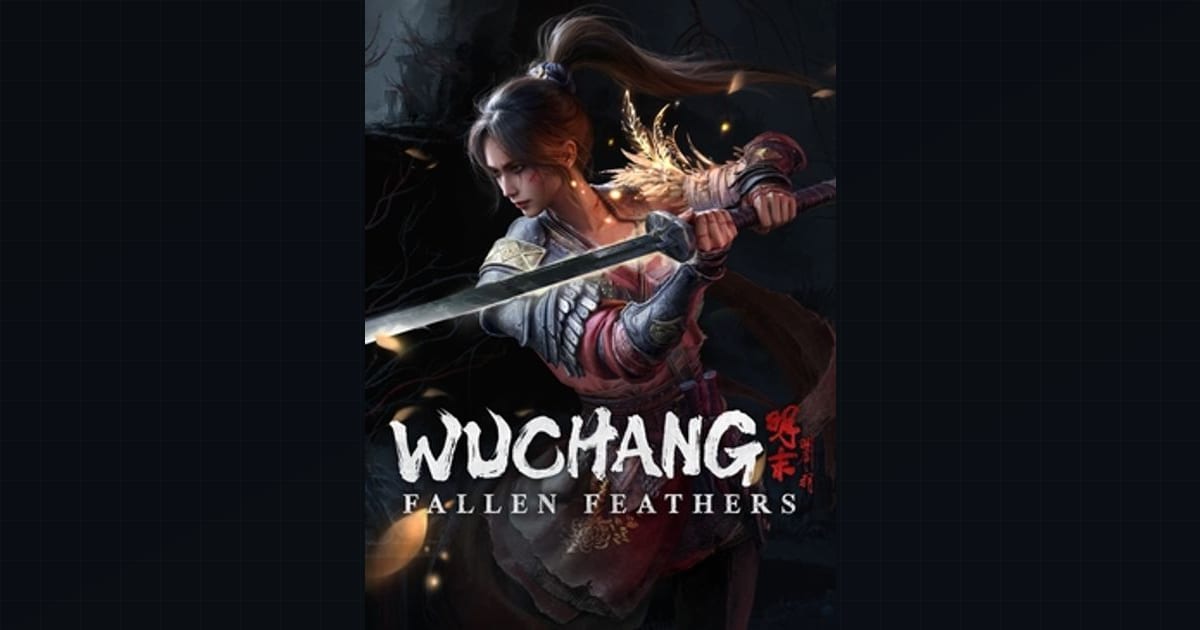
Leenzee’s Wuchang: Fallen Feathers launched on 24 July 2025 across PlayStation 5, Windows, and Xbox Series X/S as a Soulslike action role-playing game published by 505 Games. Directed and produced by Xia Siyuan and built on Unreal EngineUnreal Engine. A widely-used commercial game engine from Epic Games; powers many large-studio (AAA) games. UE5 is the current generation. 5, the single-player title sold over 1 million units by March 2026 and reached 5 million players by July 2026. An upcoming sequel, developed by Indolphinity and again published by 505 Games, has been announced.
Combat Systems
Players control Bai Wuchang, a female pirate, from a third-person perspective. Weapon types include longswords, one-handed swords, dual blades, axes, and spears, each equipable as primary or secondary. Every weapon supports light attacks, heavy attacks, weapon skills, and disciplines. Weapon skills are unique per individual weapon, while disciplines are tied to weapon type and unlocked through a skill tree.
Two primary combat resources govern combat. Skyborn might fuels weapon skills, disciplines, spells, and swift draws — weapon swaps that instantly activate skills. It is accrued through shimmers, which are well-timed dodges, and through weapon-type-specific methods. Madness increases when Wuchang kills humanoids or dies, and decreases when she kills feathered beings. At 90% madness, she deals and takes increased damage. Dying at maximum madness materializes the Inner Demon, a hostile entity that attacks Wuchang and anything targeting it. Certain skill tree upgrades scale in effectiveness as madness rises.
Progression & World Structure
The skill tree, called the impetus repository, is accessible at shrines and divided into six branches: one per weapon type plus a general path. Points can be reallocated at no cost. Red mercury serves dual purposes — refined into essence for skill tree points or used as currency at vendors. Upon death, red mercury is dropped in proportion to current madness.
The world is non-linear, comprising interconnected areas with seamless traversal, though some paths are initially restricted. Shrines function as checkpoints. NPCs offer dialogue and side quests, and player choices affect story direction and endings. Armor transmogrification allows visual customization independent of stats. A New Game Plus mode unlocks after completing a playthrough.
Setting
The game is set in an alternate-history version of Shu during the late Ming dynasty, featuring scenery based on Sichuan, including the Leshan Giant Buddha. The Feathering, a spreading disease causing societal and environmental collapse, serves as the central supernatural element diverging the world from mainstream historiography.