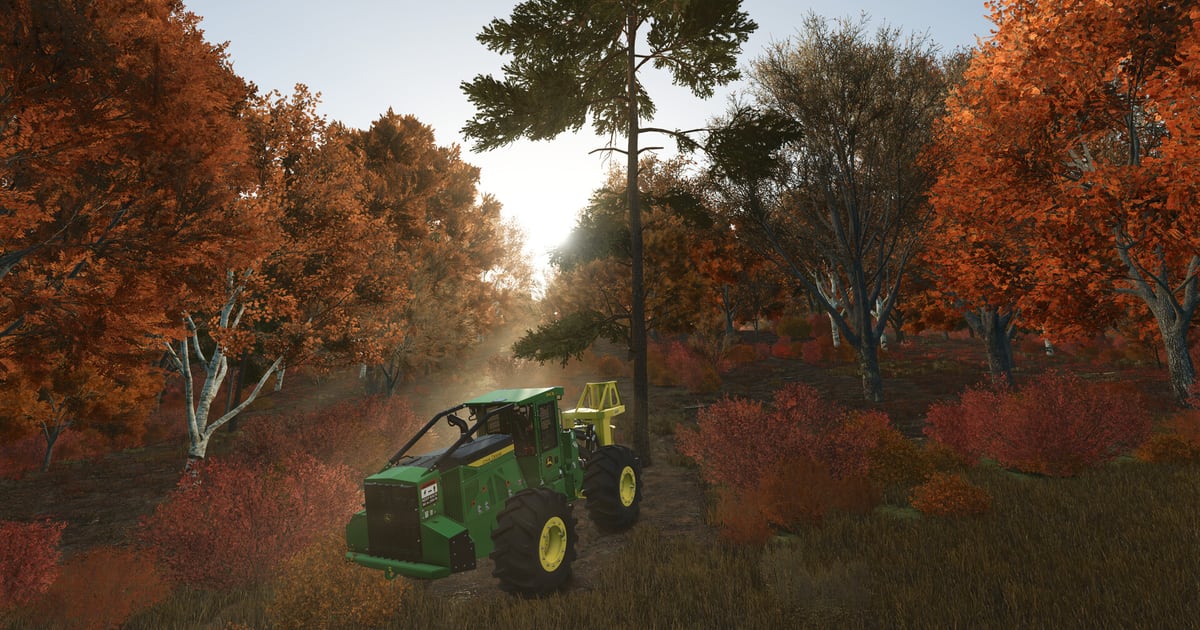
Beans & Alpacas is the expansion that turns Catuaí, GIANTS Software’s South America-inspired map, into a working coffee estate. It releases for Farming Simulator 25 on October 27, 2026, and it is the large expansion inside the Year 2 Season Pass, alongside the Vredo Pack and the SKY Agriculture Pack.
What this covers: coffee on Catuaí from plantation to finished goods — the growth cycle, the boundary-painting layout tool, fungal disease, harvesting equipment and every processing step GIANTS Software has documented — plus the alpaca care loop that ships beside it. Why it matters: coffee does not behave like the field crops FS25 taught you. It runs on its own plantation system and its own southern-hemisphere calendar, so the habits that work on wheat or barley will leave you a cycle behind. Who should care: players planning a plantation on October 27, and anyone deciding between the standalone expansion and the Year 2 Season Pass.
Coffee on Catuaí at a glance
| Item | Documented value |
|---|---|
| Growth stages before ripe fruit | 5 |
| Growth duration | 8 months |
| Planting | From September (GIANTS Software); the community wiki widens the window to Sep–Nov |
| Harvest | May (GIANTS Software); the community wiki widens the window to May–Aug |
| Yield per hectare | 36,800 l (community wiki) |
| Seed rate per hectare | Not applicable — plantations are placed in build mode, not seeded |
| Required maintenance | Fungicide, once per harvest cycle |
| Harvested product | Coffee Cherries, not coffee beans |
| First product out of processing | Coffee Bags |
GIANTS Software’s July announcement gives the tight version of the calendar — planting from September, red cherries ready in May — while the community-maintained Coffee Cherries page on The Farming Simulator Wiki records an eight-month growth duration with a wider September-to-November planting window and a May-to-August harvest. The same wiki table lists 36,800 litres per hectare and an average selling price of $2,190 in easy mode, without stating the unit that price is measured against; treat it as a relative reference rather than a price per litre.
Catuaí runs on a southern-hemisphere calendar
The single most important thing to know before you buy a single coffee machine is that Catuaí’s crop calendar is not the calendar of the three base-game maps. GIANTS Software states plainly that the crop calendar in Catuaí differs from all the other regions because you are farming in the southern hemisphere, and that is what produces the unusual rhythm: coffee goes in from September, and the cherries are ready in May.
That does not mean you are locked out of the map until autumn. Plantations can now be placed throughout the year, and their initial growth stage adjusts automatically to whatever season you are in — on Catuaí, with its warm climate and its own growth calendar, you can start a plantation the moment you have the land and the money rather than waiting for a placement window. So the coffee operation can be laid out in the first in-game week, but the income lands on a seasonal beat closer to twelve in-game months than to the two you are used to from a cereal crop.
Laying out a plantation without a seeder
Coffee does not go into the ground through a conventional seeder, and it has no seed rate per hectare. It uses its own plantation system, which puts it in the same family as grapes and olives rather than the field crops.
The layout tool is new, and it is the reason that family is now easier to work with. Instead of placing every row individually, you paint the boundary of the area you want to use. The game calculates a suitable orientation for the plantation rows and shows you the resulting layout; from there you can adjust the angle, check the cost and fine-tune the plantation before you commit to building it. GIANTS Software notes that the same improved system applies to grapes and olives as well. Coffee suits the slopes of Catuaí, which the developer describes as dense vegetation over red soil and rolling hills, drawn from the coffee-growing landscapes of Brazil.
The one maintenance step: fungal disease
Growing coffee adds a step between planting and harvesting that no base-game crop has: disease. Your coffee plants can develop fungal disease on their leaves, and the preview states that treatment with fungicide is required once per harvest cycle.
The tool for it is the KUHN AFS 600, a plantation sprayer. You fill it with fungicide, head between the rows, and work: its spraying system can treat two plantation rows in a single pass, and GPS guidance helps you hold the line between tightly spaced plants. The September constructions preview lists Fungicide as part of a wider crop-care ecosystem, so it is a supply item rather than a one-off purchase.
If you would rather not manage the spraying, GIANTS Software says the disease treatment can be disabled. Switching it off costs you only a feature, because the fungicide pass is a second run over ground you already worked, and the narrow rows make the sprayer the slow part of the operation.
Red means ready: harvesting cherries, not beans
After the five growth stages the plants show ripe reddish fruit, and that colour is the signal to harvest. GIANTS Software is explicit about the terminology: at this point you are harvesting coffee cherries, not coffee beans. The expansion’s own store page still advertises “coffee beans” as a new crop, so the two pieces of official copy describe the same crop at different stages.
The harvester is the Case IH Coffee Express 200 Multi, which moves directly over the plantation rows. Its harvesting elements shake the cherries off the plants, collect them on a belt and carry them into the machine’s tank, while a cleaning unit separates leaves from the crop along the way. Once the tank starts to fill, the narrow Colombo CTG 4500 can follow between the rows behind a tractor such as the New Holland 8030, so you unload inside the plantation and transfer the cherries out to a larger trailer instead of driving the harvester out after every pass.
From cherries to tiramisu: the processing chain
With the cherries collected, the harvest goes to the Coffee Processing Plant, where you either deliver the crop as a selling point or take control of the facility yourself. Inside, a drying step turns the fruit into coffee ready for further production, and the result is Coffee Bags; GIANTS Software notes that tanks, conveyor belts and processing equipment animate the work rather than hiding it behind a menu.
Coffee Bags are where the chain branches, and the branching is why coffee is worth more than a single selling point.
| Stage | Facility | Input | Output |
|---|---|---|---|
| 1 | Coffee Processing Plant | Coffee Cherries | Coffee Bags |
| 2 | Coffee Roastery | Coffee Bags | Coffee Capsules, Packed Coffee |
| 3 | Coffee Shop | coffee | Coffee Beverage |
| 3 | Bakery | coffee, eggs and flour | Tiramisu |
| 3 | Dairy | coffee, sugar and milk | Coffee Yogurt |
The Roastery takes Coffee Bags and produces Coffee Capsules and Packed Coffee, which can continue into other food productions. The Coffee Shop produces Coffee Beverages, the Bakery combines coffee with eggs and flour to make Tiramisu, and the Dairy mixes coffee with sugar and milk for Coffee Yogurt. The September preview also names Roasted Coffee among the coffee goods.
GIANTS Software does not say whether the Bakery and Dairy take Coffee Bags or Packed Coffee as their coffee input, only that they combine “coffee” with their other ingredients — so leave room in a full-chain design for either. For a worked example of how differently a single input can pay at each stage, the site’s Anno 1800 comparison of Old World and New World production is a useful parallel.
Alpacas: the other half of the expansion
Alpacas arrive alongside Brahman cows as a new animal species, and unlike the cattle they come with hands-on care. They can be raised in four colours — white, grey, brown and beige — and they live in stalls and pastures on grass and hay. Their happiness matters, because it is the condition for getting their fleece. Young alpacas start with less harvestable fluff and become fully woolly over the months and years, and that growth is not just cosmetic: the fully grown fleece is what the new shearing system works on.
Shearing happens once per year, in spring, and only inside the barn — which is why the lead is part of the loop. You guide the animal in on a leash, and it is not always tidy, because other alpacas wander in the way. Only when the alpaca is inside does the minigame start: GIANTS Software built it after the reception of the Highlands Fishing fishing minigame, and it has a real failure mode — you must not overload the machine, which means resisting the urge to shear too quickly. You can also hire a worker to do the annual shearing for a fee.
Walking is the other happiness lever. Taking alpacas for a walk raises their happiness stat, and the game requires it once per day — or once per month if you play with 12 days per year. When shearing finishes, a pallet spawns next to the barn carrying alpaca fleece, which you can sell or process.
The fleece chain feeds three buildings: the Spinnery processes fleece into Alpaca Wool, the Tailor Shop turns alpaca materials into Alpaca Plush, Alpaca Pillow and Alpaca Socks, and the Carpentry adds Alpaca Chair and Alpaca Stool. GIANTS Software treats the plush as the highlight of local wool production.
Pigment, resin and paint: a chain that pays the town
Beans & Alpacas also adds a material chain that has nothing to do with coffee: Copper Ore, Resin and Pigments feed Paint Production, and the output is Paint Buckets. The Sawmill provides Resin and the Pigment Factory produces Pigments, so the chain draws on forestry and mineral inputs as well as crops. The payoff is not just a sale — you deliver paint to houses around Catuaí that need a repaint, and the town visibly improves.
That connects to the October farmhouse preview: Catuaí ships six new farmhouses with interiors you can walk into, and pre-placed buildings show visible aging that continues over time. Delivering paint to a farmhouse restores its fresh look. The same preview puts the new objects at over 80, from houses to fences and bushes, with sheds and a range of fence options.
Machines, brands and what else ships
The expansion includes more than 25 new machines. The July announcement names Case IH, Ford, John Deere, KUHN, Mercedes-Benz Trucks, New Holland, Oxbo, Stara and Valtra among the brands; the expansion page’s shorter list drops Oxbo and Stara and closes with “and many more”. Colombo Industries joins the series as a new brand, and its CTG 4500 transfer trailer is one of the four machines that carry the coffee work, alongside the KUHN AFS 600 sprayer, the Case IH Coffee Express 200 Multi harvester and a tractor that can pull the trailer — the New Holland 8030 in the preview. The expansion also adds sugarcane foliage and effects, enhanced ground-tool animations and additional fieldwork detail.
For the purchase decision: the official detail page prices the PC and Mac download at $26.99, reduced 10% from $29.99 until October 27, 2026, and includes it in the Year 2 Season Pass at $34.99, which also covers the Vredo Pack (March 24, 2026) and the SKY Agriculture Pack (June 30, 2026) and hands over the JCB Fastrac Two as a bonus. On Steam the expansion is its own app, requires the base game, releases on the same October 27 date and asks for 7 GB of storage. The detail page adds a version gate: the Windows and Mac versions of Farming Simulator 25 need Update 1.14 or higher.
Also on Catuaí: bananas, the second new crop, which the September preview runs through a Banana Washing Station into Banana Boxes and then into Banana Snacks, Banana Milk, Fried Banana, Banana Jam, Banana Cake and Banana Chips via the Canning Factory, Banana Drying Station, Dairy and Bakery. The collectibles are dinosaur bones buried in the soil, recovered by fieldwork and assembled at the local museum, plus a Research Station construction project at the edge of the map.
How to sequence your first Catuaí year
Order matters more than speed here, because the coffee chain and the alpaca loop have different clocks.
- Buy before release if you want the 10% discount, which runs until October 27, 2026.
- Lay out the plantation early. Placement works all year and the starting growth stage follows the season, so there is no reason to wait for September.
- Paint the boundary, then check the row angle and the cost before you commit. The tool shows you the layout and the price first, and redoing a misplaced plantation is the expensive mistake.
- Stock fungicide and the KUHN AFS 600 before the cherries ripen. Treatment is once per harvest cycle, and it happens between planting and harvest.
- Line up the harvest fleet before the red fruit appears — the Case IH Coffee Express 200 Multi, plus a Colombo CTG 4500 and a tractor to pull it, so you can unload inside the rows.
- Decide the depth of the chain. Selling cherries at the plant is the simple version; running the plant, the Roastery and then a Coffee Shop, Bakery or Dairy keeps the harvest in your own economy.
- Build the alpaca side in parallel, not after. You need a barn, because shearing only happens indoors, plus grass and hay, and a walking routine of once per day (or once per month at 12 days per year).
- Treat spring as the shearing month. Either take the minigame seriously and shear slowly, or hire the worker and spend the evening on the fields.
- Send the fleece through the Spinnery, Tailor Shop and Carpentry rather than selling the raw pallet.
- Add the paint chain last: Copper Ore, Resin and Pigments need the Sawmill and the Pigment Factory, but Paint Buckets keep the new farmhouses looking maintained.