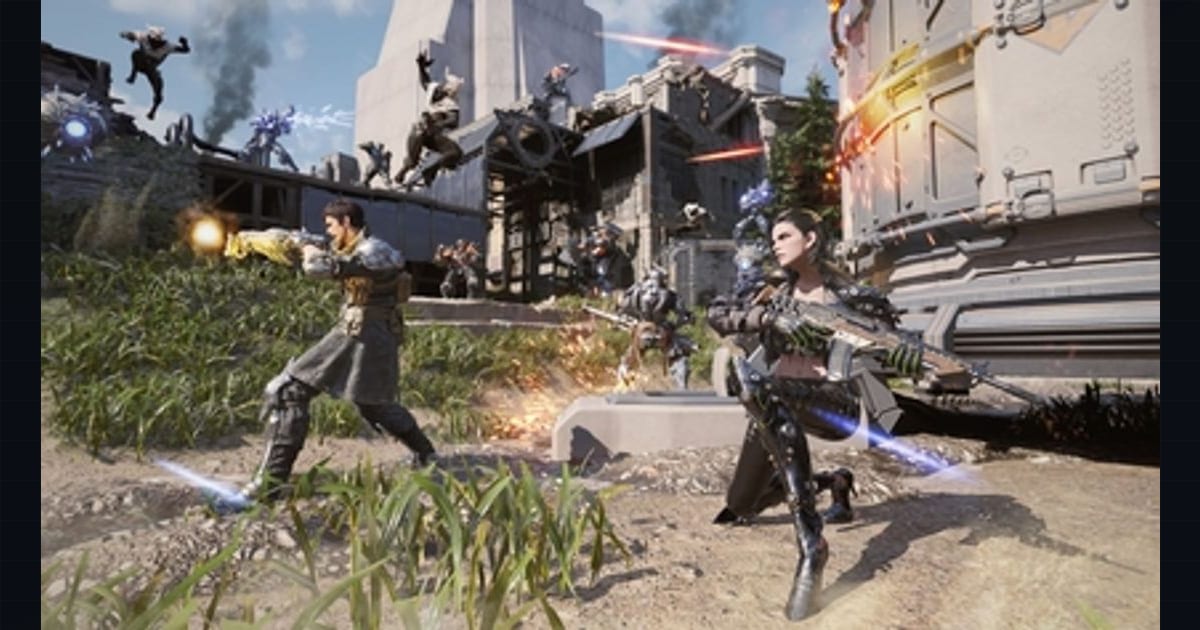
The First Descendant is a gear-driven looter where your power is the sum of four systems working together: your Descendant’s skill kit, the modules socketed into that Descendant, the reactor that amplifies skill power, and the external components that round out your stats and set bonuses. A Descendant with a mismatched reactor or a module set that ignores the boss’s resistances will struggle on Hard even at level 100, while a tuned build can solo content it has no business clearing. This guide walks through how those systems interact and how to pair each Descendant’s kit with the right module set and reactor roll for solo play and hard-mode Colossus fights. Every system described below comes from Nexon’s official game guides; where a specific stat is not published, the guidance stays general.
How the build systems fit together
Four systems define a build, and they are all gated behind progression you have to plan for:
- Descendants each have a unique skill kit and an attribute (Toxic, Electric, Chill, or Fire). Skills are typed — for example, Viessa’s Blizzard is typed Chill and Tech — and those types determine which reactor boosts them.
- Modules are chipsets socketed into a Descendant or weapon to enhance stats. Descendants get six base module slots plus two slots reserved for Sub and Skill Modules, for a total of eight. Slots and capacity expand with Mastery Rank. Each module belongs to a group, and you can equip only one module per group, so a build is a constrained selection, not a pile-everything-on exercise.
- Reactors amplify skill power. A reactor has an attribute and skill types it supports; when its attribute matches your Descendant, skills of that attribute gain power, and when its skill type matches a specific skill, that skill is further amplified. Reactors also carry an Optimization Condition that grants an even larger boost when met — usually conditioned on the equipped Descendant or the weapon in use.
- External Components (Auxiliary Power, Sensors, Memory, Processors) raise HP, DEF, and Shield, and equipping two or four matching parts activates a set effect. Each Colossus drops a different set, so your defensive loadout is a boss-by-boss decision.
The thread running through all four is the attribute matchup. Every Colossus has resistances, and one attribute it is “Extremely Low” (weak) to. Matching your weapon and skill attribute to that weakness is the single highest-impact decision in a build.
Module capacity, socket types, and Transcendent modules
Capacity is the real constraint on a build, and managing it is where most players lose power. Modules cost Capacity to equip, and enhancing a module increases both its stats and its Capacity cost, so you must plan enhancement around your Max Capacity. You can raise Max Capacity once via an Energy Activator obtained through Research, and Mastery Rank-ups expand both slots and capacity. The efficient path is to assign a Module Socket Type to a slot and socket a module whose Socket Type matches it — matching reduces Capacity Cost, while mismatching increases it. At level 40, Descendants can assign Socket Types, which resets the Descendant level but preserves skill level, so the socket-type pass is a planned respec rather than something you do casually.
Transcendent Modules are the Descendant-exclusive modules that modify skills rather than just adding stats. These are the modules that change how a kit actually plays — they can alter skill behavior, add effects, or shift a build from add-clear to single-target. Because Transcendent modules redefine a skill, your Descendant module set should be built around one or two of them, with the remaining slots spent on attribute enhancement, survivability, and capacity-efficient stat modules.
The official site also publishes a Recommended Module tool that surfaces recommended module combinations for a given Descendant, weapon, and Intercept Battle difficulty. Treat it as a starting point: it tells you what is currently recommended, but you still need to match attribute to the boss and respect your own capacity budget.
Attribute enhancement and resistance modules
For any Colossus fight, two module categories are non-negotiable:
- Attribute Enhancement modules (Toxic Enhancement, Electric Enhancement, Chill Enhancement, Fire Enhancement) raise your weapon’s Attribute ATK. Stack the one matching the boss’s “Extremely Low” resistance to maximize effective damage.
- Attribute Antibody modules (Toxic Antibody, Electric Antibody, Cold Antibody, Heat Antibody) reduce incoming damage of the boss’s attack attribute. Stack the antibody matching what the Colossus deals so you survive its burst windows.
Weapons that roll “Additional ATK When Attacking Colossus” or bonus “Attribute ATK” options compound with the enhancement modules, so prioritize those rolls when farming. A weapon with the right Colossus-specific roll plus a matching enhancement module will out-damage a higher-DPS weapon with neither.
Pairing Descendant kits to module sets and reactors
Because each Descendant has a distinct role, the module set and reactor roll should serve the kit rather than fight it.
- Bunny is the speed and field-mission specialist. Her agility makes her the go-to for clearing Field Missions quickly. Build her with module capacity tilted toward cooldown and movement-relevant stats, and pick a reactor whose attribute matches her skills so her mobility loop stays active. She is a farming and traversal pick more than a hard-mode boss pick.
- Sharen and Enzo are content-gated specialists. Sharen is essential for Outpost content and Enzo for Encrypted Vault content, so their builds should optimize for the specific mechanics those activities demand rather than raw boss DPS.
- Hailey specializes in clearing Intercept Battles — she is a single-target Colossus hunter. Build her with maximum Attribute ATK and Colossus-damage weapon rolls, a reactor that matches her skill types, and Transcendent modules that extend her burst window.
- Viessa is the Chill option, with skills typed Chill and Tech. Her reactor must match Chill (and the relevant skill type) to amplify Blizzard and the rest of her kit. Against a Fire-attribute, Chill-weak Colossus like Grave Walker, Viessa is the recommended pick: pair her with Heat Antibody (to survive the boss’s Fire attacks) and Chill Enhancement on your weapon (to exploit the Chill weakness).
The general pairing rule is: match the reactor attribute and skill type to the Descendant, satisfy the reactor’s Optimization Condition (usually by equipping the matching Descendant or weapon), then spend the remaining module capacity on attribute enhancement for the boss’s weakness and antibodies for the boss’s attack element.
Reactor rolls and Optimization Conditions
A reactor does nothing for you if its attribute does not match your Descendant — the skill-power boost only fires on a match. When the attribute matches, skills of that attribute gain power; when the skill type also matches a specific skill, that skill gains an additional layer of amplification. The Optimization Condition is the third lever: when met (its checkbox lights up in the tooltip), it grants an even greater skill-power boost. You can add extra Optimization Conditions through Reactor Implants, which lets a single reactor serve more than one build if you invest.
Reactor enhancement uses Ion Accelerators (crafted through Research, with materials from dismantling reactors), so you enhance selectively rather than broadly — pour resources into the reactor that matches your main Colossus-hunting Descendant, not into every drop.
External components and set effects for hard mode
On Hard, survivability becomes the limiting factor, and external components are where you fix it. Each Colossus drops a different external-component set, so the defensive answer is boss-specific: equip the set whose effects counter the mechanics of the fight you are entering. Activate the two-piece effect for a partial bonus or the four-piece effect for the full set, weighing the set’s bonus against the raw stats of the individual pieces you have. A four-piece set that resists the boss’s element and shores up HP/DEF/Shield is usually worth the stat trade on Hard, where a partial set with higher individual rolls can be better in Normal where survival is less pressured.
Solo versus hard-mode framing
For solo play, prioritize self-sustain and a single strong burst window: one Transcendent module that extends or empowers your burst, attribute enhancement matched to the target, antibody matched to the target’s element, and a reactor that fully matches your Descendant. For Hard-mode group Colossus fights, role specialization matters more — a Hailey built for single-target burst, a survivability-focused Descendant holding the antibody set, and a field-control Descendant managing adds. In both cases the constant is the attribute matchup: if your build does not exploit the boss’s “Extremely Low” resistance, no amount of module investment will recover the lost damage.