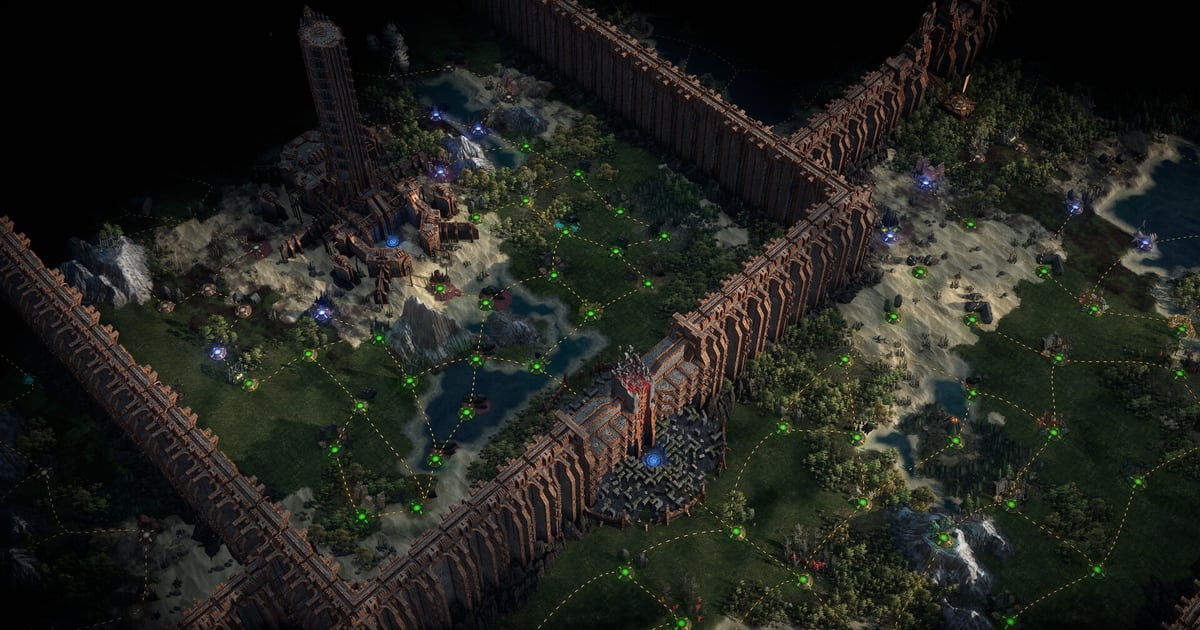
Combat in Path of Exile 2 shifts dramatically away from the hyper-fast, screen-clearing movement speed meta of PoE1 toward deliberate, weightier tactical execution. With over 100 bespoke boss encounters featuring intricate telegraphed attack patterns, survival requires mastering the newly introduced universal Dodge Roll, understanding monster Stun Meters, and executing tight animation cancels during lengthy spell casts.
What this covers: Universal Dodge Roll properties (Spacebar), i-frames vs collision mechanics, Boss Stun meter stagger loops, and animation recovery cancels. Why it matters: Unlike PoE1 where movement skills had cooldowns or charge counts, the PoE2 dodge roll is unlimited and cancels backswings instantly. Who should pick this: Exiles learning to dance around lethal boss telegraphs without dying to one-shot mechanics.
The Universal Dodge Roll
Every character in Path of Exile 2, regardless of class or ascendancy, possesses the Dodge Roll mapped to the Spacebar.
| Roll Property | Mechanical Rule | Tactical Application |
|---|---|---|
| Cooldown / Cost | Zero Cooldown, No Mana or Stamina cost | Can be chained repeatedly across arenas |
| Invulnerability (i-frames) | Active during the initial startup frames | Evades direct projectile impacts and slams |
| Unit Collision | Completely ignores monster collision hitboxes | Allows rolling directly through swarming packs to escape corners |
| Animation Canceling | Cancels backswing recovery of spells and swings | Eliminates sluggish end-lag after heavy hammer or spell casts |
Crucially, rolling does not grant total immunity to lingering ground-degen pools like burning ground. Rolling through fire will still inflict damage ticks. Corrupted Blood is a separate threat entirely — a hit-applied stacking debuff that builds up to 10 physical damage-over-time stacks, not a hazard pooled on the floor.
Boss Stun and Stagger Meters
Bosses in Path of Exile 2 do not possess binary crowd-control immunity. Instead, every major boss features a Stun Accumulation Meter beneath their health bar:
- Accumulation: Landing heavy physical slams, ice freezes, or lightning shocks fills the boss’s internal stagger gauge.
- The Stagger State: Once the meter fills completely, the boss enters an extended vulnerable Stagger state, collapsing to their knees for 4 to 6 seconds.
- Execution Window: There is no universal guaranteed-crit state against a Heavy Stunned boss — the payoffs are conditional on your build. Passives such as Skullcrusher add 20% more damage against Heavy Stunned enemies with maces, Crushing Impacts raises that to 25%, Sundering grants a +25% Critical Damage Bonus against Stunned enemies, Perfect Opportunity makes your hits Lucky, and Easy Target means the boss cannot Evade — while unique weapons like the Trephina Forge Maul always deal Critical Hits against Heavy Stunned enemies.
Managing Cast Times and Positional Spacing
In PoE2, casting high-damage spells roots your character in place for significant windup frames. Attempting to face-tank boss swings while channeling an earthquake or comet spell will result in instantaneous death.
- Begin your heavy cast while the boss is locked in their own recovery animation.
- The moment the boss turns toward you to swing, tap Spacebar to cancel the end of your animation and roll behind them, maintaining offensive pressure without taking damage.
Dodge Roll, Frame by Frame
A few properties of the roll matter more than the table can show. Rolls cannot be cancelled once started, so the commitment is real. Rolling is not faster than walking — it is a repositioning tool, not a movement-speed substitute — and its distance scales with your movement speed, so a slowed character rolls shorter. Its most useful quirk is unit size: rolling sets your character’s size to zero, which is how you escape a fully surrounded pack by threading the smallest gap. Smaller monsters, such as Adorned Beetles, can be shoved aside by the roll’s collision.
The i-frames are not a get-out-of-everything card. They cover projectile impacts and direct swings, but large boss AoEs will still connect; those attacks carry ground indicators or wind-up tells specifically so you can reposition or roll before the hit lands. Treat the roll as the answer to a committed attack, and treat reading the telegraph as the answer to an area denial.
Heavy Stun, Step by Step
Stun is an on-hit effect, so damage over time can never trigger it — a build that kills with ignites and bleeds has to land a hit to stagger. Any hit can cause a Light Stun, a fraction-of-a-second interruption that can fire often; the chance is based on the hit’s damage relative to the target’s Stun Threshold, and most monsters have a Stun Threshold equal to their maximum Life. Hits dealing 100% of the target’s maximum Life reach a 100% base chance, and any Light Stun chance of 15% or less is discarded outright. Player Physical and Melee Damage hits each gain 50% more stun effectiveness and the two stack multiplicatively for 125% on a melee physical build; monster melee and physical hits get 33% and 100% respectively, which is why melee swarms can chain-stun you.
Heavy Stun is the meter version. Damaging hits build the Heavy Stun bar shown beneath the target’s life bar, and when it fills, the target is interrupted and Immobilised for multiple seconds. Two rules keep it honest: buildup pauses while the target is already heavily stunned, and it becomes harder to re-stun them for a short time afterwards. Players normally cannot be heavily stunned, but they can accumulate buildup while blocking with a raised shield, parrying with a buckler, or riding a mount, and a heavily stunned player cannot Block, Deflect, or Evade.
Duration is not fixed. A stun lasts longer the more damage a hit dealt relative to the target’s Stun Threshold, and the Heavy Stun animation differs per monster: large uniques carry very high thresholds but stay down for a much longer window on success, often 6 seconds or more.
Primed for Stun: The Payoff Gate
The efficient way to stagger a boss is not to fill its bar slowly but to Prime it and then convert. A target becomes Primed for Stun once its Heavy Stun buildup crosses a rarity-dependent line:
| Monster Rarity | Primed at Heavy Stun Buildup |
|---|---|
| Normal | 40% |
| Magic | 60% |
| Rare | 70% |
| Unique | 80% |
Priming does nothing on its own — you need a modifier that cashes it in. The Titan ascendancy’s Crushing Impacts makes every hit a Crushing Blow, which heavy-stuns any Primed monster and also reads as 25% more damage against Heavy Stunned enemies. Boneshatter and Seismic Cry each cause a Heavy Stun on Primed enemies, and Boneshatter cannot build stun by itself, so it works only as the finisher. Staggering Palm and the Hollow Focus bells do the same. When you have one of these effects, Primed monsters display a floating indicator above their model.
Heavy Stun Payoff Modifiers
Once a boss is down, the multipliers are what make the window matter. These are the sources the wiki and guides point to for converting a stagger into damage:
| Source | Type | Heavy Stun payoff |
|---|---|---|
| Skullcrusher | Passive | 20% more damage against Heavy Stunned enemies with maces |
| Crushing Impacts | Titan ascendancy | All hits are Crushing Blows; 25% more damage against Heavy Stunned enemies |
| Perfect Opportunity | Passive | 30% increased Stun Buildup; hits are Lucky against Heavy Stunned enemies |
| Easy Target | Passive | Your hits cannot be Evaded by Heavy Stunned enemies |
| Heavy Contact | Passive | Hits that Heavy Stun enemies have Culling Strike |
| Shattering Blow | Passive | Break 50% of Armour on Heavy Stunning an enemy |
| Devastate | Support gem | Applies Broken Armour when you cause a Heavy Stun |
| Impact Shockwave | Support gem | Creates an Aftershock when you Heavy Stun a target |
| Rupture | Support gem | Aggravates Bleeding on hits against Heavy Stunned enemies |
| Trephina Forge Maul | Unique maul | Always deals Critical Hits against Heavy Stunned enemies; 30–50% increased Stun Buildup |
| Nazir’s Judgement | Unique quarterstaff | 35–50% increased Melee Damage against Heavy Stunned enemies; Dazes on Hit |
| Marohi Erqi | Unique greatclub | 40–60% increased Stun Buildup; Heavy Stuns enemies that are on Full Life |
Stun Threshold on Defense
Your own Stun Threshold equals your maximum Life by default, and it can be scaled two ways. Flat additions, such as Irongrasp’s +100–150 to Stun Threshold, behave like temporary maximum Life; percentage modifiers, such as Unbreaking’s 30% increased Stun Threshold, multiply the whole total. A 2,500-life character with Irongrasp’s +120 sits at 2,620 threshold, and adding the 30% modifier pushes that to 3,406 — which is why percentage scaling beats flat additions unless your life pool is tiny. Energy Shield characters can buy threshold as a percentage of the shield instead, and a Chaos Inoculation build still derives its base threshold from the life it had before the keystone set maximum Life to 1.
Three items define the defensive ceiling. Dionadair doubles your Stun Threshold while actively Blocking. Eye of Chayula grants Light Stun immunity at the cost of maximum Life and pairs well with Chaos Inoculation. And the light-stun-immunity notable trades away Dodge Rolling and Sprinting for the immunity, which is a real cost given how central the roll is to boss fights.
Corrupted Blood: Not a Ground Pool
Corrupted Blood is the debuff players most often misclassify. It is a hit-applied Physical damage over time stack, not a pool on the floor: it stacks up to 10 times, only the 10 most damaging instances deal damage simultaneously, and each new application refreshes the durations of the existing stacks. A target suffering from it shows red orbs swirling above the model.
Three details decide how dangerous it is. Most monsters inflict a base 5-second Corrupted Blood, and its damage scales with monster level, which is why higher-tier Waystones spike in lethality. It is neither Bleeding nor a Damaging Ailment, so bleed and ailment modifiers do nothing for it. And Armour does not mitigate it at all because it is damage over time — you need additional Physical Damage Reduction, or a physical-taken-as-fire effect such as Cloak of Flame, with the shifted portion mitigated by Fire Resistance instead.
The clean answer is immunity. A Vaal Orb can corrupt Ruby, Sapphire, or Emerald Jewels into the enchantment “Corrupted Blood cannot be inflicted on you,” and the Zerphi’s Genesis unique belt, a drop from The Trialmaster, grants the same modifier outright. Without it, the tactical play is to stop taking hits so the stacks simply time out instead of being refreshed.