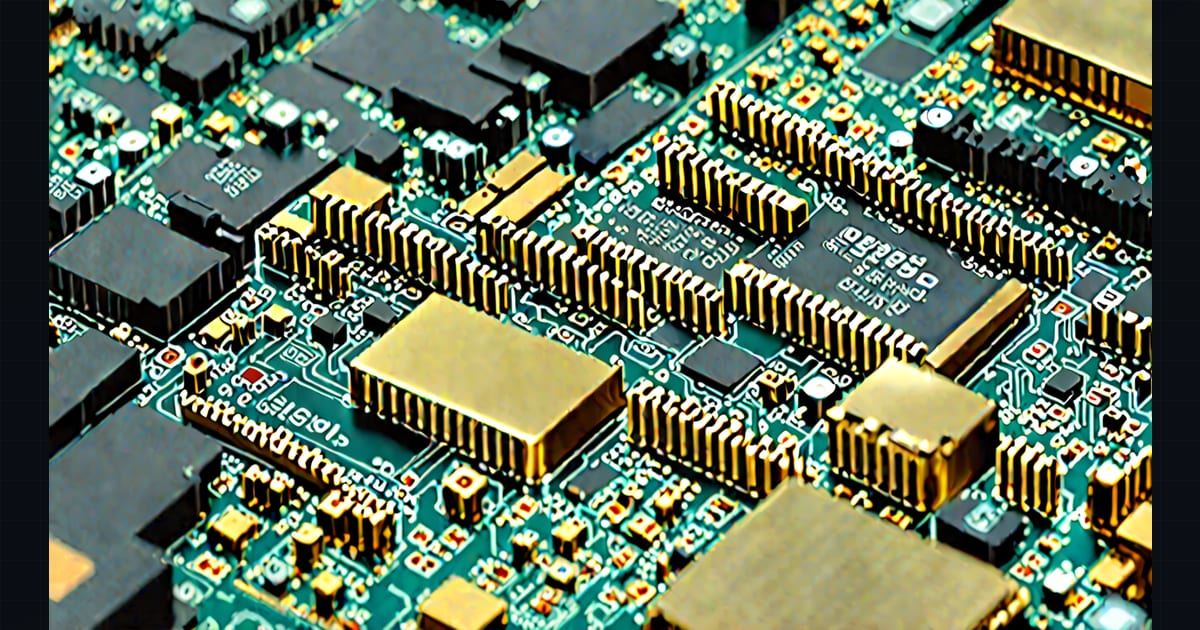
The era of mechanical hard drives and SATA SSDs in PC gaming is officially over. Modern open-world game engines rely on Microsoft DirectStorage 1.2 and PCIe 5.0 NVMe storage bandwidth to stream high-resolution textures directly from solid-state drives into GPUGPU. Graphics Processing Unit — the chip that renders the game's visuals; the main driver of framerate and image quality. VRAM.
What changed: PCIe 5.0 SSDs reach up to 14,500 MB/s sequential reads, and DirectStorage 1.2 moves decompression from the CPU to the GPU. Why it matters: Storage is now an active stage of the render pipeline, feeding the GPU per-frame instead of per-level. Who should care: Open-world RPGRPG. Role-Playing Game — a game built around character progression, story, and player choices. and MMOMMO. Massively Multiplayer Online — a game that hosts very large numbers of players together in one shared, persistent world. players; competitive esports players gain nothing from the upgrade.
1. PCIe 5.0 vs. PCIe 4.0 Storage Bandwidth
Powered by modern controllers like the Phison E26, PCIe 5.0 x4 M.2 SSDs double available bandwidth over PCIe 4.0 drives:
- Sequential Read Speeds: Reaching up to 14,500 MB/s, allowing 100GB game assets to load in under 2 seconds.
- Random 4K IOPS: Exceeding 1.8 million IOPS, eliminating texture pop-in during high-speed traversal in titles like GTA VI and Avowed.
2. GPU-Bypassed Asset Decompression (DirectStorage 1.2)
Under legacy storage pipelines, compressed game assets were loaded into system RAM, decompressed by the CPU, and sent back across the PCIe bus to the GPU. DirectStorage 1.2 bypasses the CPU completely:
- Direct Drive-to-GPU Pipeline: Compressed GDeflate asset packages stream directly from the NVMe SSD into GPU memory.
- CPU Overhead Reduction: Decompressing textures using compute shaders frees up CPU core cycles, reducing frametime stutters in crowded multiplayer cities.
3. Thermal Management Requirements
PCIe 5.0 controllers draw up to 14W of power under sustained read bursts. Building a stable PCIe 5.0 storage setup requires motherboards with dedicated aluminium heatsinks or active fan coolers to prevent thermal throttling.
Why It Matters: Storage Has Become a Render-Stage Component
For most of PC gaming’s history, storage was a passive component — a loading-screen tax you paid once at launch and then forgot about. PCIe 5.0 plus DirectStorage 1.2 rewrites that contract. Storage is now an active stage in the render pipeline, feeding the GPU on a per-frame basis rather than a per-level basis. That distinction is the whole story.
The practical consequence is that the old “load everything into VRAMVRAM. Video RAM — memory on the graphics card used for textures and frames; more of it lets you run higher settings. up front, then render” model is being replaced by “stream only what the camera can see, just in time.” A 14,000 MB/s sequential read ceiling means an engine can pull ~14 GB of unique asset data per second — enough to swap the entire visible texture set of a dense city block several times over during a single second of gameplay. When the GPU decompresses that data itself via GDeflate compute shaders, the CPU is freed from the single-threaded decompression bottleneck that has haunted open-world titles since the Xbox One / PS4 era.
The Take: Bandwidth Is No Longer the Bottleneck — The Game Loop Is
Here is the uncomfortable truth the benchmark numbers obscure: most current PC games cannot actually use 14,500 MB/s. The raw bandwidth headroom is real, but the software layer above it has not caught up. DirectStorage adoption outside of Microsoft’s own titles (Forza Motorsport, Ratchet & Clank’s PC port) remains thin, and the engines that do hook into it are typically capped by their asset-packaging strategy, not by the drive.
That means the honest purchase advice is counterintuitive: a PCIe 5.0 SSD is future-proofing, not a present-day frame-rate unlock. If you are building a rig today for GTA VI or the next wave of Unreal EngineUnreal Engine. A widely-used commercial game engine from Epic Games; powers many large-studio (AAA) games. UE5 is the current generation. 5.4+ titles that lean on Nanite + streamed virtual texturing, the headroom will pay off. If you are playing yesterday’s library, a quality PCIe 4.0 drive at half the price delivers indistinguishable load times because nothing in the render loop is asking for the extra bandwidth. The 14W thermal draw and active-cooler requirement are the real cost — you are paying power, noise, and chassis-compatibility tax for capacity you cannot yet spend.
What It Signals: The Console-PC Storage Gap Is Closing — Then Inverting
The inflection point worth tracking is the relationship between console fixed storage and PC upgradeable storage. Sony’s PS5 settled on a 5,500 MB/s PCIe 4.0 ceiling as a hard guarantee developers could target; Microsoft’s Xbox Series X|S did the same with its proprietary expansion format. That floor let first-party engines like Insomniac’s and Turn 10’s design around guaranteed streaming budgets — something PC developers, facing everything from SATA HDDs to PCIe 5.0, could never assume.
The streaming baseline on each platform now looks like this:
| Platform | Storage ceiling | Notes |
|---|---|---|
| PS5 | 5,500 MB/s (PCIe 4.0) | Hard guarantee developers can target |
| Xbox Series X|S | Proprietary expansion format | Same guaranteed-streaming approach |
| PC (PCIe 5.0 + DirectStorage 1.2) | Up to 14,500 MB/s | Roughly 2.6× the console baseline |
PCIe 5.0 on PC now sits at roughly 2.6× the console baseline, and DirectStorage 1.2 gives PC ports a path to match — and exceed — the streaming tricks that were previously console-exclusive. The long-term signal is that the PC is reasserting itself as the lead platform for streaming-bound game design, not by faster GPUs alone but by storage that outpaces the fixed-silicon consoles it ports from. Expect the next generation of multiplatform engines to ship with a “DirectStorage recommended” tier rather than a “SSD required” tier, and expect the gap between those two settings to widen as PCIe 5.0 penetration grows.
Context: The Genre Winners — Open-World RPGs, MMO Hubs, RTSRTS. Real-Time Strategy — a strategy game where everyone plays at the same time, continuously, instead of taking turns. Late-Game
Not every genre benefits equally, and mneurix.quest’s core audience should read the benchmarks through a genre lens. The clear winners are the streaming-bound designs:
- Open-world RPGs (Avowed, GTA VI, eventual Elder Scrolls VI) gain the most, because their failure mode is traversal pop-in and world-state reloads when the player fast-travels. 1.8 million random 4K IOPS is the metric that actually kills pop-in — sequential reads load levels, but random reads load the scattered small files (meshes, metadata, per-object textures) that cause the visible “blur then sharpen” cascade.
- MMO hub cities benefit from the CPU-overhead reduction. Crowded player hubs are typically CPU-bound on the main render thread as draw calls and state updates pile up; offloading decompression to compute shaders reclaims precisely the cycles that cause the 5–15ms frametime spikes players perceive as “stutter.”
- RTS late-game, with hundreds of units and their per-unit textures suddenly demanded on-screen, is the sleeper beneficiary — though few RTS engines currently pipeline through DirectStorage.
The losers, for now, are competitive esports titles, where everything fits in VRAM anyway and the camera rarely moves fast enough to outrun a PCIe 4.0 drive. Storage speed does not improve your Counter-Strike aim — and the benchmarks, read honestly, say so.
The trajectory from here is already visible: as PCIe 5.0 penetration grows, expect a widening gap between “SSD required” and “DirectStorage recommended” settings tiers in the next wave of multiplatform engines. For buyers, the practical horizon is the GTA VI and UE5.4+ generation of titles — the moment today’s bandwidth headroom becomes tomorrow’s baseline requirement.
Next read
Storage is one leg of the build — our 16GB VRAM baseline report covers the other side of the streaming equation, and the RAM pricing breakdown covers the memory market feeding it. New drives and platform launches are tracked on our launch calendar.