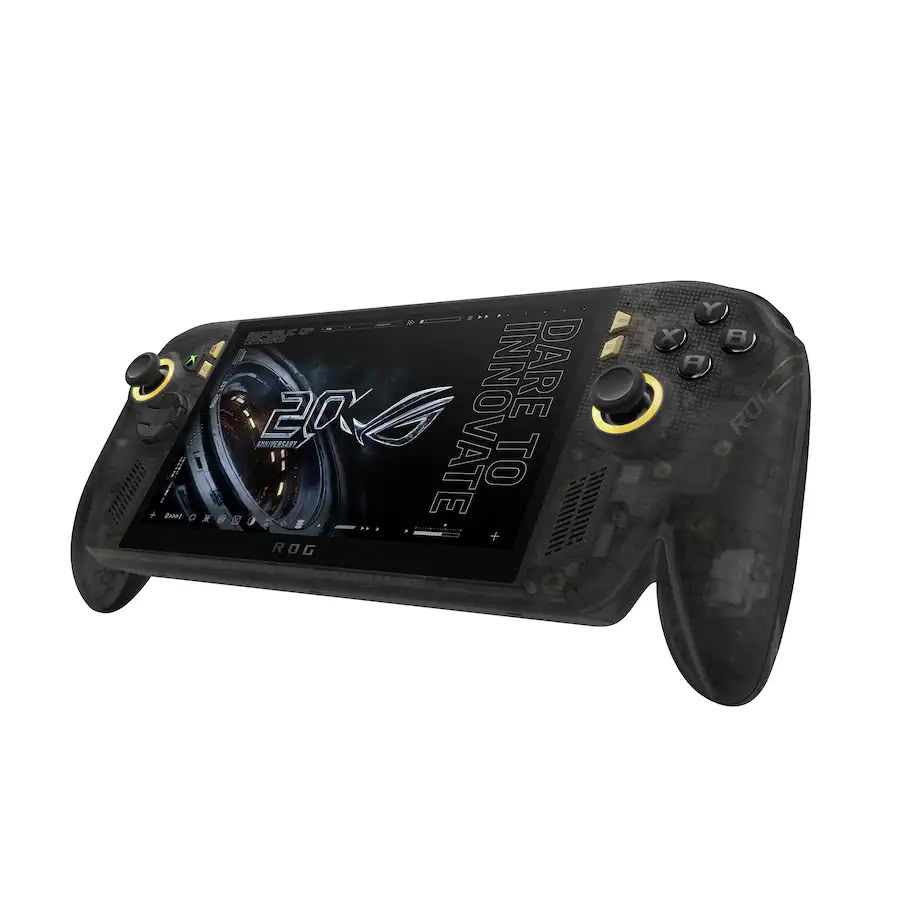
Bazzite, the Linux gaming distribution built around handheld and living-room PCs, has added preliminary hardware support for two new devices: the ASUS ROG Xbox Ally X20 and the Acer Predator Atlas. Developer Andy East announced the work as a call for testers.
What changed: Bazzite added preliminary support for the ROG Xbox Ally X20 and Acer Predator Atlas handhelds. Why it matters: Linux support usually trails new handheld launches by months, and both devices get working display, input and sleep behaviour early. Who should care: Handheld owners who prefer SteamOS-style Linux to Windows, and anyone deciding whether to buy a device on the promise of future Linux support.
What works today
| Device | Working | Missing |
|---|---|---|
| ROG Xbox Ally X20 | Display, back buttons, VRR, HDR, sleep/wake, button remapping | RGB lighting, fan control, official OGUI plugin |
| Acer Predator Atlas 8 | Less complete than the ASUS device | Not itemised in the announcement |
The ASUS device is the further along of the two. Full display and back-button support with VRR and HDR is the core of a handheld experience, and sleep/wake is the feature that most often breaks on new hardware — a Linux build that resumes reliably is usable rather than experimental.
RGB lighting is not implemented yet, though the developer expects it to arrive with Open Gaming Collective components. Fan control is also missing, but the announcement points to the usual Decky plugins as a workaround, with an official OGUI plugin in development.
Why early support matters more than it sounds
Handheld PC buyers are effectively choosing an operating system when they choose a device. Windows is the default, and Linux support is what determines whether the hardware can be reused with a console-like interface later. A device that gets Bazzite support in its launch window keeps that option open; one that waits a year may never get a community around it.
The call for testers is the other half of the story. Preliminary support is a claim that needs devices in hands to verify, and the announcement is explicitly asking owners to report what breaks.
What is still missing
The Acer Predator Atlas 8 is described as less feature-complete without a breakdown of which subsystems work. There is also no timeline for the RGB support or the OGUI plugin, and no statement on battery or TDP behaviour differences versus Windows.
Forward look
Both devices are supported in a preliminary state now. The useful next milestone is a feature-completeness list for the Acer unit, and stability reports from testers on sleep/wake over multi-day use — the failure mode that turns a promising port into a frustrating one.