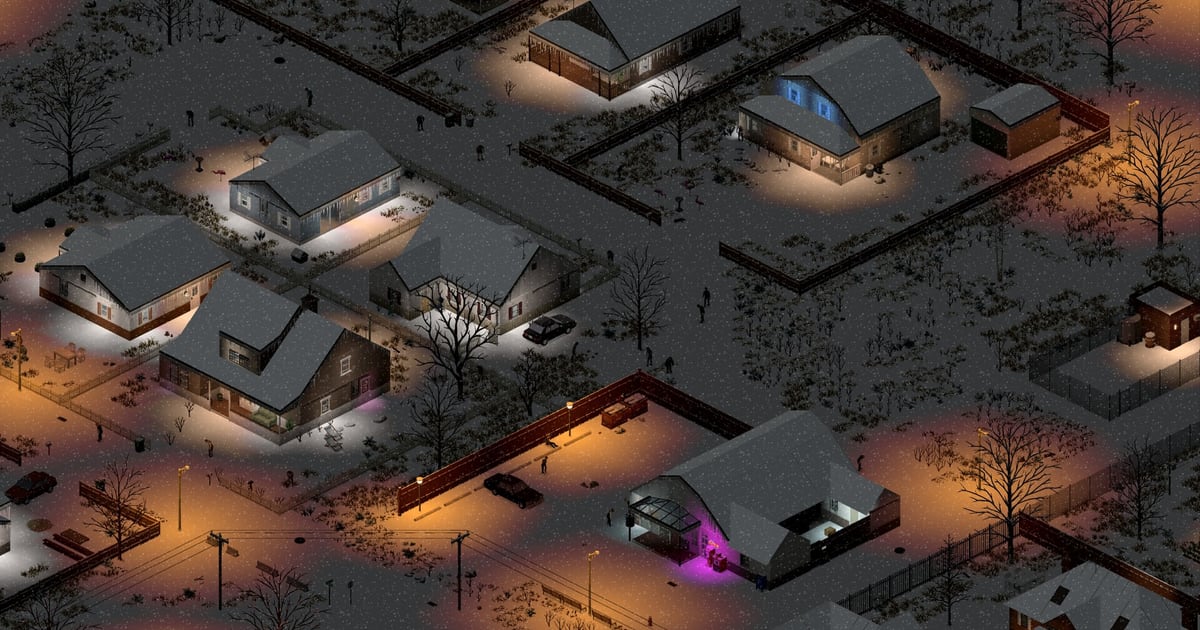
Build 42 rebuilt Project Zomboid’s crafting and building systems, then patched them repeatedly through October. Our 42.21 multiplayer and horde write-up owns what those patches repaired. This one owns what you build on top of them: where the base goes, wall versus fence, generator placement, and the fallback when a horde arrives anyway.
It is not a Build 41 guide with the numbers filed off. Build 41 saves are not compatible with Build 42 — The Indie Stone’s checklist put it flatly (“Build 41 savegames clearly will not be compatible with Build 42”) and pointed holdouts at a legacy41 beta branch.
What this covers: base siting, perimeter construction, generator placement and horde fallback on the Build 42 line, with page-version caveats attached. Why it matters: Build 42 changed how you craft, how much health a wall has and where zombies spawn, so a base plan from 2022 rests on retired assumptions. Who should care: returning players starting a fresh Build 42 world, and admins deciding what their server’s safehouse rules allow.
The build this advice assumes
Every page on projectzomboid.com carries a version strip in its footer; on 29 October 2026 it reads Stable Build: 42.21, Pre-Release: 42.22. That is the anchor: 42.21 is current, and nothing below depends on 42.22 shipping. That build is testing on a renamed branch, which “replaces the Unstable branch for early testing”, and the studio now holds a build in Pre-Release “at least one week” before Stable.
Everything else descends from 29 July 2026, when Build 42 reached Stable after the 28 July checklist announced it for “tomorrow, Wednesday 29th July”. Its headline for base-builders, from the official feature breakdown: “Deeper crafting and building systems, giving players more ways to create, maintain, and improve their long-term survival setup.”
What Build 42 actually changed about building
The trap with long-running early-access games is advice that is right about a mechanic and wrong about the version. Where a Build 41 habit now produces a Build 42 mistake:
| Build 41 habit | Build 42.21 reality | Stated on |
|---|---|---|
| Craft anything from your inventory, wherever you stand | A Workstation system “interfaces with crafting to create items”; the building menu also wants ingredients, recipe knowledge, skill levels and sometimes light | Features Overview, Building |
| Dismantle furniture to level Carpentry | “Dismantling no longer gives experience since build 42” | Carpentry |
| Wooden walls are the only real wall | Adds masonry, carving, knapping and blacksmithing, plus “clay and stone walls, new wooden walls and constructions” | Features Overview |
| Interiors sit in a known state when you arrive | Door and light states are “now randomized”; some houses “may already be looted and trashed” | Features Overview |
| Zombies follow a flat regional density | A “Voronoi Noise” spawn map makes hordes “more urban-focused”; world seeds fix basements, distribution and out-of-bounds wilderness | Features Overview |
| You know the map | Surface area doubled; 1,400 unique buildings and 20,000 new tiles over Build 41’s 15,000; 400 proceduralprocedural. Generated by rules or algorithms rather than hand-placed — e.g. terrain or quests that the game builds itself. and 75 unique basements | Big Glow Up, Features Overview |
The basements row changes siting most: underground layers hold “basements, bunkers, panic rooms” that give “unique base locations for the intrepid explorer”, and they are seed-generated, since “world seeds now determine the locations of some generated elements like basements”. Louisville also runs to “32 zombie-filled floors”. A basement you saw in a stream is not one you can walk to.
Siting: let the population curve pick the postcode
The Zombie page, marked revised for 42.21, supplies the numbers that decide a siting question — and they are distribution numbers, not difficulty numbers.
On default Apocalypse settings, “the total zombie population steadily increases starting on the first day all the way until day 28, when the maximum population allowed is reached.” Respawns are “enabled by default in Extinction and Rising”, where “zombie populations in unseen cells will repopulate if any are killed by the player.” Density falls off: “the downtown areas of urban settlements will have the highest zombie populations”, the outskirts are moderate, and “rural/wilderness areas having the lowest populations.”
So the day-1 site is not the day-30 site, and a quiet cell stays quiet only until something pushes zombies into it: cells “may harbor more than their maximum number of zombies due to a number of reasons, such as hordes migrating into the cell”. Migration is event-driven, not random drift — up to once a day “the player may hear random gunfire, screams or dogs barking in the distance”, and those sounds “will cause zombies to migrate”. The helicopter event, “once in a game” by default, “draws zombies to the player location from far away”.
The site to look for is a rural cell with a loot town inside walking distance: low baseline density, resupply reachable without a car, and enough distance from downtown that migration pushes zombies away from you rather than through you. Claiming a downtown block for the loot inverts the logic — downtown carries the highest population by the wiki’s own ordering.
Two different things are called a safehouse
Build 42’s map is full of buildings the game labels safehouses, and multiplayer servers run a separate claim system. They share a word and nothing else.
The map version is a randomised building story, eligible only if it has 20 rooms or fewer, is not a starting location, is not flagged derelict or empty, and is not a building that already contains a stash. These houses arrive barricaded downstairs and sheeted upstairs, carry loot “including but not limited to sledgehammers, skill books, schematics”, and are more dangerous than a normal house: “Safehouses tend to contain more zombies than the average house.” They also upgrade with world age, which is the tier structure worth knowing:
| World age since the outbreak | Loot table the building rolls | Practical reading |
|---|---|---|
| 0 – 10 days | SafehouseLoot | Early tools and weapons, before the good stuff exists |
| 10 – 90 days | SafehouseLoot_Mid | The window where a safehouse is worth a deliberate detour |
| 90 days or more | SafehouseLoot_Late | Late-tier loot, in a world where the cell is at maximum population |
The wiki adds that these buildings “can also double as a fantastic base of operations in a heavily populated city such as Louisville” — with the caveat that the player has to keep quiet while inside.
On a server, none of that governs who may claim a building. SafehouseAllowNonResidential (default false) governs “whether players can claim non-residential buildings”, and SafehousePreventsLootRespawn is true, so claimed buildings stop respawning loot. A warehouse, garage or gas station is non-residential, so on a default server you cannot claim one without an admin flipping that switch. The page pairs PlayerSafehouse=false with “Both admins and players can claim safehouses”, which reads inverted — verify on a live server.
Wall versus fence: same object class, different jobs
A wall and a tall fence do not do the same job, and the difference sits in zombie pathing rather than in health values.
A tall fence is something zombies largely route around. Players can climb one by pressing or holding E “while zombies can’t”, and — the sentence that matters — “zombies will prioritize finding nearby weaknesses before attempting to break a tall fence, such as doors, windows, small fences or simply walking around the tall fence.” A small fence is a speed bump: zombies can vault it.
A wall is the opposite. The Wood Wall page is direct that “zombies will attack player-made walls, the same as a door or window, making it important to be cautious of where walls are placed.” A wall is an HP pool that absorbs attention, and its HP is a function of your skill at the moment of construction:
| Carpentry level | Basic wall | Advanced wall | Craftsman wall |
|---|---|---|---|
| 2 | 490 | — | — |
| 4 | 530 | 630 | — |
| 6 | 570 | 670 | 770 |
| 8 | 610 | 710 | 810 |
| 10 | 650 | 750 | 850 |
Wooden walls need a frame first and cost 2 planks and 4 nails each, unlocked at Carpentry 2, 4 and 6. The system’s ceiling, per the same page: “The highest possible HP for a wall is a welding level 10 metal wall (level 2), with a metal frame, at 1070 HP.” The Building page adds the builder term — constructed objects carry “100 health per level” of the relevant skill — so a wall thrown up early and cheaply stays weak unless you rebuild it.
The conclusion is not “walls or fences” but that the two belong at different radii. A tall-fence perimeter gives a horde a reason to look elsewhere, and zombies “will not target naturally generated tall fences” — a compound already inside a fence line is doing defensive work before you build anything. Walls go where you intend to make a stand: the gap, the garage mouth, the corridor you have decided to hold. Wooden walls “can be used as player-made tall fences, as long as there’s no roof above them.”
Barricades are a third, weaker tier and read as an alarm rather than a barrier: they “will only slow down zombies, not stop them”, and “as barricades make a lot of sound when attacked, they can be used to alert the player to a zombies presence” — the real reason to board a window you do not intend to hold. Up to four planks go per side, and three or four block line of sight.
Carry one freshness warning into play: the Fence and Barricade pages are still marked last updated for 41.78.19, before Build 42 shipped. The behaviours above are what those pages state; whether 42.21 altered any of them is not something they can tell you.
Generator placement is a noise decision, not a power decision
The generator has four constraints and only one is about electricity. The Generator page gives all four, flagged as last updated for 42.13.1.
Coverage: “each generator powers devices in a cylindrical area centered on itself with a radius of 20 tiles”, reaching “3 floors above the generator and 3 floors below it.” Exhaust: do not put it indoors. “Players should not place a generator inside a structure they plan to, or are currently occupying. Generator exhaust will negatively impact character health very quickly down to 1”, and the structure stays unsafe until the unit is off.
Noise is the constraint that gets bases killed: “Generators can be heard by zombies, which will attract unwanted attention.” Ranges differ by model — Lectro-Max and Premium Technologies 20 tiles, Old 25 tiles, ValuTech 23 tiles.
Fuel: the tank “can take up to 1 gas can’s fuel and can only be filled while the generator is off”. Baseline draw is 0.002 L/h before device load, and the page’s worked example — a popsicle fridge, a television and six lamps — totals 0.0222 L/h, so “a full generator of 10 liters would run for about 450 in-game hours (18.7 days)”. Connecting it needs Electrical 3, Electrical 2 with Inventive, the Electrician or Engineer occupation, or the How to Use Generators magazine.
The placement rule, then: outdoors, on the ground, within 20 tiles of the fridge but roughly 25 tiles from anywhere you sleep or the wall line you expect to hold — the two radii are the same order of magnitude, centred on one tile.
Timing matters as much: the electricity “will shut off on a random day from day 14 through 30 on the default Apocalypse game mode”, announced on the Automated Emergency Broadcast System “up to two days before”, while water shuts off “on a random day from day 0 through 30” unannounced.
The fallback plan when the horde finds you
The behaviour that decides whether a base survives an incursion is on the current-stable wiki page, and it is more specific than “they attack the walls.”
Zombies are sound-led: they “respond most readily to sound” and “will shuffle towards these sounds using the most direct path, which may lead to them smashing into windows and other destructible objects” — which is why one obvious entrance concentrates the attack. The page also gives the release valve: “there is a small chance, as long, as there is no longer any reason for zombies to continue pathfinding, that they will lose interest and become idle again.” The memory model supplies the exit: they shuffle “towards a last predicted location”, then “settle back into inactivity”.
Hordes make it collective: a “horde leader” is followed by every other zombie in the group, so alerting the leader “will consequently attract the rest of the horde”. One noise at the wrong moment moves the group.
A fallback plan built on those statements: do not fight inside the footprint, because every hit a wall takes is damage you paid planks for. Have a second way out that is not the door the horde has queued at, since the direct-path rule makes the obvious exit the crowded one. Break line of sight rather than outrunning them: the memory model resolves to a predicted position, then idles.
Two 42.22 changes sharpen this, pre-release only. “Characters can now push while both hands are full of encumbering items”, and “characters will now be unable to sleep if a Bad Smell moodle is present” — which turns corpse clearance inside the base into a sleep blocker. The same build makes your doors less trustworthy: crowbars can “force open locked windows, doors, garage doors and gates”, with “security doors and jail cell doors” exempt. On PvP that is a base-design input once it ships; on PvE it is a reminder that a locked door is a delay, not a barrier.
What this guide does not claim
The mechanics above come from pages of differing vintages: Zombie is marked revised for 42.21.0 and Safehouse for 42.20.4, but Generator is marked 42.13.1, Metagame 42.13.2, Wood Wall 42.12.3, Building 42.11.0, and Fence and Barricade 41.78.19. The wiki flags each as possibly inaccurate against 42.21.0, so every figure here carries its version.
Whether Build 42 changed zombie migration specifically is not stated on any page fetched here. What it demonstrably changed is distribution: the Voronoi spawn map and seed-determined placement. The migration behaviour above — metagame sounds, horde leaders, cell spread — is what the current-stable wiki page describes without attributing those rules to Build 42.