Flagship gaming CPUs rarely stay at launch price forever. By the middle of 2026, AMD’s Ryzen 9000X3D chips are not only widely in stock but also selling well below their original SEP, often with a free cooler or power supply thrown in. The Ryzen 7 9800X3D has dropped into the low-$400 range, while the Ryzen 9 9950X3D is now available for roughly $130 under its launch price. For anyone building or upgrading an AM5 gaming PC, the question is whether these cuts are a simple sale or a signal that the next generation is close enough to wait.
What changed
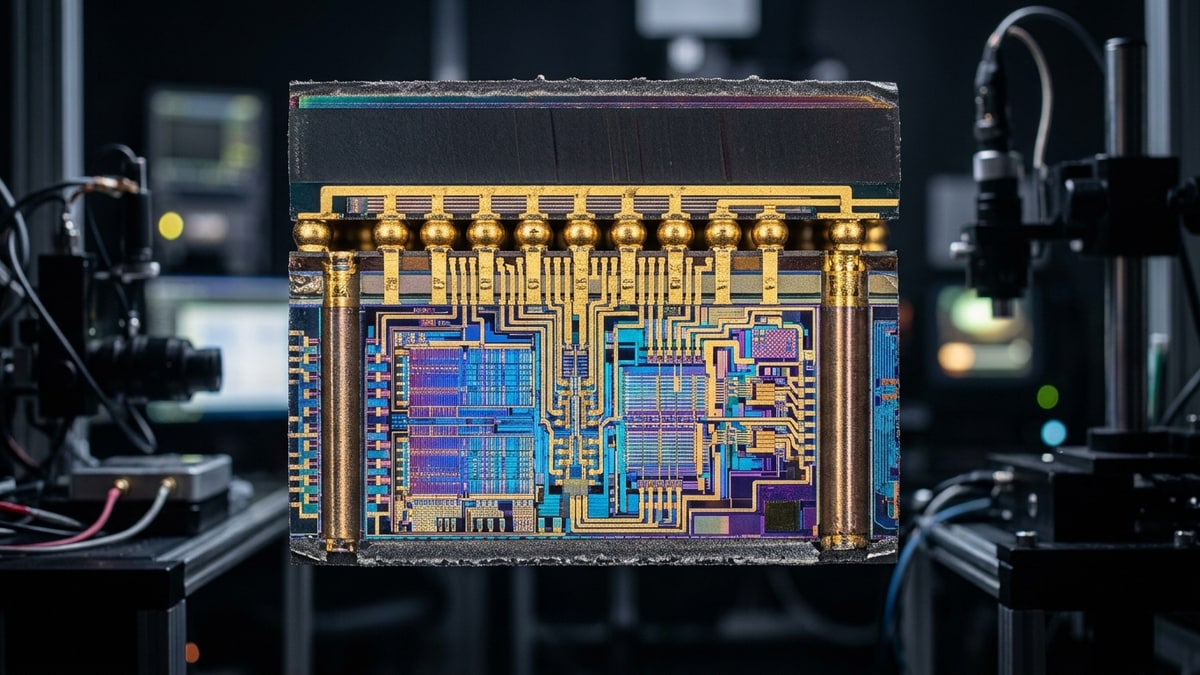
AMD introduced the Ryzen 7 9800X3D on October 31, 2024, as the first Zen 5 X3D processor. The official press release lists an eight-core, sixteen-thread design with a 4.7 GHz base clock and up to a 5.2 GHz max boost. Total cache is 104 MB, enabled by 2nd Gen AMD 3D V-Cache3D V-Cache. AMD's stacked L3 cache that gives the CPU very fast access to data, notably boosting game framerates. technology, and the chip carries a 120 W TDP. The launch SEP was $479. AMD also noted that this was the first X3D processor with full overclocking support, thanks to a new cache placement that moves the 64 MB 3D cache below the CCD so the cores sit closer to the heat spreader.
The larger Ryzen 9 9950X3D followed in March 2025. Phoronix reported AMD’s official confirmation that the sixteen-core, thirty-two-thread part would launch at $699, with the twelve-core Ryzen 9 9900X3D launching at $599. The 9950X3D combines 64 MB of standard L3 cache with 64 MB of 3D V-Cache for a total of 128 MB, runs at up to a 5.7 GHz boost clock, and has a 170 W TDP. It sits at the top of the consumer AM5 stack for heavily threaded work while still carrying the extra cache that helps gaming.
By mid-2026, street pricing has moved. Wccftech reported in mid-August that the Ryzen 7 9800X3D was selling for $429 at Newegg with a promo code and included a free 240 mm AIO, a bundle that adds visible value on top of the headline CPU price but is harder to quantify as a precise dollar discount. The same report put the Ryzen 9 9950X3D at $569 after a $130 promo-code discount, also with a free AIO. Club386 and HotHardware both confirmed the 9950X3D at $569 through Amazon and Newegg coupons around the same period. VideoCardz noted the 9800X3D had already touched $429 earlier in the year, and PCGuide listed it at roughly $415 in late August. Even the older Ryzen 7 7800X3D is now routinely in the mid-$300 range with bundled power supplies, making the entire X3D lineup cheaper than at launch.
How it works
AMD’s pricing cadence usually follows a clear rhythm. A new Zen architecture arrives first in standard non-X3D form, then the X3D variants appear months later with extra cache aimed at gaming. The 9000 series followed that pattern: Ryzen 9000 non-X3D launched in 2024, the 9800X3D arrived that October, and the 9900X3D and 9950X3D landed in early 2025. Discounts of this size on the 9800X3D and 9950X3D in mid-2026 therefore line up with the back half of the product cycle, when AMD and its retail partners typically clear inventory ahead of the next launch window.
The cuts also reflect the arrival of the Ryzen 9 9950X3D2 “Dual Edition,” which now serves as AMD’s official flagship AM5 CPU. Club386 notes that the newer chip costs noticeably more and does not deliver a large gaming advantage over the original 9950X3D, so the older part has become the better value choice. Similarly, the 9800X3D now undercuts the newer Ryzen 7 9850X3D by a wide enough margin that the older chip is often the smarter buy for a pure gaming build. Retailers are using bundled coolers and power supplies to make the deals more attractive, a common tactic when a product is well-stocked and no longer commands launch pricing.
Availability is another important signal. The 9800X3D and 9950X3D are listed in stock at major retailers including Newegg, Amazon, and B&H, with regular restocks. There are no widespread reports of supply shortages, which suggests AMD is producing these chips in volume and moving them through the channel rather than holding prices high because of limited supply. That is the opposite of a launch scarcity pattern and usually precedes either a refresh or a generational transition.
What it means
For a new PC build or an AM5 upgrade today, the current prices are strong. The Ryzen 7 9800X3D remains the best pure-gaming choice for most users: eight fast cores, a large cache pool, and low enough power that it is easy to cool. At roughly $420 to $430, or even lower with a bundled cooler, it undercuts the newer 9850X3D while offering nearly identical frame rates in real games. The Ryzen 9 9950X3D at $569 is a more expensive proposition, but it is the right pick for anyone who also does heavily threaded work such as video encoding, 3D rendering, or streaming while gaming. The 9900X3D sits between them at around $500 when discounted, though it receives less attention than the eight-core and sixteen-core options.
The platform context matters. AM5 motherboards require DDR5DDR5. A generation of system RAM (memory); newer and faster than DDR4. memory, and a decent B650, B850, or X870E board adds to the total cost. AMD has stated that AM5 will be supported through 2029, so a motherboard bought now should accept future drop-in upgrades. That long support window reduces the risk of buying a 9800X3D or 9950X3D today, even if a new generation appears next year. The alternative, Intel’s LGA 1851 platform, is already scheduled to give way to a new socket, so its high-end chips do not have the same upgrade path.
The big unknown is Zen 6 X3D. No official announcement has been made, and any leaked dates should be treated as speculation. AMD’s historical pattern suggests the next X3D parts would launch after the standard Zen 6 CPUs, which means late 2026 or 2027 is a plausible window, but that is not a confirmed schedule. If Zen 6 X3D does arrive, early chips will likely launch at or above current SEP levels and may carry BIOS and platform-maturity teething issues. The discounted 9000 X3D chips therefore remain a safe, proven option for a build today, while waiting only makes sense if you are comfortable paying a launch premium for an unproven product.
Buyers should also be realistic about what X3D delivers. The extra L3 cache improves gaming, particularly in CPU-bound or cache-sensitive titles such as MMOs, strategy games, and some ARPGs, but the uplift varies by engine and resolution. At 4K with a flagship GPUGPU. Graphics Processing Unit — the chip that renders the game's visuals; the main driver of framerate and image quality., the gap between an X3D chip and a fast non-X3D Ryzen or Intel part often shrinks. For high-refresh 1080p or 1440p gaming, or for games that scale with cache, the X3D premium pays off. For a box used mostly for productivity, a non-X3D Ryzen 9 9950X or an Intel Core Ultra part may be the better fit.
When shopping, check the total platform cost, not just the CPU. Bundled coolers help, but a 9950X3D still benefits from a strong 240 mm or 360 mm AIO or a large air cooler to sustain its 170 W TDP. A 9800X3D is easier to cool, yet a tower cooler is still worth the small investment. DDR5-6000 in a dual-channel kit is the practical sweet spot for AM5, and a 650 W or larger power supply leaves room for a mid-range to high-end GPU.