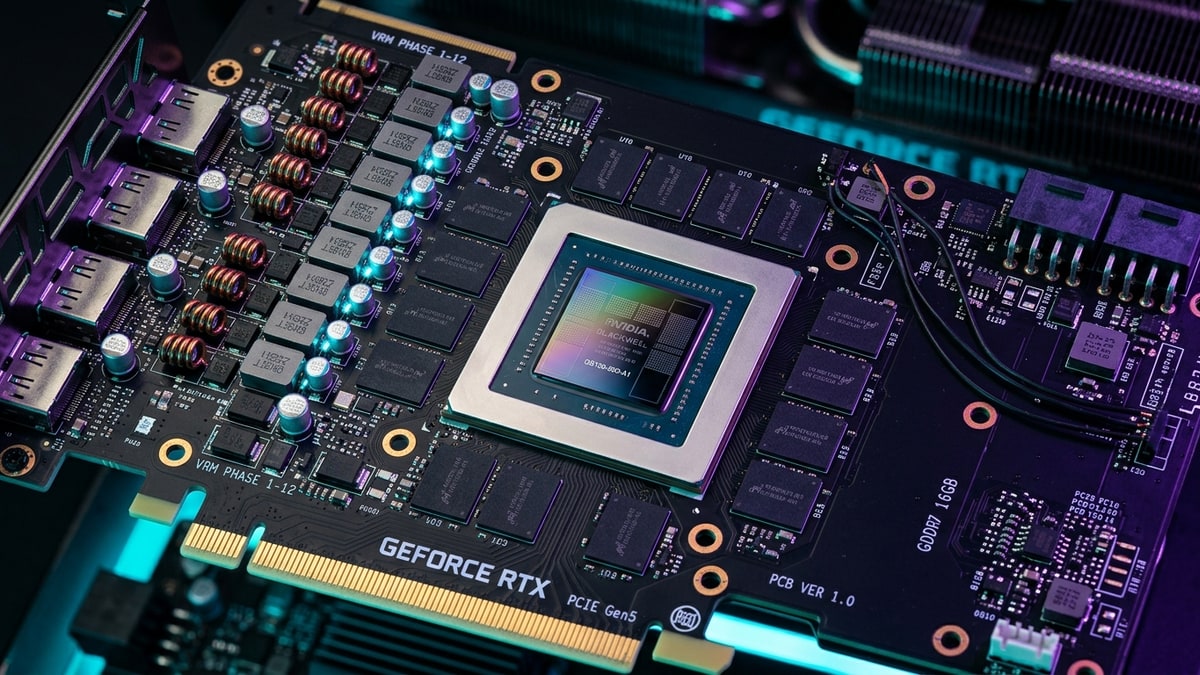
NVIDIA has never confirmed the RTX 50 Super refresh exists, yet the rumor cycle around it has produced the most consistent stack of leaked spec sheets this generation. The short version: three cards with roughly 50 percent more VRAMVRAM. Video RAM — memory on the graphics card used for textures and frames; more of it lets you run higher settings. each, mostly unchanged shader counts, higher power budgets — and a launch window that keeps sliding because the memory needed to build them costs close to triple the memory on current boards.
If you are holding off a GPUGPU. Graphics Processing Unit — the chip that renders the game's visuals; the main driver of framerate and image quality. purchase for a Super card, here is where the reporting actually stands, what the refresh would look like, and which of today’s 50-series cards it would replace at each price tier.
What changed
The rumor trail hardened in mid-2026. Multiple outlets, working from partner-facing spec sheets and supply-chain sourcing, now converge on three core models:
- RTX 5070 Super — 18GB of GDDR7 (up from 12GB on the current RTX 5070, per NVIDIA’s official spec page), still on a 192-bit bus, with a reported CUDA core bump from 6,144 to 6,400 and power moving from 250W to a reported 275W.
- RTX 5070 Ti Super — 24GB of GDDR7 (up from 16GB), 256-bit bus, CUDA cores reportedly unchanged at 8,960, with power climbing from 300W to a reported 350W.
- RTX 5080 Super — 24GB of GDDR7 (up from 16GB), 256-bit bus, CUDA cores flat at 10,752, memory speed nudged from 30 Gbps to a reported 32 Gbps for roughly 1TB/s of bandwidth, and a reported 415W TBP against the current card’s 360W.
A fourth lower-tier card — an RTX 5060 refresh with 12GB of VRAM, up from the 8GB NVIDIA officially lists for the RTX 5060 — appears in some leak roundups but is less consistently corroborated, and it is unclear whether it would even carry the Super name.
The pattern across all of this is notable: VRAM goes up 50 percent everywhere, shader counts barely move, and every card draws more power. This is a capacity correction, not a performance leap. That framing matches how NVIDIA handled the RTX 4070 Ti Super in January 2024, where the headline fix was memory, but the scale of the VRAM increase here is much larger.
The most telling detail of the whole cycle came from an unusual source: Tom’s Hardware reported that unreleased RTX 50 Super cards surfaced inside Seasonic’s online power supply calculator, carrying total power figures 10 to 17 percent above their non-Super counterparts. PSU sizing tools need accurate TGP numbers to function, so a listing there carries more weight than the average rumor — and it lined up almost exactly with the spec-sheet power figures circulating elsewhere.
How it works
The mechanism behind the refresh is simple on paper: swap the 2GB GDDR7 modules used in today’s RTX 50 cards for denser 3GB modules, keep the same memory bus width, and watch capacity jump by half without redesigning the board or the die. The RTX 5080 Super keeps the same 256-bit interface as the RTX 5080; it just hangs bigger chips off it.
The mechanism behind the delay is also simple, and it is arithmetic. Per reporting from TrendForce, Videocardz, and Wccftech, 3GB GDDR7 modules currently cost roughly $60 to $70 each, against about $20 for the 2GB parts. A 24GB card needs eight modules on a 256-bit bus, so the memory line item alone climbs from around $160 to potentially $480 or more in bill-of-materials cost — before silicon, PCB, cooler, or margin. On a card NVIDIA would have to price near the $999 the RTX 5080 launched at, that math does not close.
Board partners reportedly have finished units in hand. Wccftech relayed Videocardz’s reporting that at least one add-in board partner has received Super cards but cannot sell them, because NVIDIA has not given the go-ahead. Hardware that is built but held is different from hardware that is cancelled, but the longer the hold runs, the thinner that distinction looks.
The root cause sits upstream. With memory makers running at capacity, silicon that could become a $30,000 AI accelerator will beat silicon bound for a $600 gaming card every time supply gets tight. Gaming memory gets what is left over, and 2026 has not left much.
What it means
Timing. The reported windows have marched steadily to the right: early-2026 hopes gave way to Q3 2026, then Q4 2026 to Q1 2027, and the current consensus — from BenchLife via Videocardz, and from TrendForce-sourced reporting — centers on a CES 2027 reveal in January, with retail availability likely later in Q1 or Q2. NVIDIA discussed no new GeForce desktop cards at Computex 2026, focusing public messaging on AI hardware instead. Nothing here is official, and earlier “confirmed” windows have already slipped twice.
Which cards a Super refresh would displace. If the leaked lineup ships, each Super model slots on top of its vanilla sibling at or near the same price tier:
- RTX 5070 Super (18GB) replaces the RTX 5070 (12GB) around the $549 tier. The 5070’s 12GB has been its most-criticized spec since launch, so this would be the most consequential single fix of the refresh.
- RTX 5070 Ti Super (24GB) replaces the RTX 5070 Ti (16GB) around the $749 tier, matching the 5080 Super on capacity.
- RTX 5080 Super (24GB) replaces the RTX 5080 (16GB) around the $999 tier, with the 32 Gbps memory speed making bandwidth its headline gain.
- The RTX 5090, at 32GB per NVIDIA’s official spec sheet, sits above all of this and would remain the halo card untouched.
The open question is price. With memory costs up roughly 3x per module, it is hard to see Super cards landing at current MSRP levels unless NVIDIA or its partners absorb several hundred dollars of extra materials cost per board — something the market in 2026 has not shown much appetite for. Expect pricing at or above launch levels if the refresh ships before GDDR7 pricing eases.
For buyers today. The practical advice from the reporting is dull but sound: do not hold a purchase for a card with no confirmed specs, price, or date. If you need a GPU now, the current RTX 5070, 5070 Ti, and 5080 are real and shipping; the Super versions are rumoured hardware that has already slipped most of a year. Meanwhile, the competitive picture is calm — AMD’s next-generation cards are themselves rumoured for mid-to-late 2027, so neither side is rushing.
One side effect worth noting: the existence of a credible Super refresh report has already softened demand for current 16GB cards in the retail channel, which is part of why analysts expect NVIDIA to stay quiet about the delay rather than acknowledge it. Silence protects current inventory.
Power and cooling. If the leak figures hold, add a line item to any future build plan: a rumored 415W RTX 5080 Super wants more PSU headroom and case airflow than the 360W card it replaces. NVIDIA’s official recommendation for today’s 5080 is an 850W system power supply; a Super card at those reported figures would push comfortable builds toward 1,000W territory.
A note on precedent. NVIDIA ran a cleaner version of this playbook at CES 2024 with the RTX 40 Super series — the 4070 Super, 4070 Ti Super, and 4080 Super arrived with modest core increases and sharper pricing roughly 15 months after the base cards. That launch was confirmed, dated, and reviewed on day one. The 50 Super cycle is visibly messier: roughly twenty months in with no official word, a far larger VRAM change in scope, and a refresh defined by memory economics rather than stack rebalancing. The difference tells buyers something about the market they are shopping in.