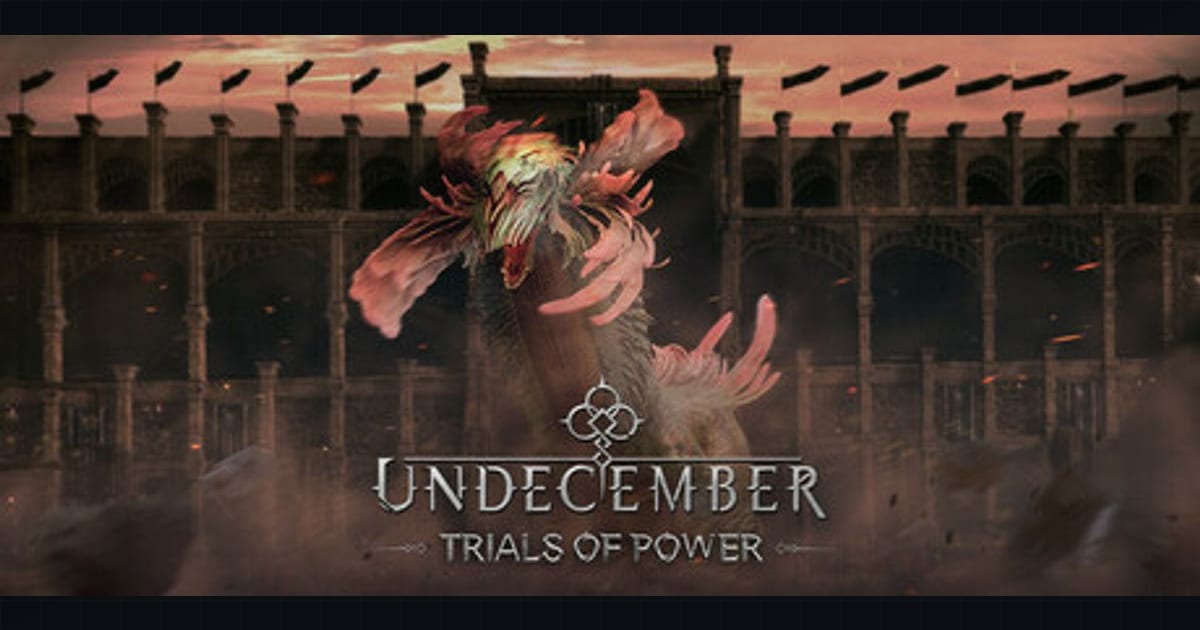
Undecember is a hack-and-slash action RPGRPG. Role-Playing Game — a game built around character progression, story, and player choices. that strips out fixed classes and replaces them with a rune-driven build engine. Instead of committing to a Warrior or Mage, you assemble your combat identity from Skill Runes, Link Runes, and Runestones slotted into a separate panel called the Rune Cast. The result is a game where your character’s power comes almost entirely from what you farm, link, and upgrade.
This guide walks through the rune-linking system, the gear crafting loop, and the progression targets that define the endgame. All mechanics below are drawn from the official Steam store page and the systems the game documents in-client.
What changed
Undecember launched on Steam in October 2022, developed by Needs Games and published by LINE Games Corporation. The store page frames the design around four pillars: UNCHANGED (the genre’s “gain strength after wiping out enemies” loop), UNDEFINED (no defined classes; characters are split into Strength, Dexterity, and Intelligence types but with no gear or combination restrictions), UNLIMITED (infinite skill combinations via runes), and UNSTOPPABLE (a list of contents that runs from the main Acts to endgame modes).
The classless design is the single most important thing to understand before you plan a build. You can cast magic with a sword, summon minions with a bow, or invent a hybrid nobody else runs. Builds are “divided into Strength, Dexterity and Intelligence types,” the store page notes, “but there are no gear or combination restrictions.” That freedom is the engine that keeps the itemization interesting.
How the rune system works
Runes are not passive stat sticks. They are the skills themselves. The official description splits them into three categories:
- Skill Runes — hexagonal runes that, when assigned to the quickbar, become activated attacks and abilities.
- Link Runes — support runes that modify and strengthen Skill Runes. A special subset carries the channel tag, which lets you combine two Skill Runes into a single combo.
- Runestones — passive bonuses that apply to the rest of your loadout depending on where you place them on the board.
Linking is the heart of the system. Each Skill Rune is a hexagon with six sides. To attach a Link Rune, the Skill Rune must expose a side in the color that matches that Link Rune, and not every side is active from the start. The odds of pulling a rune with all six connections functional are slim, which is why the rune merchant’s enchant service matters so much.
Channel Link Runes work like a fuse. You slot them in a strict order — Skill Rune with the channel tag, then the channel Link Rune, then the second Skill Rune — following the arrows on the board. Both skills must be equipped in quickbar slots, but only the one carrying the channel tag is active; using it triggers both at once. Get the order wrong or skip the tag requirement and the combination silently fails to fire.
A few Skill Runes are consistently strong early: Multishot, which adds projectiles; the “Spell Activation While Channeling” and “Spell Activation on Attack” Link Runes, which turn skills into combo engines; and foundational attacks like Fireball, Whirlwind, Lightning Chain, and Spread Shot. Runes also carry rarity tiers — Normal, Magic, Rare, and Legendary — and higher rarity means better bonuses.
Rune growth and enchanting
Runes have levels and grades you can raise. At the rune merchant in safe settlements you can do two things:
- Rune Enchant — change the color, count, and position of a rune’s sides, and even shift its rarity. This is how you force a Skill Rune to expose the colored sides your Link Runes need. It costs essences, many of which roll randomly, so luck is a real factor.
- Rune Growth — increase a Skill or Link Rune’s level to raise its power. This consumes crystals called Elements; feeding a rune an Element of the matching color produces the best result.
Essences come from drops, disassembling equipment, gifts, alchemy, and the premium-currency shop. Because so many enchant outcomes are random, experienced players tend to stockpile essences and reroll in batches rather than one at a time.
Gear crafting and transfers
Gear follows the same rarity ladder as runes, and its options are reshaped through a parallel crafting economy built around essences. The in-game systems document several families of essence operations:
- Upgrade Essences raise a piece of gear from Magic to Rare to Legendary.
- Birth Essences add prefix or suffix options to an empty item.
- Change Essences reroll existing options.
- Removal Essences strip a prefix or suffix you no longer want.
- Reversion Essences downgrade an item — for example, peeling the Legendary-exclusive enchant off a Legendary piece to return it to Rare grade.
- Imbue Essences (Magic, Rare, Legendary, Ancient, Holy) layer additional option quality onto an item.
Transfers are how you avoid throwing away progress when you find an upgrade. Gear Option Transfers move the grade, prefix/suffix options, quality, and even the trade/bind status from one item to another. The target must be equal or higher level, and an item that has received a transfer cannot receive another. Partial transfers exist for Rare items with six or more options, letting you gamble four-to-six options onto a new base. Rune Transfers work similarly, using Rune Birth, Color, and Link Essences, with the material rune consumed and destroyed in the process.
Alchemy ties the whole loop together. The Alchemy Desk lets you brew potions, synthesize runes and charms, combine materials into specific items, and craft elixirs gated behind Formula Pages. Rune Synthesis takes three runes of the same grade and produces one random rune of that grade, accumulating Mileage that eventually pays out a selection chest. This is also how you obtain certain runes and runestones that only appear through synthesis.
Build archetypes and endgame targets
Because there are no classes, archetypes emerge from which attribute you stack and which runes you link. Three broad families cover most viable builds:
- Strength melee — high-uptime whirl and cleave skills, heavy single-target runes, and Link Runes that add area damage or lifesteal. Greatsword and club-style attacks benefit from Whirlwind and the throw family.
- Dexterity ranged and flurry — bow and projectile builds built on Multishot and Spread Shot, with channel combos that trigger a secondary spell on every shot. Fast, safe, and excellent for clearing dense packs.
- Intelligence casters — Lightning Chain and Fireball cores, paired with “Spell Activation While Channeling” links that weave a second spell into each cast. These builds scale hardest in the late game but need mana and cast-speed support.
Endgame progression is where the build you assembled gets stress-tested. The store page lists four contents that open up after the main scenario:
- Chaos Dungeon — the primary endgame farming loop, available after you finish the Acts.
- Boss Raid — cooperative content supporting up to eight players.
- Crusade of Glory — a free-for-all PvP mode for players who want to test builds against other people.
- Guild — up to 50 members, with guild buffs and exclusive benefits.
The practical progression path is: clear the Acts to unlock Chaos Dungeon, farm it for Legendary runes and gear, use Rune Growth and Enchant to tune your links, run Boss Raid for cooperative drops, and then refine toward either Crusade of Glory PvP or deeper Chaos Dungeon farming. Runestones and the Zodiac system add another layer of passive tuning on top of your active runes.
What it means for players
Undecember’s appeal is that your build is never truly finished. Every Legendary rune drop is a chance to reroll its sides at the merchant, link a new combo, and reshape how the character plays. The classless design means a bad early choice costs you nothing — you can respec your entire playstyle by swapping runes and gear. The cost is time and essences, not a permanent commitment.
The trade-off is that the crafting economy is RNG-heavy. Random sides, random enchant outcomes, and random synthesis results mean patience and material stockpiling matter as much as raw build theory. Players who enjoy farming and incremental optimization will find the loop satisfying; players who want deterministic crafting may find the essence grind frustrating. Either way, the systems are documented in-client, so the path from Act clearing to Chaos Dungeon farming is straightforward to follow.