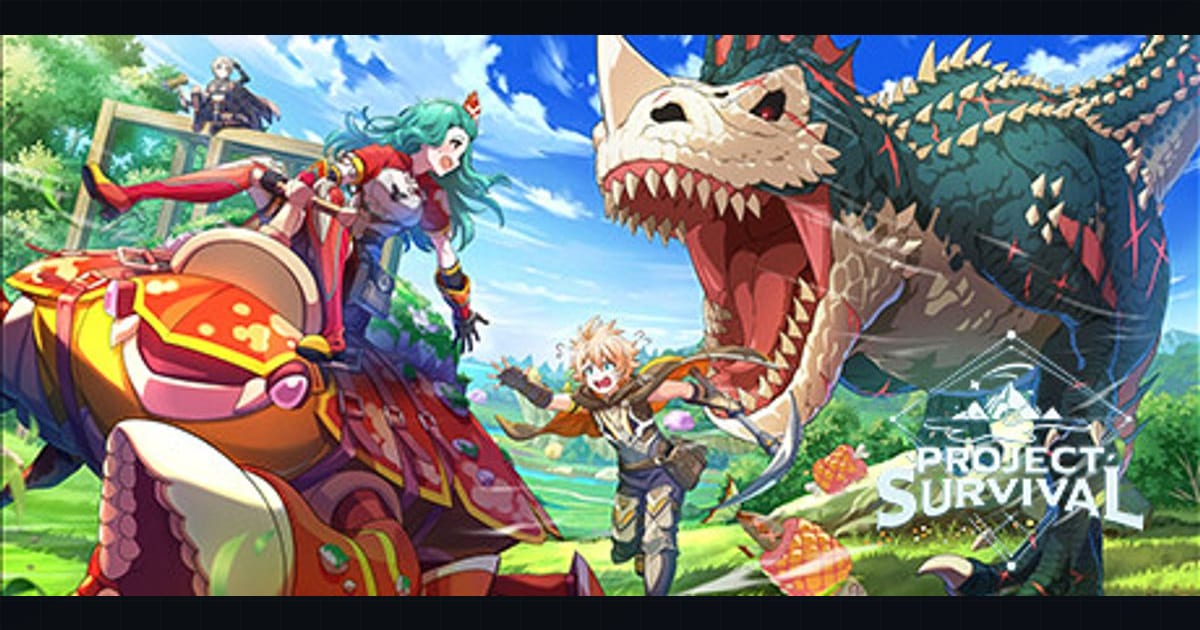
Wild Wild Eden reframes the survival-crafting monster by making each creature a permanent member of your settlement rather than a piece of equipment. Revealed in spring 2026 by Malaysia-based developer Magnus Games Studio and Japanese publisher Shueisha Games, the game is heading to PC via Steam in Early Access in spring 2027, with a planned full release window listed as Q1 2027 on the Steam store page.
What changed in the reveal
Wild Wild Eden first surfaced in July 2023 under the working title “Project Survival” at BitSummit. The June 30, 2026 official reveal dropped that placeholder, confirmed the new name, opened a Steam wishlist page, and published four localized trailers (English, Japanese, Traditional Chinese, Simplified Chinese, and Korean audio/subtitle support) along with an English-language gameplay trailer. According to producer Masakazu Kobayashi, the team also changed development engines during the gap between announcement and reveal, and both visuals and core systems were rebuilt around that switch.
The studio’s pitch is short and direct: an open-world survival crafting RPGRPG. Role-Playing Game — a game built around character progression, story, and player choices. built around an emotional bond with monsters. Shueisha Games’ own product page frames it as “an open-world survival adventure about building a tribe with monsters,” and the Steam description leans into the same idea — monsters are family, not tools.
How the family system works
Wild Wild Eden’s creature handling is split across four interlocking loops, all confirmed on the official Steam page and the publisher’s product page.
Taming
Taming uses traps and a consumable called Dream Brew to put monsters to sleep before they are welcomed back to your camp. There is no combat-aggro taming like many creature collectors — instead you set up, lull the creature, and add it to the settlement. Tamed monsters can be ridden, including in the sky, and they will fight alongside the player in combat.
Breeding
Pairing same-species monsters passes abilities, traits, and unique characteristics to the next generation. Offspring are hatched and raised, and the developers call out that “exceptionally rare color variations” can appear along the way. Shueisha Games describes the goal as breeding a one-of-a-kind partner that can take hundreds of hours to perfect.
Camp work
The same creatures handle chores. The publisher product page highlights Water Slimes that can help cultivate fields and automatically water crops, and the Steam description lists assigning creatures to processing stations to “channel their unique abilities to power your entire camp’s infrastructure.” Companion contributions span farming, hauling, and camp defense.
Personality and affection
Both the developer and publisher repeatedly emphasize personality. The Steam description states companions will “gather together, show affection toward the player, and sometimes surprise you with amusing and unexpected behaviors,” and assistant producer Raycley Zhang’s developer note describes creatures that come running when fed, relax in their favorite spots, and occasionally act clumsy. The framing is consistent: each monster has its own temperament, and the survival loop is built around deepening those relationships rather than cycling through expendable helpers.
How it plays alongside survival
Outside the family layer, Wild Wild Eden covers the usual survival-crafting bases and a few unusual ones. Confirmed features on the Steam store page include:
- Resource gathering — wood and stone for base building, with the right companion boosting efficiency.
- Crafting — gear, weapons, and station-driven processing powered by tamed monsters.
- Building — unrestricted building across the wilderness, including on water and inside extreme locations like volcanoes (per the Shueisha Games product description).
- Farming and fishing — slow-life activities supported by helpers, with the Water Slime as a named example.
- Player combat — when enemies threaten the tribe, the player can take up arms personally.
- Boss fights — described as “the ultimate test of your family’s bond,” with the companions you have raised joining the assault.
Visually, Wild Wild Eden commits to an anime-inspired art style rather than photorealism, and the world is a primitive fantasy planet with floating landmasses in the sky, ancient ruins, forests, mountains, oceans, and “each one unlike anything you’ve ever encountered” creatures. Single-player and online co-op are both confirmed, with online multiplayer designed around letting every player carve out a different role — master breeder, architect, explorer, or combat specialist.
The world you’ll be exploring
The Wild Wild Eden planet is built around several distinct biomes and locations that the developer team and publisher have called out individually. Per the Shueisha Games product page and the Steam feature list, players will travel through vast forests, scale magnificent mountains, dive into glittering oceans, and explore enigmatic ancient ruins. The world also includes floating landmasses that drift across the skies, which the publisher uses as a signature visual of the setting. Each journey into the wilderness is framed as more than resource gathering — every expedition is positioned as one step closer to uncovering the secrets of the planet the player has crash-landed on.
The narrative frame is the reason that exploration matters as much as survival. According to the Steam description, your home planet suffered a catastrophic disaster that left it beyond recovery. Survivors set out across the stars in pursuit of a brighter future and arrived on this world, only to find that everything has changed. The central question the developers want players to chase is what really caused the destruction of the home world — and whether the history the survivors were taught is the truth. As DC Gan and Welson Gan put it in their developer message: “we are here to reclaim what was lost and uncover the dark secrets buried beneath the surface of this world.”
That story gives the family system its emotional weight. Companions are not just storage units or combat pets — they are the people you are building a new life with on a hostile planet. The framing extends to online co-op, where the studio has stated that every player can forge their own role within the world: master breeder, architect, explorer, or combat specialist. Each role is presented as a valid way to engage with the survival loop.
What it means for players
For survival-crafting fans, the most concrete thing Wild Wild Eden is offering is a long-tail emotional hook rather than another pure efficiency game. The pitch — feed them, breed them, watch them nap — is the opposite of how Palworld, ARK, or Valheim frame their creatures as workforce units, and the developer commentary leans into that contrast multiple times. Zhang’s statement that the team wants players to think “I want to live in this world forever” is the clearest articulation of intent.
The breeding loop is the part most likely to define long-term play. With hundreds of hours available per the publisher’s description and rare color variations possible, the system borrows from long-running creature-collection games while adding personality systems that treat creatures as emotional investments rather than genetic min-max projects. For players who already spend dozens of hours chasing a perfect shiny in other games, Wild Wild Eden is positioning itself as the version of that loop wrapped in a survival-crafting frame with an anime art style.
There are caveats. The Steam page lists Q1 2027 as the planned release date, while the Shueisha Games product page says Spring 2027 for Early Access, and Gematsu’s June 30 coverage also places the Early Access launch in Spring 2027. The studio is small, and the PC system requirements on Steam are unusually high for a stylized survival game: minimum RX 5600 XT / GTX 1660-Ti with 16 GB RAM, recommended RX 6700 XT / RTX 4060 with 32 GB RAM, and an SSD is listed as required. Languages are limited to Japanese, English, Traditional Chinese, Simplified Chinese, and Korean, and consoles have not been announced. Max concurrent players for online co-op is also listed as TBA on the Shueisha Games product page, so the multiplayer structure will firm up as the Early Access launch approaches.
The studio behind it
Magnus Games Studio is a Malaysia-based developer founded in 2017 by brothers DC Gan and Welson Gan, whose previous work has focused on monster-raising games. The studio describes its inspirations as their own dogs and reptiles and a lifetime love of rivers, mountains, and the unknown. Shueisha Games is producing, with Kobayashi as producer and Zhang as assistant producer. The reveal trailer is available in five languages on YouTube, and the project was previously known as Project Survival from its 2023 BitSummit showing.