Why MMOMMO. Massively Multiplayer Online — a game that hosts very large numbers of players together in one shared, persistent world. & RTSRTS. Real-Time Strategy — a strategy game where everyone plays at the same time, continuously, instead of taking turns. punish your CPU differently
GPUGPU. Graphics Processing Unit — the chip that renders the game's visuals; the main driver of framerate and image quality.-bound AAA titles reward raw pixel throughput. CPU-bound genres — grand strategy, RTS with hundreds of units, MMO city sieges — reward something else entirely: sim-step latency. Each game tick, the simulation has to resolve pathfinding for thousands of units, economic calculations across hundreds of provinces, and player input across a network. Miss your sim-step budget and the game doesn’t drop frames — it drops turns, slows game-speed, or stutters the whole server tick.
That’s why a GPU that pushes 200 FPSframerate. How many images (frames) the game shows per second; higher = smoother motion. 60 fps is a common target. in a synthetic benchmark can still leave Stellaris crawling in 2400 AD, or make an AoE IV late-game battle feel like a slideshow. The bottleneck isn’t pixels; it’s the sim.
What it covers: Why MMO and RTS performance is limited by sim-step latency, and which 2026 CPUs fix it. Why it matters: These genres drop turns and game-speed, not frames — a faster GPU cannot save them. Who should pick this: Grand-strategy, RTS, and MMO players speccing a build for late-game worlds, not benchmarks.
Sim-step vs FPS: the metric that matters
Sim-step benchmarks measure how long the CPU takes to complete one simulation tick at a fixed game-state complexity — a late Stellaris save with 20 empires, an AoE IV 4v4 at pop cap, a 100v100 siegesiege. A timed, large-scale attack on a settlement — attackers try to destroy it, defenders try to hold it. in an MMO. Lower is better. FPS is a side effect of sim-step time, not the other way around. A CPU that holds 120 FPS while its sim-step stays under the tick budget will feel smooth where a “faster” CPU that bursts to 200 FPS then stalls on a heavy tick will stutter.
The 2026 CPU landscape
Two architectures dominate the desktop space this year:
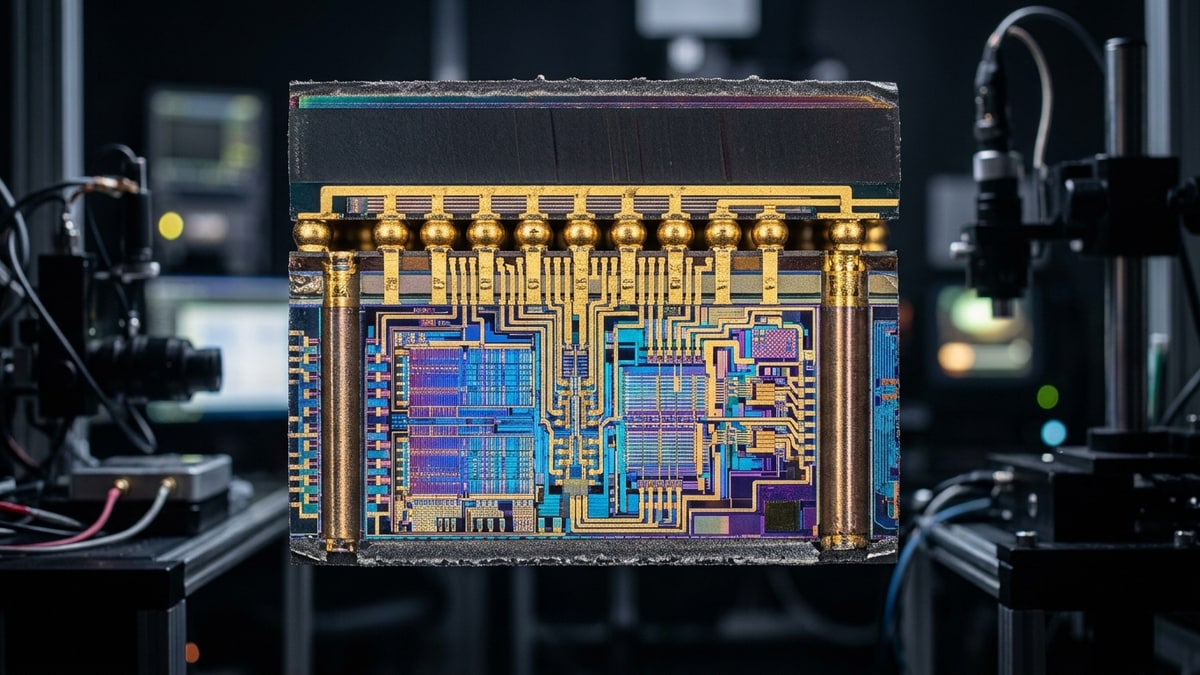
- AMD Zen 5 + 3D V-Cache3D V-Cache. AMD's stacked L3 cache that gives the CPU very fast access to data, notably boosting game framerates. (Ryzen 9000X3D): The 9800X3D stacks 64MB of additional L3 cache under the compute die — a reversal from the 7800X3D’s top-stacked design — which lets the cores clock higher while keeping the cache cool. The 9950X3D and 9900X3D carry dual CCDs, but only one CCD gets the 3D cache. That asymmetry matters: a sim loop that can’t split across CCDs won’t benefit from the second cacheless die.
- Intel Arrow Lake (Core Ultra 200 series): A tiled design with P-cores and E-cores, no Hyper-Threading, and a new memory controller. Early BIOS and memory-tuning issues hurt gaming latency at launch; subsequent microcode and BIOS updates narrowed but did not fully close the gap in CPU-bound titles.
For sim-heavy genres, the deciding factors are, in order: single-thread throughput, L3 cache size, memory latency, and how well the game’s engine spreads work across cores (most grand-strategy and RTS engines don’t).
Comparison: CPUs ranked for sim-bound genres
| CPU | Cores / Threads | L3 Cache | Best for | Sim-step (relative) |
|---|---|---|---|---|
| Ryzen 7 9800X3D | 8C / 16T | 96MB | All-around sim, Stellaris, AoE IV | 1.00 (baseline) |
| Ryzen 9 9950X3D | 16C / 32T | 128MB (one CCD) | Sim + streaming / productivity | ~1.05–1.12 |
| Ryzen 9 9900X3D | 12C / 24T | 128MB (one CCD) | Sim + moderate multitask | ~1.05–1.12 |
| Ryzen 9 9950X | 16C / 32T | 64MB | Productivity-first, weaker sim | ~1.20–1.30 |
| Core Ultra 7 265K | 8P+12E / 20T | 36MB | Productivity parity | ~1.25–1.40 |
| Ryzen 7 9700X | 8C / 16T | 32MB | Midrange non-X3D | ~1.20–1.30 |
| Core Ultra 5 245K | 6P+8E / 14T | 24MB | Intel budget | ~1.35–1.50 |
| Ryzen 5 9600X | 6C / 12T | 32MB | AMD budget | ~1.30–1.45 |
Relative sim-step: lower is faster. Numbers are illustrative, derived from published single-thread and gaming benchmarks; exact sim-step figures vary by scenario, patch, and memory tuning — verify against current reviews before buying.
Tier list: best CPU for MMO & RTS in 2026
Ranking criteria: single-thread sim throughput, cache benefit in CPU-bound engines, late-game scalability, and value at current street price.
S-tier — sim-speed leaders
- Ryzen 7 9800X3D — The best single-CCD sim CPU available. Full 96MB cache available to all 8 cores; no CCD-crossing latency penalty. Top pick for Stellaris, AoE IV, and MMO sieges. The under-die cache stack lets it clock meaningfully higher than the 7800X3D it replaces.
A-tier — strong with caveats
- Ryzen 9 9950X3D / 9900X3D — Excellent when the sim thread lands on the V-cache CCD. The cacheless second CCD is a productivity bonus, not a sim bonus. Slightly worse than 9800X3D in worst-case single-thread sim due to inter-CCD scheduling overhead, but the difference is small and only shows in heaviest late-game ticks.
- Ryzen 7 9700X — Solid non-X3D Zen 5. Loses a meaningful chunk of sim throughput to the X3D sibling but costs meaningfully less. The sensible fallback when X3D stock is scarce.
B-tier — capable but not optimal
- Core Ultra 7 265K — Competitive in well-threaded productivity; trails X3D in cache-sensitive sim. Early Arrow Lake memory-latency issues are largely patched, but a residual gap persists in worst-case late-game scenarios.
- Ryzen 5 9600X — Budget-friendly, fine for mid-game and smaller matches; chokes in max-pop AoE IV or late Stellaris saves.
C-tier — productivity-first
- Core Ultra 9 285K — More cores, not more sim speed. Pick this if you sim and stream and render on the same machine.
- Ryzen 9 9950X (non-X3D) — Great for rendering and compilation; weaker for sim than a cheaper 9800X3D. A common mis-buy for gamers who assume more cores equals more game speed.
Per-game findings
Stellaris — the grand-strategy stress test
Stellaris runs on Paradox’s Clausewitz engine, which is heavily single-threaded for the simulation loop. Late-game saves with 20+ empires, thousands of pops, and ongoing wars are the canonical sim-bound scenario. X3D parts are widely observed to lead in CPU-bound scenarios: the 9800X3D’s 96MB cache keeps the working set hot, and its higher clocks — enabled by the under-die cache stack — close the frequency gap with non-X3D Zen 5.
Practical test: load a late save, set the game to max speed, and time how long 10 in-game years take. The 9800X3D typically leads this test. The 9950X3D’s second CCD doesn’t help because the sim loop doesn’t split across cores. Mods like “Sim Speed” and pop-reduction mods shift the working set but don’t change which CPU wins.
Age of Empires IV — pop-capped 4v4
Relic’s Essence Engine handles hundreds of units, pathfinding, and combat resolution per tick. Pop-capped 4v4 late game is where budget CPUs fall behind. AoE IV benefits from cache but is more multi-thread-aware than Stellaris, so the 9950X3D and 9900X3D close some of the gap to the 9800X3D. The practical difference: the 9800X3D holds higher minimum FPS in the heaviest battles; the dual-CCD X3D parts smooth out background tasks (Discord, browser, overlays) without stealing sim time from the cache CCD.
MMO city sieges — 100v100 and beyond
MMO sieges are the hardest case to benchmark cleanly because server tick rate, network conditions, and engine threading all interleave. Local CPU matters most for client-side unit rendering, ability resolution, and UI responsiveness. Engines vary widely in threading — Unreal-based MMOs, proprietary engines, and CryEngine derivatives all behave differently. The safe generalization: large L3 cache and high single-thread throughput reduce client-side stutter in crowded scenes. The 9800X3D is the pick; the 9950X3D is the pick if you also stream your siege to an audience.
Buyer’s guide: picking the right CPU
Ranked by how well each CPU serves sim-bound genres relative to its price.
- Ryzen 7 9800X3D — best sim performance, reasonable price, no meaningful productivity sacrifice for a pure gamer. Default recommendation.
- Ryzen 9 9950X3D — if you sim and stream or render. Pay the premium only if you actually use the second CCD’s cores.
- Ryzen 9 9900X3D — the middle ground. Slightly cheaper than the 9950X3D, same sim behavior on the cache CCD.
- Ryzen 7 9700X — best non-X3D value. If X3D stock is scarce or marked up, this is your fallback.
- Core Ultra 5 245K — best Intel value for sim. Lower cache hurts late game, but Arrow Lake’s single-thread is competitive at the price point.
- Ryzen 5 9600X — budget floor. Acceptable for mid-game and smaller sieges; expect late-game slowdown in Stellaris and pop-capped AoE IV.
What to pair it with
- RAM: 32GB DDR5DDR5. A generation of system RAM (memory); newer and faster than DDR4.-6000 CL30 is the sweet spot for AM5. Sim-bound games are latency-sensitive — tight timings matter more than raw frequency. Step to 64GB only if you run heavy total-conversion mods in Stellaris or host a server alongside the client.
- Cooling: X3D parts are voltage-limited, not thermal-limited. A decent 240mm AIO is plenty. Don’t overvolt chasing frequency; the cache is the win, not the clocks.
- Motherboard: B650 or X670 for AMD — the X3D benefit is platform-stable across the AM5 generation. For Arrow Lake, ensure the latest BIOS with the memory-latency patches applied before judging sim performance.
The short version
For MMO, RTS, and grand strategy in 2026, the CPU that matters is the one with the most cache you can afford feeding the fastest single-thread cores. That is the Ryzen 7 9800X3D, full stop. Step up to a 9950X3D only if you need cores for streaming or productivity alongside the sim. Skip the non-X3D Ryzen 9 and the Arrow Lake top-end unless your workload is productivity-first — more cores do not equal more sim speed in engines that don’t thread the sim loop.
Sources & further reading
- AMD Ryzen 9000 series desktop product page — https://www.amd.com/en/products/processors/desktops/ryzen/9000-series.html
- Intel Core Ultra Series 2 (Arrow Lake) — https://www.intel.com/content/www/us/en/products/details/processors/core/core-ultra-series-2.html
- Stellaris wiki — Clausewitz engine & performance — https://stellaris.paradoxwikis.com/
- Age of Empires IV official site — https://www.ageofempires.com/games/age-of-empires-iv/
- Hardware Unboxed CPU benchmark coverage — https://www.youtube.com/@HardwareUnboxed
- Gamers Nexus Ryzen 9800X3D review — https://gamersnexus.net/
Watch Arrow Lake’s scheduler updates and Zen 6 rumors through late 2026 — both directly target the single-thread sim workloads this ladder ranks. Until then, the 9800X3D holds the sim-speed crown, and any CPU launch is worth one re-run of these benchmarks.
Next read
- For the genre-agnostic picture, see CPU-Bound Gaming in 2026: When X3D Wins.
- For the two X3D chips head-to-head, see Ryzen 9800X3D vs 9950X3D: The Asymmetry Problem.
- For build-tier pairings, see Gaming PC Build Tiers 2026: 1440p and 4K.