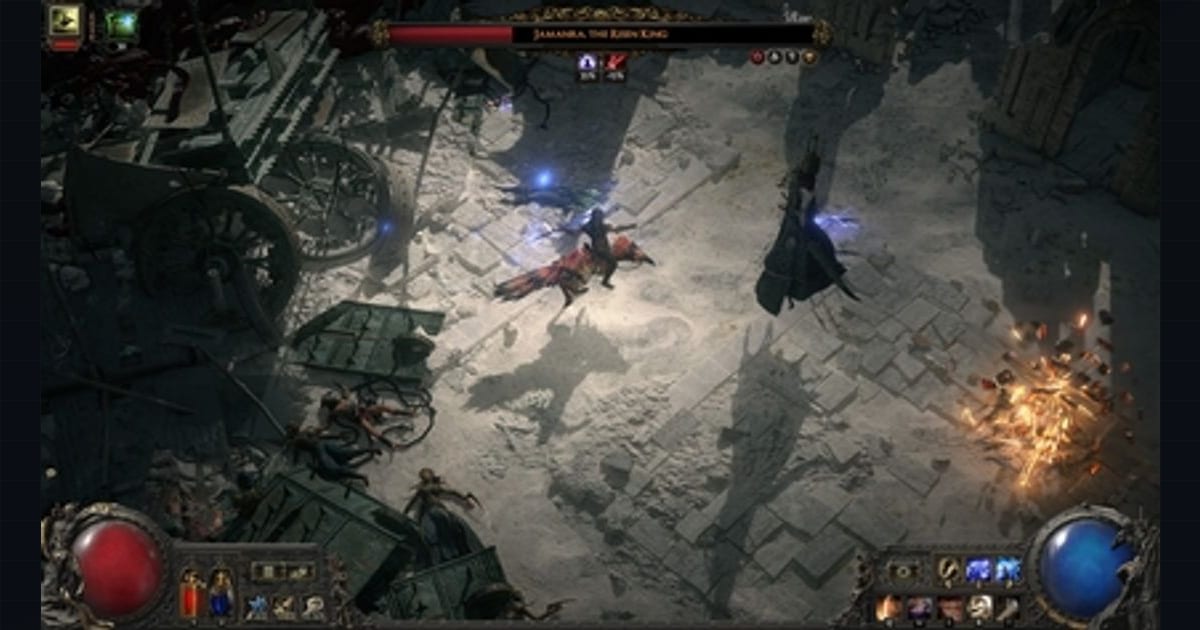
Path of Exile 2’s Early Access build offers six starting classes, each anchored to one of the three core attributes and tuned around a distinct combat rhythm. Picking a first class is less about chasing a meta pick and more about matching a class’s mechanical core to how you actually want to play — melee spacing, ranged kiting, or spell casting — because the ascendancy system and gem links do the heavy lifting on power later.
This guide groups the six classes by playstyle, then gives a working tier read for the current 0.3 patch balance pass so you can weigh fun against viability before committing to a campaign run.
What it covers: The six Early Access classes grouped by playstyle, with a working 0.3 tier read. Why it matters: First-class choice is mechanical fit, not meta — ascendancies and gem links do the power later. Who should pick this: New players at character select.
How Class Choice Actually Works in PoE2
A few structural facts frame every class recommendation:
- Attribute anchor: Each class starts on a fixed spot of the passive tree aligned to Strength (Warrior), Dexterity (Ranger, Mercenary), or Intelligence (Witch, Sorceress), with the Monk sitting at the Str/Dex intersection. Your starting position shapes which clusters are cheap to reach early, not what you can ultimately build.
- Ascendancy gates real specialization: Each class unlocks two or more ascendancy subclasses through trial content, and the ascendancy — not the base class — defines most of a build’s identity at the endgame. Treat the base class as a starting lane you can branch from.
- Weapon swap and skill gems carry the build: Because support sockets live on gems (not gear links), a class’s viability is closely tied to which weapon archetypes and gem families it reaches cleanly. A “weak” class with a strong gem pairing can outperform a “strong” class run badly.
- Balance moves patch to patch: 0.3 rebalances a number of skills and ascendancy nodes; check the official patch notes for exact changes. Tier reads below are a snapshot, not a verdict — they reflect what is performing well right now, not what will survive the next pass.
Classes Grouped by Playstyle
Melee & Close-Quarters: Warrior, Monk
Warrior is the deliberate, hit-commit melee class. It leans on two-handed maces, slams, and armor-based mitigation, with a kit built around stunning enemies and executing staggered targets. The pace is slow and read-heavy: you trade windup for large hits and rely on armor and life regen to survive the frames where you cannot dodge.
- Best for: Players who want committed, weighty melee where positioning and timing of slams matter more than APM.
- Watch out for: Slow base movement and long attack animations punish mistimed commits early; rely on dodge roll iframes, not face-tank, during boss phases.
- 0.3 note: Slam and stun-scaled skills have seen tuning this patch; Warrior remains a solid, forgiving campaign pick for new players.
Monk sits at the Strength/Dexterity intersection and trades Warrior’s raw weight for combo-based, mobility-forward melee. Its identity is built around combo points (or a similar resource flow) and quick repositioning, with quarterstaff and unarmed-friendly skill lines. It is more demanding than Warrior — you manage resources and chain sequences — but rewards players who like active melee.
- Best for: Players who want fast, sequence-driven melee with movement baked into the kit.
- Watch out for: Higher execution floor; a fumbled combo window leaves you exposed. Mitigation is more dodge- than armor-based.
- 0.3 note: Combo-line skills have seen adjustments this patch; Monk is a strong pick for players who enjoy mechanical melee.
Ranged & Projectile: Ranger, Mercenary, Huntress
Ranger is the bow-class, pure Dexterity, and the clearest “kite and projectile” fantasy. It pairs high movement speed with bow skills, traps, and the kind of multi-shot / pierce scaling that turns trash packs into AoE clear while keeping you at range. It is the most accessible class for players who want to deal damage without standing in melee range.
- Best for: Players who want ranged clear with high mobility and low mechanical risk in the campaign.
- Watch out for: Lower base life and armor; one missed dodge against a telegraphed slam can delete you in higher-tier maps.
- 0.3 note: Bow and projectile skills have received adjustments this patch; Ranger is a safe, strong first-class pick.
Mercenary is the ammunition-driven ranged class — guns and reload mechanics rather than bows. It introduces a reload/ammo resource loop that makes it feel more tactical than Ranger: you manage shots and reloads the way a Monk manages combos. The class rewards deliberate trigger discipline over spam.
- Best for: Players who want a tactical ranged loop with a resource to manage, not pure kiting.
- Watch out for: Reload downtime is a real DPS tax if you mismanage ammo; less forgiving than Ranger for pure clear speed.
- 0.3 note: Ammo-skill tuning this patch keeps Mercenary viable but execution-sensitive; mid-tier for new players who dislike resource juggling.
Huntress (added after Early Access launch) is a spear-based Dex hybrid that blends melee and ranged spacing — closer than Ranger, farther than Monk. It is a newer addition and its ascendancies are still settling in the meta. For a first class it is appealing if you want a flexible spacing class, but it carries more patch-to-patch variance than the launch six.
- Best for: Players who want a mid-range hybrid that does not commit to full melee or full ranged.
- Watch out for: Newer class means less community build knowledge and more balance churn; expect your build to shift between patches.
- 0.3 note: Treat Huntress tier reads as provisional; it has been in flux and is not the safest first-class pick.
Spell & Minion Casters: Witch, Sorceress
Witch is the Intelligence minion-and-curse class. It pairs raised minions (skeletons, zombies, and similar) with curse and damage-over-time scaling, letting your army do the fighting while you position and apply debuffs. For a first class it is one of the most forgiving in the campaign: minions absorb hits, and your job is crowd control and buff upkeep.
- Best for: Players who want a low-mechanical-floor caster where an army absorbs pressure and curses do the work.
- Watch out for: Minion AI and targeting can feel sluggish against fast bosses; you still need to dodge telegraphed slams.
- 0.3 note: Minion and curse lines have been periodically retuned; Witch is consistently a top recommendation for new players because the floor is low and the ceiling is real.
Sorceress is the pure Intelligence direct-damage caster — fire, cold, and lightning spell lines with elemental scaling and the classic glass-cannon profile. It deals the damage itself rather than delegating to minions, which means higher output but a thinner margin for error: low life, low armor, and a reliance on dodge roll and positioning to survive.
- Best for: Players who want to be the source of the damage, with elemental spell fantasy and elemental ailment scaling.
- Watch out for: Lowest natural survivability of the six; requires active dodging and good flask use, especially against fast melee bosses.
- 0.3 note: Direct spell damage has seen tuning this patch; Sorceress is high-output but the least forgiving first class for someone new to dodge-roll spacing.
0.3 Patch Tier List (Snapshot)
Tiers below rate overall viability for a new player going through the campaign and into early endgame under the current 0.3 balance state. They weight forgiveness, clear speed, and survivability — not raw ceiling, which ascendancy and gear eventually equalize.
| Class | Playstyle | Tier | Why |
|---|---|---|---|
| Witch | Minion/curse caster | S | Minions absorb pressure, curses amplify, lowest execution floor of any class. |
| Ranger | Bow ranged | S | Strong clear, high mobility, forgiving ranged play through the campaign. |
| Warrior | Slam melee | A | Committed, armor-backed melee; forgiving for new players who respect windup. |
| Monk | Combo melee | A | High ceiling, mobility-driven; demands more execution than Warrior. |
| Sorceress | Direct spell caster | B | High output, lowest survivability; punishing for first-time dodge-roll spacing. |
| Mercenary | Ammo ranged | B | Tactical and viable, but reload management adds friction for new players. |
Huntress is omitted from the tier table intentionally: as a newer addition with ongoing balance churn, a stable tier read is not yet reliable. If you want a spacing hybrid and accept build volatility, it is playable — just not the safest first commitment.
Picking Your First Class: A Decision Shortlist
If you are still undecided, the fastest filter is “how close do you want to stand to the thing trying to kill you.”
- Stand far, let others tank → Witch (minions) or Ranger (bows).
- Stand far, deal the damage yourself → Sorceress (spells) or Mercenary (guns).
- Stand close, commit to hits → Warrior (slams) or Monk (combos).
- Want flexibility, accept churn → Huntress (hybrid spacing).
Two practical notes for first runs. First, your first class is not a permanent commitment — PoE2’s structure means re-rolling is expected, and league cycles reset the economy regularly, so a “wrong” first pick costs you a campaign run, not the account. Second, ascendancy choice matters more than base class for endgame viability, so once you clear the trial content, weigh the ascendancy options against your gem setup before locking in.
Common First-Class Mistakes
- Chasing the meta over the fit: A top-tier Witch played by someone who hates pet management will underperform a “B-tier” Sorceress played by someone who loves elemental spell spacing. Match the class to your tolerance for resource juggling and proximity to danger.
- Ignoring dodge roll: Across all six classes, the dodge roll’s iframes are the primary survivability tool in the campaign. New players often try to face-tank telegraphed slams — on a Sorceress or Ranger that is a one-shot.
- Locking ascendancy too early: Trial unlocks come at a fixed point, but you do not have to commit the moment you unlock. Review which ascendancy nodes complement your current gem and weapon setup first.
- Skipping weapon swap setup: PoE2’s dual weapon sets auto-swap by skill. New players often leave the second set empty, losing a free melee/ranged hybrid option that several classes benefit from.
Sources & further reading
- Official Path of Exile 2 site — https://www.pathofexile.com/
- Path of Exile 2 Steam store page — https://store.steampowered.com/app/2694490/Path_of_Exile_2/
- Path of Exile wiki (community) — https://www.poewiki.net/
- Grinding Gear Games patch notes archive — https://www.pathofexile.com/forum
- Path of Exile 2 official YouTube channel (dev talks and class showcases) — https://www.youtube.com/@pathofexile
Next read
- For the balance state this read assumes, see Path of Exile 2 0.3: Ascendancy and Economy.
- For one class in depth, see Path of Exile 2: Witch Ascendancy.
- All our coverage lives on the Path of Exile 2 hub.