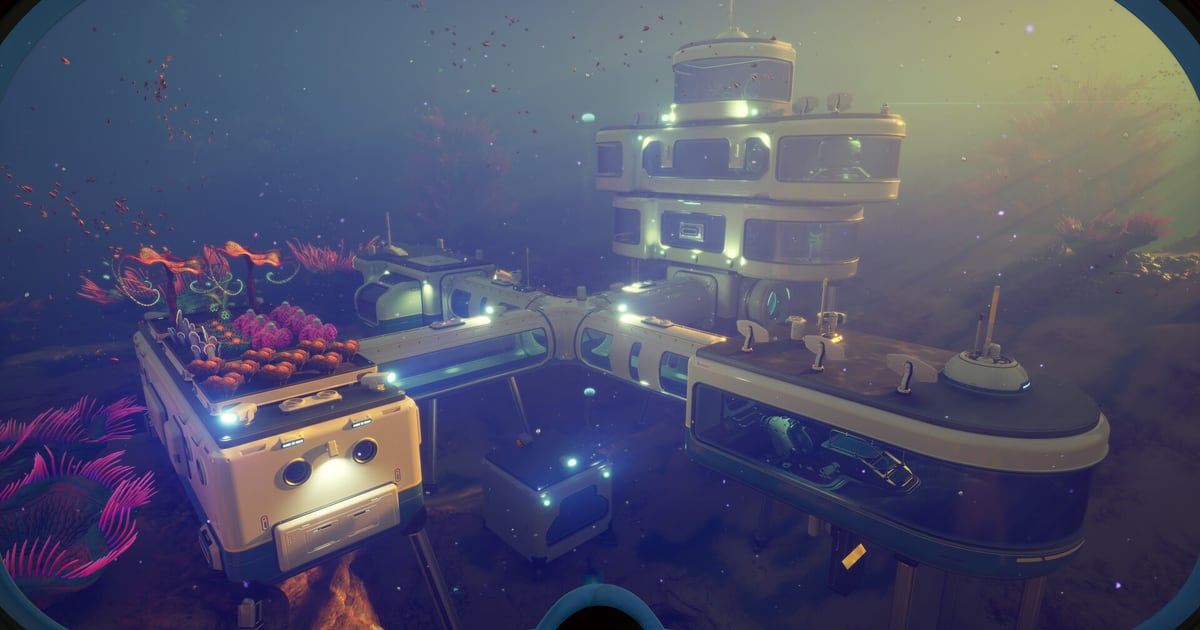
Unknown Worlds plunges players into an entirely new alien oceanic world in Subnautica 2. Building upon the beloved atmospheric terror of the original games, the sequel introduces optional 4-player cooperative exploration, dynamic deep-sea ecosystems, and overhauled depth pressure simulation. Survival in the abyss demands coordinating oxygen management, fabricating multi-crew submersible pressure hulls, and navigating pitch-black volcanic oceanic trenches.
What this covers: Submersible Depth Module tiers (250m to 800m), Hydrostatic pressure hull stress, Multi-diver oxygen ports, and Leviathan acoustic evasion. Why it matters: Descending past your vessel’s certified depth threshold deals continuous hull damage, and a hull pushed to zero health detonates in the crushing depths. Who should pick this: Pioneers gearing up for deep trench expeditions with diving partners.
Depth Tiers and Hydrostatic Pressure
In Subnautica 2, descending into oceanic trenches imposes intense physical pressure on both diver suits and submersibles:
| Tadpole Loadout | Certified Crush Depth | Module Function | Datacard Location |
|---|---|---|---|
| Stock Tadpole | 250m | Baseline pressure hull, no module required | Blueprint unlocks after scanning three Tadpole fragments |
| Tadpole Depth Module Mk. 1 | 450m | Increases maximum crush depth | Karakorum Power Plant, at roughly 294m |
| Tadpole Depth Module Mk. 2 | 800m | Increases maximum crush depth further | Not yet documented in Early Access game data |
Exceeding your vessel’s maximum depth triggers the crush-depth warning, and the hull starts taking damage 20 seconds later; that damage is repairable with the Repair Tool, but a Tadpole pushed to zero health explodes.
Multi-Diver Co-op Synergy and Oxygen Ports
Cooperative play fundamentally expands underwater exploration efficiency:
- The Mother-Ship Anchor: While two divers venture deep inside narrow underwater cave crevices, a third pilot remains in the submersible, monitoring external sonars for roaming leviathans and maintaining vehicle power.
- Oxygen Port Riding: The Tadpole carries a handlebar on each side, with an oxygen port below every handlebar. Divers can hold on while another player pilots and breathe from the shared supply without entering the vehicle — and the Haul Chassis adds two more seats with their own oxygen ports, letting four players travel on a single sub.
Acoustic Evasion: Handling Abyssal Leviathans
Deep-sea leviathans in Subnautica 2 key in on the noise your vehicles make. Flooding the abyss with vehicle floodlights and running propulsion engines at full flank speed will attract predators from kilometers away:
- Cavitation Muffler: This Modification Station upgrade reduces the noise produced by the Tadpole, making hostile lifeforms less likely to notice the vehicle.
- Strike Armor: Grants the Tadpole additional physical resistance from attacks and collisions — a 50% damage reduction when a leviathan does close in.
- Repair Tool Readiness: Creature attacks and collisions drain hull integrity; patch the damage with the Repair Tool, because a Tadpole that reaches zero health explodes and injures anyone nearby.
Building the Tadpole and Its Support Structures
The Tadpole is not assembled on the seafloor; it is printed at a Vehicle Fabricator mounted beside a Moonpool in a powered seabase. The blueprint unlocks after scanning three Tadpole fragments — or, per the wikily item database, after scanning a Tadpole Hull, Tadpole Wheel and Tadpole Propeller. The vehicle itself costs 2 Titanium Ingot, 1 Glass, 1 System Chip and 1 Power Cell, with a ten-second fabrication timer.
| Base Structure | Materials Required |
|---|---|
| Moonpool | 5x Titanium |
| Tadpole Dock | 2x Titanium Ingot, 1x Silver Ingot, 2x Copper Wire |
| Vehicle Fabricator | 2x Titanium Ingot, 1x Copper Ingot, 2x Glass |
| Tadpole (vehicle) | 2x Titanium Ingot, 1x Glass, 1x System Chip, 1x Power Cell |
The Moonpool needs genuine clearance underneath it: the Tadpole Dock extends a long way down, and a base built too close to the seabed has to be expanded or relocated before the dock will fit. Once built, the Tadpole is a single-pilot submersible with a front canopy, 8 m/s top speed, 100 health and four upgrade slots, plus a rear Hardpoint. A Portable Locker is the only storage that can be mounted on that Hardpoint without a Chassis.
Datacard Hunting: Where the Modules Live
Upgrade modules are not free unlocks. Each blueprint is a datacard recovered from a named wreck site, and Early Access game data pins most of them to rough depths.
| Module | Effect | Biome | Approx. Depth |
|---|---|---|---|
| Engine Efficiency | -20% power use per module, stacking to -80% | Karakorum Power Plant | ~139m |
| Photovoltaic Charger | Recharges the Power Cell in daylight above 40m, 15-30% per hour | Karakorum Power Plant | ~94m |
| Strike Armor | 50% damage reduction from attacks and collisions | Overgrown Ruins | ~196m |
| Cavitation Muffler | Reduces vehicle noise so hostile lifeforms are less likely to notice it | Root Canyon | ~375m |
| Tadpole Depth Module Mk. 1 | Raises crush depth to 450m | Karakorum Power Plant | ~294m |
Only Engine Efficiency stacks; every other module occupies one of the four slots, and Depth Module Mk. 1 is mutually exclusive with Mk. 2. Depth Module Mk. 2, which raises crush depth to 800m, still has no documented datacard location in current Early Access game data — so the 250/450/800m ladder is the ceiling the community has recorded so far.
Scout Ray vs Haul: Choosing a Chassis
Chassis are separate external modifications crafted at the same Vehicle Fabricator, and only one can be fitted at a time.
| Chassis | Top Speed | What It Adds |
|---|---|---|
| Tadpole Scout Ray Chassis | 10 m/s | Top speed, acceleration and maneuverability at the cost of a much wider vehicle; wings fold away when parked; preserves the rear Hardpoint |
| Tadpole Haul Chassis | 8 m/s | Two extra seats plus a handlebar (four players total), 30-slot rear storage, two side Hardpoints and an underside camera; acceleration drops sharply |
A Chassis equips automatically when the Tadpole moves within close proximity of it, and can be ejected at any time from the cockpit. Both the Tadpole and its Chassis can be deconstructed with the Habitat Builder to recover materials, provided the power cell socket and upgrade panel are empty, no Chassis is attached, and all Hardpoints are cleared.
Oxygen Arithmetic for Long Dives
The Tadpole supplies unlimited oxygen while powered, but the math changes the moment a diver leaves the hull. A player’s base reserve is 45 units, and depth sets the drain rate: one unit per second shallower than 100m, three per second between 100m and 200m, and five per second deeper than 200m. Equipping a Rebreather cancels those depth penalties entirely.
| Air Tank | Oxygen Added | Notes |
|---|---|---|
| Standard Air Tank | +30 | Enough headroom for the 30-unit low-oxygen alert to fire |
| High Capacity Air Tank | +75 | Sets the current maximum capacity of 120 units |
| Ultra High Capacity Air Tank | +90 | Listed but not currently available in survival |
The PDA warns at 10 units and, when diving far from the surface, at 30 units — but because a deep diver can burn five units a second, that “30 seconds” alert can leave under ten seconds of air. Running dry fades the screen to black over roughly four seconds and kills about four seconds later. Refills come from the surface, a swapped tank, an Oxygen Tunic (30 points per bubble, which also tops up Air Bladders), leaking damaged Air Tanks inside Pioneer Seabases, or any powered seabase or vehicle.
Powering the Tadpole Between Dives
The Tadpole runs on a single Power Cell seated in a socket on its roof, next to the four-slot upgrade panel. You can pull the cell and charge it elsewhere, or let the vehicle top itself up: the Photovoltaic Charger trickle-charges it in shallow daylight, and a Tadpole Dock recharges it automatically at the same rate as a Power Cell Charger, drawing 10 energy/sec from its base. Engine Efficiency is the range multiplier — each module cuts consumption by 20%, up to -80% at four modules. A craftable spare Power Cell is cheap insurance for a long trench run.
Base Support for Deep Expeditions
Seabases anchor any deep-dive operation: they produce breathable oxygen automatically as long as they have power, and stop the instant the power fails, at which point a player inside starts losing oxygen. Four generator types feed them.
| Generator | Output (energy/sec) | Best Use |
|---|---|---|
| Bioreactor | 1-20 | Consumes any organic matter |
| Thermal Plant | 1-16 | Lava Geysers and Black Smokers |
| Hydroelectric Turbine | 12 | Natural water currents only — artificial currents do not work |
| Solar Panel | 1-8 | Near-surface, daylight dependent |
Generators each fill only their own internal storage, and the Power Transmitter extends a generator’s reach to a distant base. Running the numbers matters: the Tadpole Dock draws 10 energy/sec, the Vehicle Fabricator 5, the Processor 10 and the Modification Station 5 — a compact deep base with a dock and a fabricator is a constant, non-trivial drain. The Seabase AI also announces its own state (“Welcome aboard”, “Warning: Power offline”, “Power connected. All systems online”), which is a fast way to hear that a distant outpost has gone dark.
Early Access Context
Subnautica 2 entered Early Access on May 14, 2026. The store page describes it as a single-player game that can optionally be played in online co-op with up to three friends, with cross-platform multiplayer supported and four pre-designed characters at launch. Unknown Worlds expects Early Access to run roughly two to three years while it adds biomes, creatures, craftables and narrative — which is exactly why datacard locations and depth figures should be re-checked after each major update.