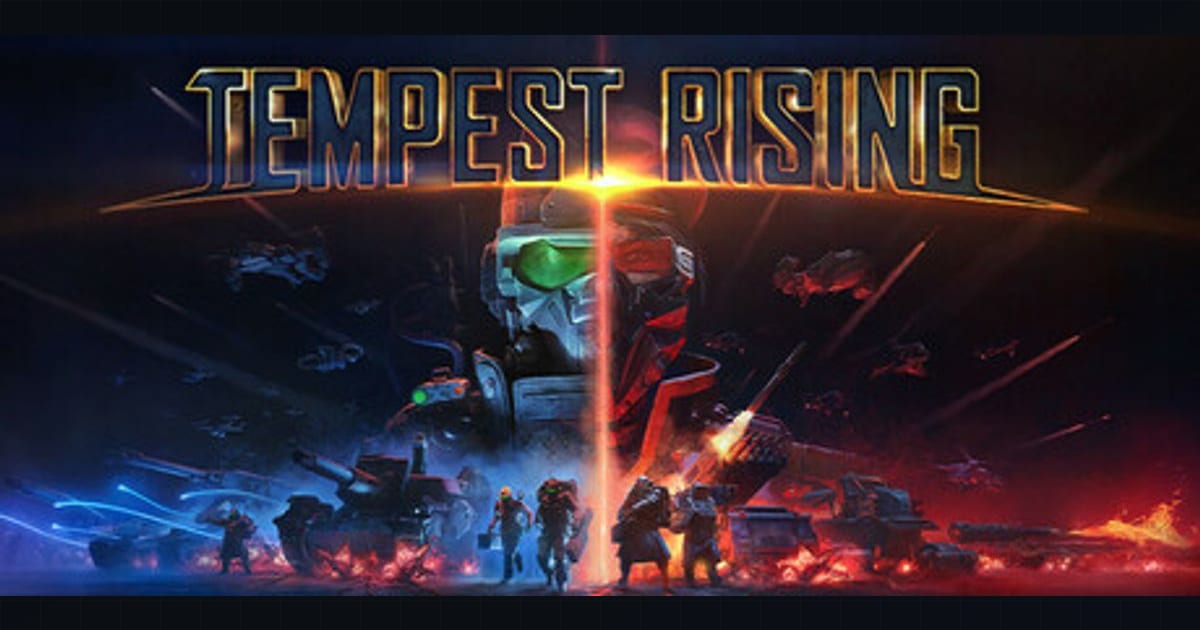
Slipgate Ironworks and 3D Realms have published technical breakdown notes detailing the economic and combat asymmetry between the Global Defense Forces (GDF) and the Tempest Dynasty in Tempest Rising. Built on Unreal EngineUnreal Engine. A widely-used commercial game engine from Epic Games; powers many large-studio (AAA) games. UE5 is the current generation. 5, the game combines classic base-building mechanics with modern input queues and netcode.
Economic & Refinery Architecture
- Harvest Refineries: The GDF rely on high-capacity automated harvesters that process Tempest vines directly into power cells. The Tempest Dynasty utilizes mobile extraction rigs that convert field nodes into temporary defensive turrets.
- Base Construction Queues: Construction occurs via grid-based placement. Factory queues support rally-point waypoints with automatic stance assignment (Aggressive, Guard, Hold Position).
- Command Powers: Superweapon abilities require dedicated radar structures and consume global electrical grid reserves during activation cycles.
Competitive Netcode Focus
Multiplayer architecture incorporates deterministic lockstep networking optimized for 1v1 and 2v2 ranked ladder matchmaking. Custom map authoring tools will launch alongside the base game release.
Why It Matters: Asymmetry as a Design First Principle
The most telling detail in the breakdown isn’t the factionfaction. An in-game group or nation players can align with or fight against, with its own goals and reputation system. roster or the unit list — it’s that the economy itself is asymmetric. The GDF harvest Tempest vines into power cells through automated, high-throughput refineries; the Dynasty’s mobile rigs instead convert the same field nodes into temporary defensive turrets. That is a foundational divergence, not a cosmetic one. Both sides interact with the same map resource, but they extract different things from it — one pulls liquid income, the other builds territorial pressure.
This matters because RTSRTS. Real-Time Strategy — a strategy game where everyone plays at the same time, continuously, instead of taking turns. balance is overwhelmingly fought at the economy layer, not the unit layer. StarCraft II spent a decade tuning worker counts, mineral saturation curves, and inject-larva timers before it ever touched unit damage values. By baking asymmetry into the harvest loop itself, Tempest Rising is committing to a design where the two factions will feel different from the first harvest cycle, not from the first engagement. The GDF player is playing a logistics game; the Dynasty player is playing a zoning game. Those are two different cognitive loads on the same map, which is exactly what classic Command & Conquer-lineage design has historically struggled to deliver without one side becoming the “fast/cheap” mirror of the other.
The Take: Grid Construction + Lockstep Is a Conservative, Correct Bet
The construction model — grid-based placement, factory queues, rally-point stances — reads as deliberately orthodox. There is no modular-base or territory-claim innovation here; Slipgate is shipping the base-building grammar that Red Alert, Tiberium Wars, and Grey Goo all share. Paired with deterministic lockstep netcode tuned for 1v1 and 2v2, the message is clear: this game wants to be legible to the ladder audience first, and it wants replays, casts, and competitive integrity to work on day one.
That is the correct instinct. Lockstep is bandwidth-cheap and replay-faithful, which is why it remains the backbone of StarCraft, Age of Empires II: DE, and Zero-K despite two decades of alternative netcode research. The risk — and it’s a real one — is that lockstep’s responsiveness degrades badly under high-ping cross-region play, and a 2026 release that leans on it for ranked matchmaking is implicitly telling its player base that regional servers and low-latency peer pools are a hard requirement. If 3D Realms wants a casual 4v4 scene to survive alongside the 1v1/2v2 ladder, the netcode choice will need either rollback-style input prediction grafted on top, or a candid server-authoritative fallback mode. The breakdown notes don’t mention one, and that silence is worth watching.
What It Signals: UE5 in Service of Fidelity, Not Simulation Depth
The Unreal Engine 5 choice is worth scrutinizing. UE5 is excellent for visual production — Nanite geometry, Lumen GI, and the asset pipeline make Tempest Rising look a generation ahead of its C&C spiritual predecessors. But UE5 is not a deterministic-simulation engine out of the box; lockstep determinism requires strict fixed-timestep logic, no floating-point nondeterminism across CPU architectures, and careful separation of sim from presentation. Building that on top of UE5’s tick-driven, frame-rate-coupled GameThread is non-trivial engineering.
The fact that Slipgate is committing to lockstep on UE5 signals one of two things: either they’ve invested in a sim/presentation decoupling layer (the mature path, and the one that makes competitive play viable long-term), or they’re leaning on UE5’s networking abstractions and accepting the determinism tax that comes with them. The recommended spec — an i7-10700K and an RTX 2070 for an RTS — is steep for the genre, and it suggests the visual layer is the priority, with simulation cost riding on top. For the competitive audience that’s the core of any modern RTS revival, the question isn’t whether Tempest Rising looks better than C&C3; it’s whether replays desync, whether frame pacing holds under large unit counts, and whether the tick rate is high enough that micro feels responsive. Those answers will decide the ladder’s longevity more than any faction roster will.
Context: The RTS Revival Needs a Competitor, Not a Nostalgia Object
Tempest Rising enters a field where Stormgate has had a troubled launch, Iron Harvest found a niche but not a mainstream ladder, and Command & Conquer Remastered proved the appetite exists without producing a new competitive platform. The genre is starved of a game that is simultaneously faithful to the C&C grammar and viable as a modern esport. The faction asymmetry described here — asymmetric economy, sub-faction tech trees, superweapons gated behind grid and radar — is the exact shape of a game trying to thread that needle.
The betting line: if the determinism and netcode hold up under tournament load, the economic asymmetry alone gives Tempest Rising a stronger competitive identity than any RTS since StarCraft II. If they don’t, it becomes a very pretty single-player campaign with a ladder that quietly dies inside two seasons. The Q4 2026 window gives Slipgate time to show the netcode in open stress — and the competitive community will be watching the desync logs more closely than the trailers.